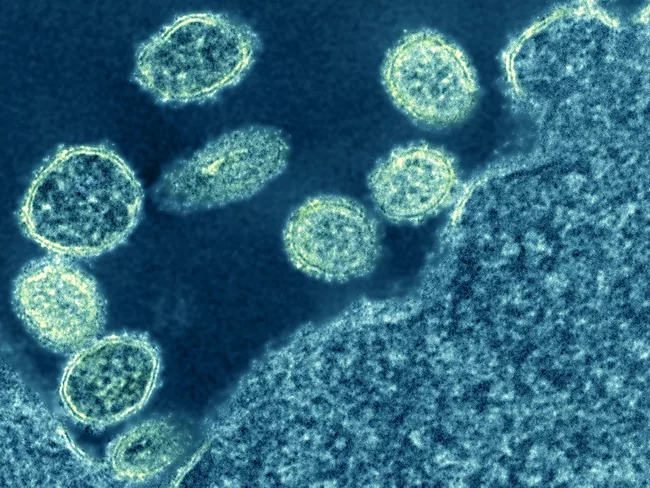
Researchers from Eradivir Inc. and affiliated organizations presented the discovery and preclinical evaluation of EV-21, a dual mechanism antiviral immunotherapy for the treatment of influenza infections. EV-21 was designed as a ligand-targeted drug conjugate, developed by linking the neuraminidase inhibitor zanamivir to two distinct haptens that bind to two different naturally occurring antibodies in humans. As a result, the candidate acts though a dual mechanism of action, which consists of potent recruitment of the human immune system to recognize and destroy free viruses and virus-infected cells.
The World Health Organization recently endorsed an economical malaria vaccine with a 75% effectiveness rate, which costs less than half of the initial vaccine (RTS,S/AS01) created two years ago. The new vaccine, R21/Matrix-M, developed by the University of Oxford and the Serum Institute of India, marks a significant milestone after decades of scientific research.
Gilead Sciences Inc. and Assembly Biosciences Inc. have entered into a 12-year partnership to advance the research and development of novel antiviral therapies, with an initial focus on Assembly’s established areas of herpesviruses, hepatitis B virus (HBV) and hepatitis D virus (HDV).
Researchers from Generate Biomedicines Inc. have detailed the discovery and preclinical characterization of GB-0669, a spike S2-targeted monoclonal antibody (MAb) being developed for the prophylaxis of SARS-CoV-2 infection. Machine learning models were used to identify MAbs targeting the conserved S2 stem helix and RBD class IV region of spike.
At the IDWeek 2023 infectious disease conference held last week in Boston, fungal infections got the audience’s attention during the session titled, “The antifungal evolution: novel strategies for a changing world.” With the emergence of some resistant pathogens such Candida auris and the growing disease burden in the population at risk for life-threatening fungal infections, these pathogens are more than ever standing out within the infectious diseases arena.
What CEO Jason Okazaki called Assembly Biosciences Inc.’s “monumental” deal for new antivirals with Gilead Sciences Inc. brings $100 million right away, consisting of an $84.8 million up-front payment and a $15.2 million equity investment. Wall Street liked it, and shares of South San Francisco-based Assembly (NASDAQ:ASMB) closed Oct. 17 at $1.25, up 52 cents or 72%, on word of the 12-year arrangement. Gilead (NASDAQ:GILD) ended at $80.48, up $1.28.
In a study published in Nature on Oct. 11, coinciding with the beginning of IDWeek 2023 in Boston, researchers from Harvard Medical School described EVEscape, a method for anticipating the movements of SARS‑CoV‑2 by predicting potential mutations likely to escape current vaccines and treatments.
Dmtc Ltd. has divulged macrophage infectivity potentiator (Mip)-related protein (bacterial) inhibitors reported to be useful for the treatment of Q fever.
 RSS
RSS