Biohaven Ltd. has acquired global rights, excluding China regions, from Hangzhou Highlightll Pharmaceutical Co. Ltd. for TLL-041, now designated BHV-8000, an oral, brain-penetrant, highly selective, dual TYK2/JAK1 inhibitor, for neurological disorders.
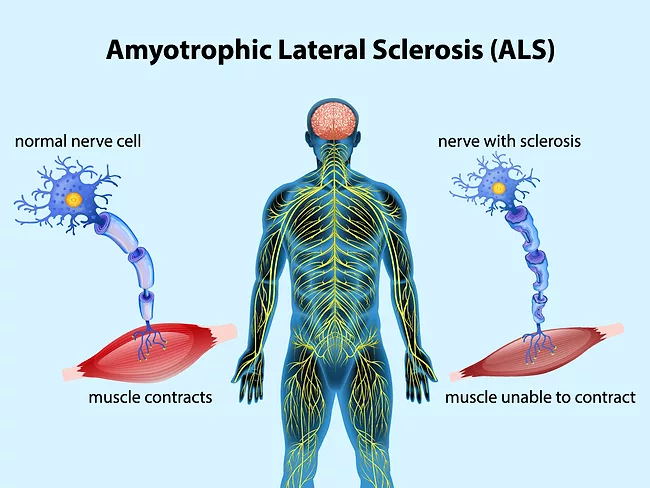
Amyotrophic lateral sclerosis (ALS) is a fatal neurodegenerative disease characterized by failure of motor neurons that lead to paralysis. To date, no treatment exists for ALS that focuses on improving neuromuscular transmission, which would improve quality of life for ALS patients.
FDA approval of Aduhelm (aducanumab), as the first disease modifying drug for Alzheimer’s, may have had a distinctly lukewarm reception in some quarters, but it is an important starting point in treating dementia, with a myriad of other avenues now being pursued in discovery and development.
If you believe the theme of the World Dementia Council (WDC) meeting in London this week, dementia is “in a new era,” where it will be possible to prevent, diagnose and treat neurodegenerative disease. That is not the case for most people living with dementia today, but the approval of the first disease-modifying drugs and the imminent arrival of new blood-based biomarkers is “a big moment,” Lenny Shallcross, executive director of WDC told the meeting on Mar. 20.
Hangzhou Healzen Therapeutics Co. Ltd. has divulged potassium voltage-gated channel subfamily KQT member 2/3 (KCNQ2/3) activators reported to be useful for the treatment of epilepsy, among others.
Artivila Therapeutics (Shenzhen) Co. Ltd. has identified NAD(+) hydrolase SARM1 (SAMD2; MyD88-5) inhibitors reported to be useful for the treatment of Alzheimer's and Parkinson's diseases, multiple sclerosis, amyotrophic lateral sclerosis and peripheral neuropathy.
Nurexone Biologic Inc. has released further results from a preclinical study of Exopten demonstrating effective treatment of 75% of paralyzed rats suffering from spinal cord injuries.
If you believe the theme of the World Dementia Council (WDC) meeting in London this week, dementia is “in a new era,” where it will be possible to prevent, diagnose and treat neurodegenerative disease. That is not the case for most people living with dementia today, but the approval of the first disease-modifying drugs and the imminent arrival of new blood-based biomarkers is “a big moment,” Lenny Shallcross, executive director of WDC told the meeting on Mar. 20.
With phase III data in hand from the Emergent-3 study of Karxt (xanomeline plus trospium) in adults with schizophrenia, Karuna Therapeutics Inc. continues to target mid-2023 for an NDA submission to the U.S. FDA. The 256-subject trial met its primary endpoint, with Karxt turning up a statistically significant and clinically meaningful 8.4-point reduction in Positive and Negative Syndrome Scale total score compared to placebo at the fifth week.
The neuron-specific K+/Cl- co-transporter KCC2 is involved in the shift from depolarizing to hyperpolarizing γ-aminobutyric acid receptor (GABAAR) currents and subsequent synaptic inhibition.