Merck Sharp & Dohme LLC has identified NLRP3 inflammasome inhibitors reported to be useful for the treatment of atherosclerosis, nonalcoholic or metabolic dysfunction-associated steatohepatitis (NASH/MASH), neuroinflammation, inflammatory skin, inflammatory joint and autoimmune diseases, Alzheimer’s disease and Parkinson’s disease, among others.
Vanderbilt University has synthesized muscarinic M4 receptor positive allosteric modulators (PAMs) reported to be useful for the treatment of Alzheimer’s disease, pain, schizophrenia and sleep disorders.
The oxidase, cytochrome c, assembly 1-like (OXA1L) gene plays a key role in inserting and assembling proteins in the inner mitochondrial membrane, and recent studies have linked some variants to mitochondrial encephalopathy. However, the exact disease mechanism and causal link remain unclear.
The U.K. Medicines and Healthcare Products Regulator Agency dropped a guidance for digital mental health technologies that clarifies several key points, such as when the DMHT qualifies as software as a medical device.
Researchers at Washington University reported the preclinical validation of [18F]FQ-NeuroROS, a redox-sensitive reporter probe for imaging neuroinflammation in preclinical models of multiple sclerosis (MS). MS is a chronic autoimmune disorder of the central nervous system (CNS), characterized by inflammatory cell infiltration, demyelination and axonal damage.
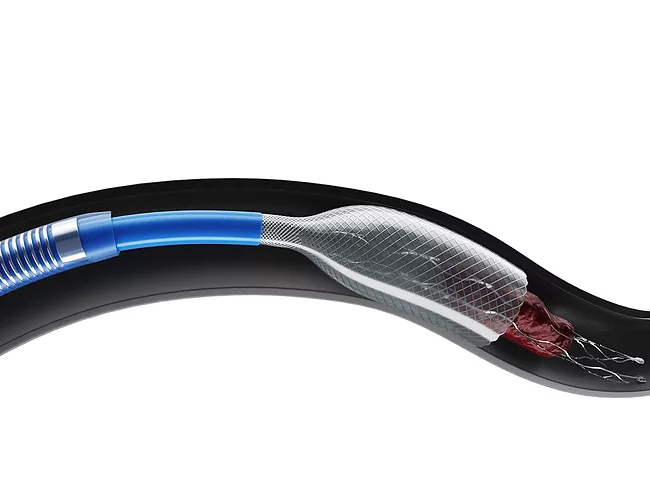
Anaconda Biomed SL recently received CE mark for the Ana5 funnel catheter, designed to improve mechanical thrombectomy in the treatment of acute ischemic stroke. The company hopes that the device, which has a vessel-matching diameter funnel to maximize the capture of blood clots, could be the holy grail in mechanical thrombectomy.
Australia’s largest health insurance company, Medibank Private Ltd., is the first to reimburse for psychedelic treatment in Australia, funding Emyria Ltd.’s MDMA (3,4-methylenedioxy-methamphetamine) program for post-traumatic stress disorder offered through the Perth Clinic.
The joining of psychedelic specialists Beckley Psytech Ltd. and Atai Life Sciences can now go ahead after the pair announced positive top-line results from the phase IIb study of BPL-003, an intranasal formulation of 5-MeO-DMT benzoate.
Shenzhen Bay Laboratory has synthesized G protein-coupled receptor GPR139 agonists reported to be useful for the treatment of Parkinson’s disease, epilepsy, pain, depression, schizophrenia, substance abuse and dependence, post-traumatic stress and autism spectrum disorders.

 RSS
RSS