Galapagos NV is about to bury its recent turbulent past and sail off for the future with its $3 billion cash pile and the new name of Lakefront Biotherapeutics NV. The foundation for the transition was laid earlier this month in an arrangement with Gilead Sciences Inc., holder of 25% of Galapagos’ equity, to “co-parent” the assets of Ouro Medicines LLC, which Gilead is acquiring for up to $2.17 billion.
Dysregulated type 2 immune responses are central in atopic dermatitis (AD) pathophysiology. Key cytokine IL-13 drives epidermal barrier dysfunction and inflammation, while IL-31 mediates pruritus via activation of sensory neurons. Both represent clinically validated, complementary targets addressing both inflammation and itch in AD.
Hidradenitis suppurativa (HS) is a chronic inflammatory skin disease characterized by dysregulated T-cell-mediated immune responses and suboptimal outcomes with current therapies. Increased expression of OX40 and OX40L in lesional HS skin suggests a contributory role for this pathway in disease-associated inflammation.
Multispecifics took center stage at this year’s ESMO TAT, emerging as one of the hottest trends in oncology research. Unlike traditional small-molecule drugs or monoclonal antibodies that typically target a single protein, multispecific compounds are engineered to harness multiple mechanisms of action within a single molecule. They orchestrate biology rather than just blocking it.
Biolojic Design Ltd. has earned an additional milestone payment from its collaboration partner, Teva Pharmaceutical Industries Ltd., for TEV‘325 (TEV-56308, formerly BD-9), a multibody targeting IL-13 and thymic stromal lymphopoietin (TSLP) for autoimmune disease
Excalipoint Therapeutics Inc. launched with an oversubscribed $68.7 million seed financing round to advance a portfolio of T-cell engagers for solid tumors, marking one of the largest early stage financings in China biotech history.
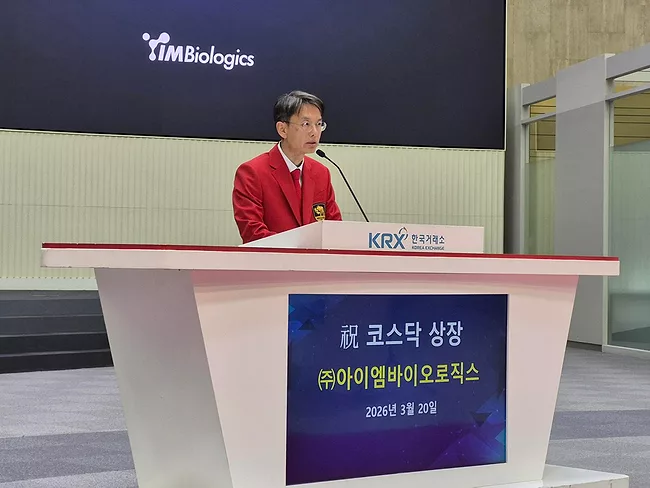
Imbiologics Corp.’s market capitalization reached ₩1.5 trillion (US$1.02 billion) on its Kosdaq debut March 20, as the biotech seeks to become a leading antibody drugmaker for autoimmune diseases.
Early clinical data from Simcere Pharmaceutical Group Ltd. suggest its PD-L1/IL-15 bispecific antibody, SIM-0237, could emerge as a next-generation contender in Bacillus Calmette-Guérin-unresponsive non-muscle-invasive bladder cancer.
Laigo Bio BV has extended its seed round to €17 million (US$19.8 million), after making progress with translating its novel E3 ubiquitin ligase targeted protein degradation technology toward the clinic.
Imbiologics Corp.’s market capitalization reached ₩1.5 trillion (US$1.02 billion) on its Kosdaq debut March 20, as the biotech seeks to become a leading antibody drugmaker for autoimmune diseases.
 RSS
RSS