For companies in the life sciences, patent subject matter eligibility has acquired a bad reputation, but the U.S. Patent and Trademark Office (PTO) has attempted to provide administrative workarounds to the problem. PTO director Kathi Vidal said recently, however, that the agency intends to revisit its guidance, just one of several steps the PTO is taking to eliminate some of the drag on patent applications in the U.S.
After political leaders across the globe made patents and other intellectual property safeguards the scapegoat for disparities in access to COVID-19 vaccines, the biopharma industry is sharing its vision for how to deal with the foundational issues of equitable access in pandemics to come – and it has nothing to do with IP waivers like the one World Trade Organization members adopted last month.
Patent subject matter eligibility under Section 101 of the Patent Act has proven controversial for patents in the U.S. thanks in no small part to Supreme Court jurisprudence in cases such as Alice v. CLS Bank and Mayo v. Prometheus. In the latest development, the court has declined to hear the American Axle case, leaving many observers despairing of any chance of restoring a decent patent system for personalized medicine, companion diagnostics and even the use of artificial intelligence in drug development.
Hot on the heels of a groundbreaking deal brokered by the U.K.’s NICE to finance an antibiotic with a subscription-style payment plan, three European life sciences companies have formed a joint venture (JV) to create next-generation antimicrobials and diagnostics to fight antimicrobial resistance.
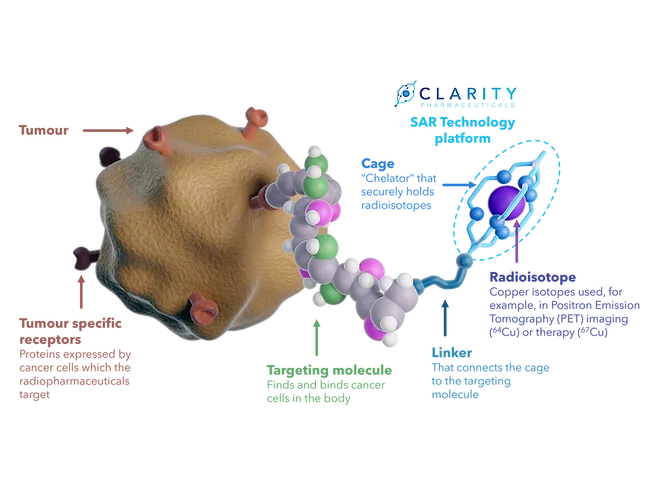
Clarity Pharmaceuticals Ltd. is progressing three of its targeted copper theranostics through the clinic that are based on its sarcophagine technology that securely holds copper isotopes inside a cage-like structure, called a chelator. The SAR technology allows a unique pairing of copper isotopes, copper-64 and copper-67, for both cancer diagnosis and therapy.
Oxford University has opened the doors to its new Pandemic Sciences Institute, a £100 million (US$119.5 million) initiative to build on the research and experience of COVID-19, to counter future pandemic threats.
A lot of eyes are on the World Trade Organization (WTO) Ministerial Conference taking place in Geneva June 12-15, as member countries try to reach a consensus on a proposal that would allow certain members to waive intellectual property (IP) rights on COVID-19 vaccines for at least three to five years.
A year after the World Health Organization's (WHO) Independent Panel for Pandemic Preparedness and Response called for reforms to make COVID-19 the last pandemic, the panel remains solidly frustrated in its lack of progress.
In an effort to increase global access to COVID-19 technologies, the World Health Organization’s COVID-19 Technology Access Pool and the Medicines Patent Pool finalized a licensing agreement May 12 with the U.S. NIH for research tools, early stage vaccines and diagnostics.
A proposal hammered out by the EU, India, South Africa and the U.S. to allow IP waivers for COVID-19 vaccines is headed to all members of the World Trade Organization (WTO) for consideration.
 RSS
RSS