AI and advanced biotechnology are reshaping South Korea’s med-tech sector, but great technology alone is not enough to build a successful medical device company, speakers said at MedTech Innovator’s Medtech Spotlight: New Impact Korea 2026.
Roche Holding AG received CE Mark approval for its Elecsys Apolipoprotein E4 (ApoE4) biomarker test, an in vitro diagnostic immunoassay to identify the ApoE4 gene variant from a blood sample. With APOE4 considered as the strongest genetic risk factor for developing Alzheimer’s disease, the test provides a fast, reliable way to determine whether an individual carries the genetic variant without the need for DNA‑based genotyping.
There is broad agreement that psychiatric diagnoses in their current form are not reflective of any underlying biology, and that this is one of the things hampering psychiatric drug development. “We are still fully reliant on descriptive diagnoses that yield heterogeneous patient cohorts,” Steve Hyman told the audience at the European Congress of Neuropsychopharmacology (ECNP) Roadmap Meeting on Precision Psychiatry in Amsterdam in January.
Agilent Technologies Inc. has agreed to buy Biocare Medical LLC for $950 million in cash in a bid to strengthen its pathology portfolio. The deal adds Biocare’s complementary immunohistochemistry antibodies, reagents and instruments portfolio to Agilent’s existing offerings, and expands its ability to serve a wider range of pathology laboratories across clinical and research settings.
In handing a win to Regenxbio Inc., the U.S. Court of Appeals for the Federal Circuit also cleared some leaves from the 101 patent eligibility threshold after years of Supreme Court decisions cluttering the passageway.
Grail Inc.’s share price dropped more than 50% in premarket trading Feb. 20 after it reported late the day before that the NHS-Galleri trial did not meet its primary endpoint. The U.K study, done though the National Health Service with 142,000 individuals enrolled, evaluated the ability of Grail’s Galleri multicancer early detection test to look for cancer-specific methylation patterns in blood.
Med-tech companies with an AI component in their solutions will certainly find investors willing to back them. AI after all, is being used to develop more effective, smarter technologies. However, investors will only deploy capital into innovations that address genuine clinical needs. The aging population is driving interest in devices targeting cardiovascular and musculoskeletal disorders, and other solutions geared toward neurological conditions, women’s health and diagnostics are also attracting investor attention.
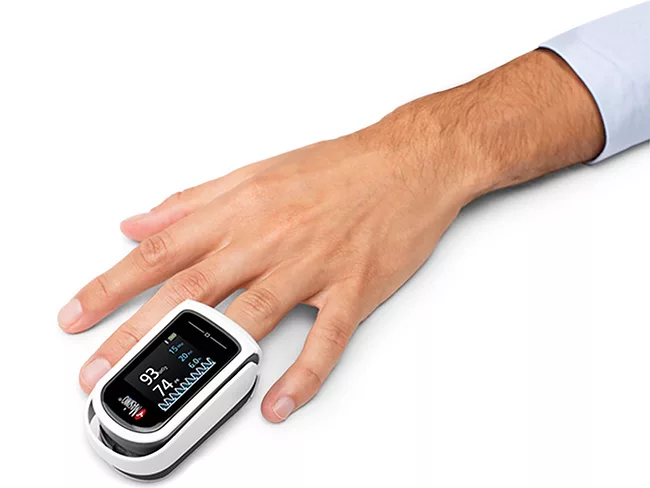
Danaher Corp. agreed to acquire Masimo Corp. for $9.9 billion in a move to strengthen its diagnostics business. Under the terms of the agreement, Danaher will acquire all the outstanding shares of Masimo for $180 per share in cash, representing a 38.3% premium to Masimo’s last closing price.
An AI-based software developed by Screenpoint Medical BV could help detect breast cancers earlier and reduce the number of cancers that appear between routine screenings. In a trial of over 100,000 women, the use of the company’s Transpara Detection system resulted in a 12% reduction in the rate of interval cancers, compared to standard mammography screening. The results from the Mammography Screening with Artificial Intelligence study was published in the Lancet.
Australian respiratory imaging technology company 4dmedical Ltd. raised AU$150 million (US$105 million) in an institutional placement to accelerate U.S. adoption of its CT:VQ lung imaging software to bolster the company’s lead in software-based lung imaging.
 RSS
RSS


-biomarker-test.webp?height=488&t=1773783523&width=650 "Elecsys Apolipoprotein E4 (ApoE4) biomarker test")