Alongside its duties in evaluating safety and effectiveness of drugs and their postmarketing monitoring, the U.K. Medicines and Healthcare products Agency (MHRA) has now been handed a further brief to support economic growth.
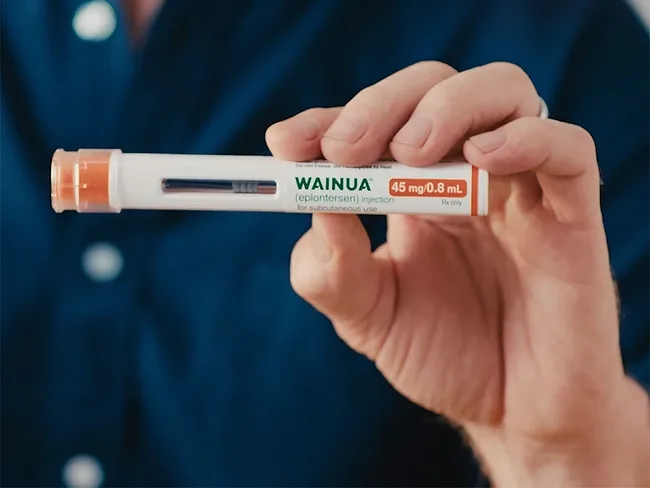
The synergy – or lack of it – between knockdown drugs and stabilizers in treating transthyretin (TTR)-mediated amyloid cardiomyopathy (ATTR-CM) became one of the topics for debate in the aftermath of the phase III fizzle with gene silencer Wainua (eplontersen), advanced by Astrazeneca plc and Ionis Pharmaceuticals Inc.
News of the unexpected phase III failure of the gene silencing drug Wainua (eplontersen) in the treatment of transthyretin-mediated amyloid cardiomyopathy sent Astrazeneca plc’s shares (NYSE:AZN) down $10.88 to close July 9 at $178.40.
The gene therapy specialist formerly known as EG427 has a new name and fresh momentum, after closing a €33 million (US$37.7 million) series C that will further advance clinical development of the lead program in chronic neuro-urology indications.
Novartis AG is to pay $1.1 billion up front to acquire Myricx Bio Ltd., a preclinical-stage antibody-drug conjugate (ADC) specialist that is advancing a novel and more potent class of payload. With the first two programs due to enter clinical development before the end of the year, the Swiss pharma also will pay up to $400 million more in potential milestones. The centerpiece of the deal is London-based Myricx’s N-myristoyltransferase inhibitors, which in preclinical testing have prompted complete and durable tumor regression at well-tolerated doses in a range of solid tumors.
Ipsen SA announced its second acquisition of the week, saying it will pay €700 million (US$797 million) for Memo Therapeutics AG and its phase III-ready drug potravitug, a treatment for BK virus-associated infections and nephropathy in immune-compromised kidney transplant patients.
The academic authors of the paper describing the pivotal trial of Amgen Inc.’s Tavneos (avacopan) have retracted it from The New England Journal of Medicine because the primary endpoint assessments of nine patients were “re-adjudicated” after the database was locked and the study unblinded.
Deep brain stimulation (DBS) through implanted electrodes has enabled fundamentally new ways of treating certain disorders. More than 100,000 severely ill patients have received an implant to treat Parkinson’s disease, which is DBS’ greatest success story.
Roche Holding AG is looking to take a share of Illumina Inc.’s dominance in the gene sequencing market with the launch of Axelios 1, its next-generation sequencing (NGS) platform designed for accuracy, speed, flexibility, scalability and cost efficiency. The move signals a potential shift in the sequencing landscape as the technology aims to address critical bottlenecks in genomics.
Following an initial rebuff in February 2026, the EMA’s Committee for Medicinal Products for Human Use (CHMP) is recommending approval of Acadia Pharmaceuticals Inc.’s Daybu (trofinetide) for treating neurobehavioral symptoms of Rett syndrome, after it took another look at the file.
 RSS
RSS