Life science companies doing business during a pandemic may believe that patients, judges and juries will look kindly on products that don’t perform as promised, but that may be an empty wish.
The FDA’s bright line between orphan designation and exclusivity was erased, again, Monday for some drugs when the U.S. Court of Appeals for the District of Columbia denied the agency an en banc rehearing of Eagle Pharmaceuticals Inc. v. Alex Azar.
Qui tam litigation holds a dear place in the hearts of U.S. federal prosecutors and whistleblowers alike, but the volume of these cases ebbed as the COVID-19 pandemic swept across the nation. A report by Gibson, Dunn & Crutcher LLP makes clear, however, that despite the pandemic-induced drag, these cases are resuming their historical pace, and makers of drugs and devices are once again the most frequently targeted type of business.
Two decades after the federal government jumpstarted U.S. R&D investment in its understanding and control of nanoscale matter, funding for the efforts across the government reached about $1.4 billion in fiscal 2020, part of a total cumulative investment of about $29 billion. Though FDA-budgeted nanotech research has accounted for just a fraction of that, at a modest $133 million since 2009, substantial advances have still been made, according to a presentation on the state of nanotech progress and innovation issued this summer.
While the U.S. and other countries are looking to step up their own domestic drug and device manufacturing, a bigger takeaway from the COVID-19 pandemic is the need for resilient supply chains that can withstand a global scramble for products suddenly more in demand than the supply can support.
“There’s a difference in knowing something and realizing something. We’ve known for quite a while now that we’re too dependent on other countries for our medical supplies. But during this pandemic, I think we’ve realized it,” U.S. Rep. Buddy Carter (R-Ga.) said at a recent congressional hearing on the progress being made in developing COVID-19 vaccines.
With the economy and public health on the line, U.S. President Donald Trump thumped his Made in America pulpit again Thursday on a campaign swing through Ohio, in which he vowed to bring the pharmaceutical supply chain home over the next four years.
Citing the limited supplies and the pricing of the COVID-19 therapy, nearly three dozen U.S. states and territories are clamoring for the federal government to march in on Gilead Sciences Inc.’s patents for remdesivir. And if the feds won’t, then states should be given that authority, according to a letter sent Tuesday to the Department of Health and Human Services, the NIH and the FDA.
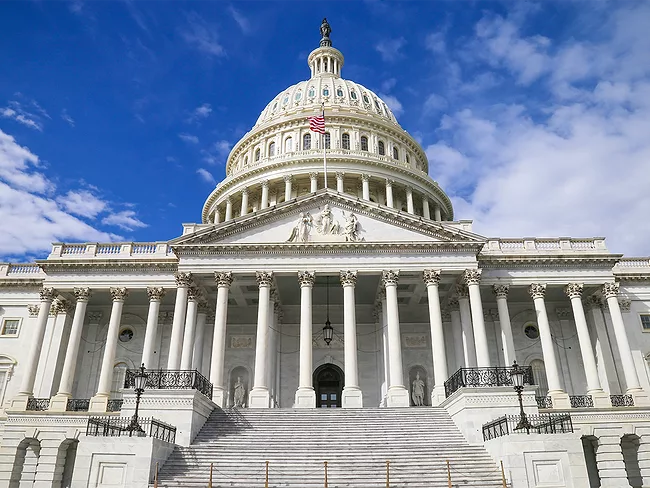
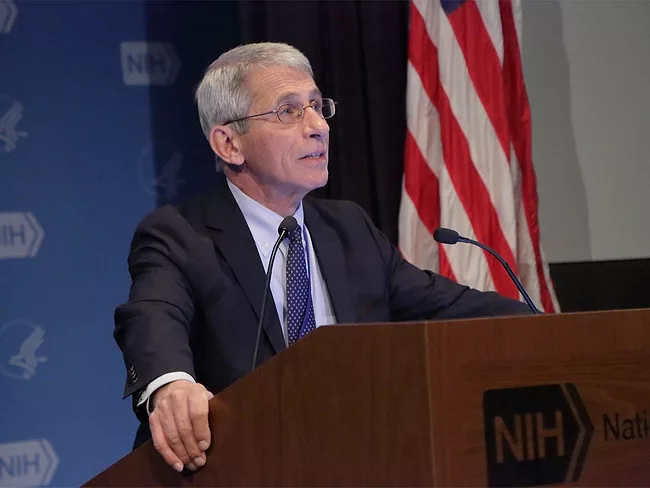
The issue of the U.S. federal government’s response to the COVID-19 pandemic was revisited yet again in a hearing in the House of Representatives. While partisanship was on full display, Anthony Fauci, director of the National Institute of Allergy and Infectious Diseases, said he is “cautiously optimistic” about the prospects for a vaccine and that the development of candidates has not compromised scientific principles.
In a time when the FDA needs its best and brightest people onboard, nearly half the senior leadership at the agency will be eligible for retirement by Sept. 30.
 RSS
RSS