Ill-considered government policies, pharmacy benefit manager market abuses and an unpredictable future are casting doubt on the long-term sustainability of the U.S. biosimilar market, Craig Burton, the executive director of the Biosimilars Council, told a House Ways & Means subcommittee April 8.
When an autoimmune disease disrupted the life of someone close to scientist Dario Gutierrez, an idea emerged for a new company called Merida Biosciences focused on removing misdirected antibodies and their negative effects using Fc biotherapeutics.
Cartesian Therapeutics Inc. followed up December’s phase IIb data with more good news regarding Descartes-08, offering 12-month efficacy and safety results that whetted Wall Street’s appetite for the phase III Aurora effort ahead. Milos Miljkovic, chief medical officer, told BioWorld that minimum symptom expression – among the areas where Descartes-08 shone, providing relief for “months and months after the last dose of treatment” – is especially important to patients.
Women have substantially greater relative risk of major adverse cardiovascular events associated with a variety of plaque measures assessed by Cleerly Inc.’s AI-enhanced quantitative coronary computed tomography than men, an post hoc analysis of the CONFIRM2 trial found.
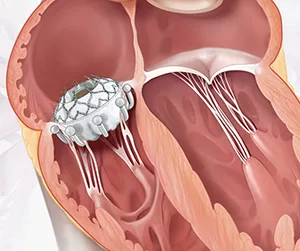
The U.S. Centers for Medicare & Medicaid Services (CMS) issued a draft coverage memo for transcatheter edge-to-edge repair for the tricuspid valve (T-TEER), which is a development that promises accelerated competition for this anatomical space.
Diopsys Inc. agreed to pay $14.25 million to settle allegations it violated the False Claims Act (FCA) in encouraging the unnecessary use of the company’s Nova device for retinal testing.
A late 2024 CMS proposal to include obesity drugs like Novo Nordisk A/S’ Wegovy (semaglutide) and Eli Lilly and Co.’s Zepbound (tirzepatide) under Medicaid and Medicare didn’t make it far under the new U.S. administration. A final rule, set to be published in the Federal Register April 15, will not include the provision that would have added obesity drugs to Part D coverage beginning in 2026.
The nationwide preliminary injunction keeping the U.S. NIH from slashing its indirect cost rate to a flat 15% has become permanent. In issuing the permanent injunction and final judgment April 4 in three challenges to the rate change, Judge Angel Kelley, of the U.S. District Court for the District of Massachusetts, said the NIH’s Feb. 7 notice that it would begin imposing the 15% rate Feb. 10 to all existing and future grants violated the Administrative Procedure Act, as the action was arbitrary and capricious, was impermissibly retroactive and failed to follow notice-and-comment procedures.
Mehmet Oz won the U.S. Senate’s nod as the administrator of the Centers for Medicare & Medicaid Services. Oz brought in 53 aye votes to 45 nays in the Senate’s April 3 confirmation tally, and inherits a complicated task as the Medicare breakthrough devices coverage program continues to face substantial challenges.
“The nation’s scientific enterprise is being decimated.” That statement in an open letter “to the American people” signed by 1,800 members of the U.S. National Academies, is made concrete in a list of 709 NIH grants – and counting – that have been axed since President Donald Trump was inaugurated on Jan. 20.
 RSS
RSS