It’s a quad-pack for Edwards Lifescience Corp. as it reported its third and fourth deals this month – agreements to buy Jenavalve Technology Inc. and Endotronix Inc. for a combined up-front cost of about $1.2 billion plus up to $445 million in contingent milestone payments.
Regulation of artificial intelligence for medical devices is still a developing space, but market competition authorities in the European Union, the U.K. and the U.S. are already examining the potential for anticompetitive behavior in this rapidly growing technological arena.
The July 25 meeting of the U.S. FDA’s Oncologic Drugs Advisory Committee (ODAC) could impact the future development of immune checkpoint inhibitors, such as Astrazeneca plc’s Imfinzi, to treat patients with non-small-cell lung cancer (NSCLC) both before and after surgery. Although much of the discussion will focus on an sBLA for Imfinzi (durvalumab), the committee will be asked to vote on whether the FDA should require that new trial design proposals for perioperative regimens for resectable NSCLC include adequate within-trial assessment of the contribution of the treatment phase to efficacy results.
The U.S. Patent and Trademark Office has provided updated guidance on the question of patent subject matter eligibility for inventions that rely on artificial intelligence, stating that a patent claim that does little more than recite an abstract idea is not subject-matter eligible.
In only the third such change in two decades, the FDA’s device center bids farewell to its director with the announcement that Jeff Shuren will leave the agency in the final weekend of July 2024.
Owens & Minor Inc. plans to acquire Rotech Healthcare Holdings Inc. in a $1.36 billion cash transaction expected to close by year end. The deal shows serious commitment to a strategy outlined in December to build out its home health business.
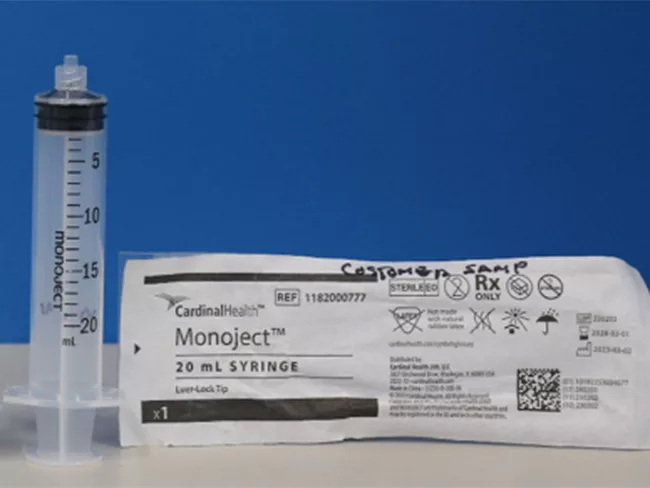
The U.S. FDA literally wasted no time in posting twin warning letters to two companies in China that manufacture syringes that were the subjects of multiple recalls in the U.S.
Samsung Bioepis Co. Ltd., of Incheon, South Korea, gained U.S. FDA approval of Epysqli (eculizumab-aagh) as the second biosimilar product to Alexion Pharmaceuticals Inc.’s Soliris (eculizumab) to treat two rare diseases. The regulatory clearance July 22 grants use of Epysqli to treat paroxysmal nocturnal hemoglobinuria and atypical hemolytic uremic syndrome – two rare hematologic- and kidney-related disorders known to affect about 50,000 and 5,000 patients in the U.S., respectively.
Aussie biotech Alterity Therapeutics Ltd. released interim data of an open-label phase II trial for lead candidate ATH-434 for treating multiple system atrophy that showed 43% of participants improved, with 29% showing either stable or improved neurological symptoms.
The U.S. Department of Health and Human Services’ Office of the Inspector General disclosed an advisory opinion finding Bluebird Bio Inc.’s fertility support program for a gene therapy treatment could run afoul of federal anti-kickback statutes. That follows a similar opinion against Vertex Pharmaceuticals Inc., and its fertility program associated with gene-editing therapy Casgevy (exagamglogene autotemcel). Vertex subsequently filed a lawsuit.
 RSS
RSS