The U.S. FDA’s Center for Devices and Radiological Health has rewired its organizational structure on several fronts, including a promotion of its communication function into a “super office,” which the agency said will help it be more agile and responsive to its strategic priorities.
Aussie biotech Alterity Therapeutics Ltd. released interim data of an open-label phase II trial for lead candidate ATH-434 for treating multiple system atrophy that showed 43% of participants improved, with 29% showing either stable or improved neurological symptoms.
The U.S. FDA advised Agenus Inc. to conduct a phase III trial for its immunotherapy combination, botensilimab (bot) and balstilimab (bal), instead of seeking accelerated approval based on phase II data, sending company shares plunging by 58.8% July 18.
The bill the U.S. Senate passed to prune biologic patent thickets could be among the first in a legislative thicket aimed at prescription drug prices to make it through the Senate before the year ends.
The U.S. House Committee on Ways and Means held a field hearing in the State of Utah, during which committee chairman Rep. Jason Smith (R-Mo.), highlighted the need to continue to incentivize life science research in the U.S. Smith remarked that Republican members of the committee have formed “tax teams” to find ways that the tax code can be tweaked to “better incentivize research and development here in the U.S.,” another sign that the well-being of life science commerce is seen as a macroeconomic imperative in Washington.
Novocuff Inc. closed an oversubscribed $26 million series A funding round to support further development of the Novocuff cervical control system, which is designed to reduce preterm births by closing the cervix in high-risk pregnancies. The funds will enable the company to undertake a U.S. multi-center pivotal clinical trial, pursue marketing authorization, expand its team and begin early-stage commercialization of the device.
The coverage with evidence development (CED) process employed by the U.S. Medicare program may suffer from underutilization, but the authors of a new article in Value in Health see the attendant problems as administrative in nature. The issues include, but are not limited to, a lack of predictability as to when a CED study would be required for coverage of a medical device.
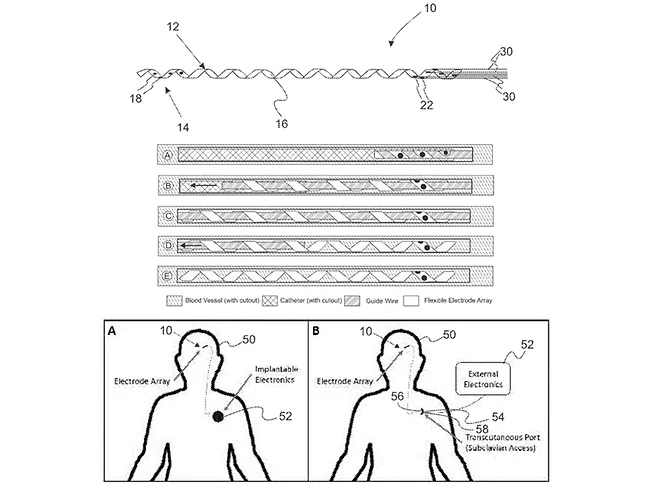
Researchers from the University of Southern California filed for protection of a thin film electrode array they developed to be implanted using endovascular methods for minimally invasive, high-resolution electrical recording and stimulation of the nervous system and other electrogenic tissue.
In one of the largest venture rounds for biopharma in 2024, Cardurion Pharmaceuticals Inc. closed a $260 million series B financing, with funds slated to advance and expand its pipeline for potentially first-in-class drugs targeting cardiovascular disease, including two programs in phase II development.
The U.S. House Committee on Ways and Means held a field hearing in the State of Utah, during which committee chairman Rep. Jason Smith (R-Mo.), highlighted the need to continue to incentivize life science research in the U.S. Smith remarked that Republican members of the committee have formed “tax teams” to find ways that the tax code can be tweaked to “better incentivize research and development here in the U.S.,” another sign that the well-being of life science commerce is seen as a macroeconomic imperative in Washington.

 RSS
RSS