With all the criticism the U.S. NIH has been getting of late, it’s not surprising that yet another reform proposal for the research agency is brewing in Congress. In unveiling a proposed framework to reform the NIH, House Energy and Commerce Committee Chair Cathy McMorris Rodgers (R-Wash.) recognized the critical role the agency plays in life-saving medical research and innovation.
Elutia Inc. received U.S. FDA clearance for its antibiotic-eluting bioenvelope. Designed to prevent post-operative complications from the implantation of cardiac devices such as pacemakers and defibrillators, Elupro (formerly Cangaroo RM) combines slow release of the antibiotics rifampin and minocycline with a biomatrix that stimulates regeneration of a tissue pocket to surround and protect the device.
For the third time in as many years, Health Canada, the U.S. FDA and the UK Medicines and Health Care Products Regulatory Agency have teamed up to issue a set of recommendations for artificial intelligence used in or as a medical device.
Criticisms over the U.S. FDA’s use of advisory committees led the agency to hold a June 13 public hearing during which FDA commissioner Bob Califf said the agency is working to improve the experience of special government employees who take part in these hearings.
Even patent attorneys aren’t particularly collectively excited about standard essential patents, but that hasn’t stopped the U.S. Patent and Trademark Office from signing a memorandum of understanding with the U.K. Intellectual Property Office to collaborate on policies related to these patents.
Just as it is for terminally ill cancer patients, time is of the essence for people in the early stages of Alzheimer’s disease. Thus, the clinical meaningfulness of Eli Lilly and Co.’s donanemab is the time it gives patients before the disease progresses, Reisa Sperling, a neurology professor at Harvard Medical School and director of the Center for Alzheimer’s Research and Treatment at Brigham and Women’s Hospital, told the U.S. FDA’s Peripheral and Central Nervous System Drugs Advisory Committee June 10.
A week after generating buzz with its proposed Nasdaq listing and plans to raise about $200 million, Telix Pharmaceuticals Ltd. withdrew its U.S. IPO filing, citing market conditions. The Australian radiopharma firm’s shares continue trading on the Australian Securities Exchange (TLX), where they closed June 14 at AU$16.61 (US$10.98), up AU15 cents.
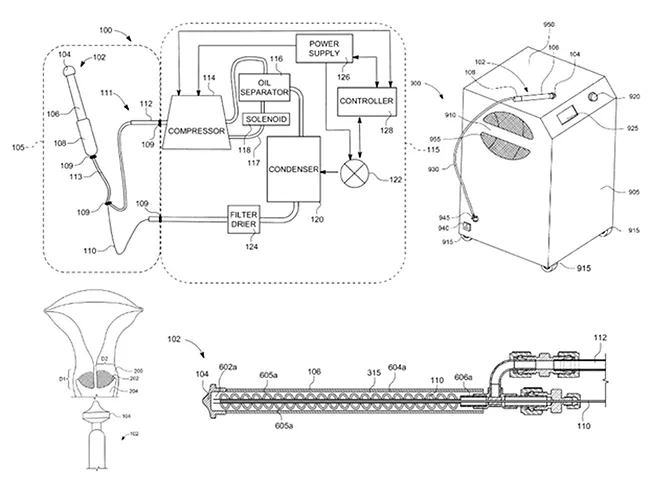
The first patenting from San Francisco-based Ananya Health Inc. describes its development of a closed-loop cryoablation platform to freeze abnormal cells before they become cervical cancer. The company’s device achieves ablative temperatures without consumable gas, making the procedure portable, battery-powered, and ten times cheaper than traditional cryoablation.
A survey of 1,025 consumers conducted by remote patient monitoring company Vivalink Inc. found that 84% of respondents would be willing to participate in hospital-at-home monitoring if it allowed them to leave the hospital earlier. Further, of those who had participated in a hospital-at-home program, 84% reported a positive experience.
The U.S. Supreme Court unanimously upheld the FDA’s relaxed regulation of the abortion drug mifepristone when it ruled June 13 that the organizations challenging those changes lacked the standing to do so.

 RSS
RSS