Moderna Inc. gained U.S. FDA approval on May 31, nearly three weeks past its original PDUFA date, for its respiratory syncytial virus (RSV) vaccine Mresvia (mRNA-1345), which had both breakthrough therapy and fast track designations in the U.S.
The U.S. Department of Justice announced May 29 that Innovasis Inc., of Salt Lake City and two of the company’s executives have agreed to pay $12 million over allegations of payment of kickbacks to surgeons.
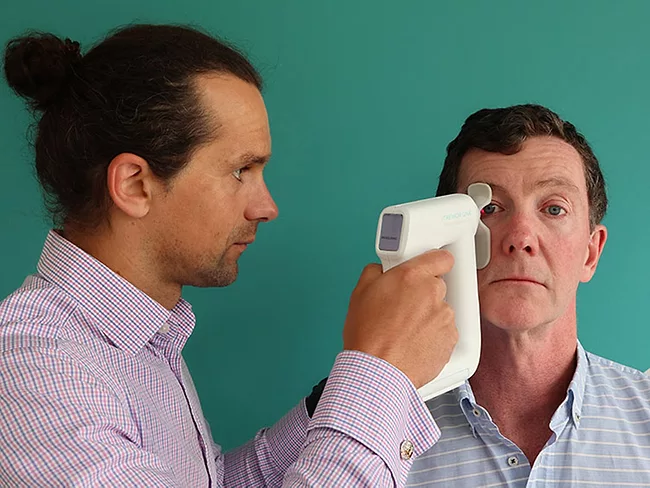
Two companies – Head Diagnostics Ltd. and Octave Bioscience Inc. – identified biomarkers that could provide objective assessments of disease progression and response to treatment for patients with multiple sclerosis.
Despite U.S. NIH policy and its peer-review grant process, providing for inclusive enrollment in phase III NIH-funded clinical trials seems to be a check-the-box exercise for many researchers. In a review of a sample of phase III NIH-funded trials conducted between 2016 and 2020, the Health and Human Services Office of Inspector General found that two-thirds had the required inclusive enrollment plans, but 57% of the trial plans provided no explanation or rationale for the enrollment targets.
South Korea’s Hanall Biopharma Co. Ltd., of Songpa-gu, Seoul, agreed to an exclusive licensing deal with San Francisco-based Turn Biotechnologies Inc. to develop novel ophthalmic and optic therapies using the latter’s mRNA-based technology.
The problem of counterfeit devices has perplexed the U.S. FDA for some time, given that the agency had previously been forced to send the illicit products back to the originator, only to see the same devices reenter the U.S.
Surmodics Inc. reported plans to be acquired by private equity firm Golder, Thoma, Cressey, Rauner Inc. for $43 a share for a total equity valuation of approximately $627 million. The per-share acquisition price represents a 41.1% premium to Surmodics’ 30-trading day volume-weighted average closing price through May 28, 2024.
The American Society of Clinical Oncology (ASCO) begins its 2024 annual meeting at the cavernous and labyrinthine McCormick Place convention center in Chicago Friday, May 31. It’s one of the world’s largest cancer research conferences and can be daunting to follow. More than 400 organizations will participate this year, with about 200 sessions ready to convene. The vast majority of the 5,000 abstracts that cover all aspects of cancer treatment have already been released, and they will be scrutinized by the more than 40,000 attendees from around the world.
The American Clinical Laboratory Association has followed through on its promise to file suit against the U.S. FDA over the agency’s final rule for lab-developed tests. The lawsuit will be heard in the U.S. District Court for the Eastern District of Texas, which is also the venue for litigation against another federal government agency, the Federal Trade Commission, suggesting that litigants expect a favorable review of their case in this court.
Merck & Co. Inc. is shelling out $1.3 billion in cash up front to acquire privately held Eyebiotech Ltd., gaining rights to the latter’s pivotal trial-ready diabetic macular edema drug and a pipeline of earlier-stage candidates targeting vision loss. An additional $1.7 billion could follow in development, regulatory and commercial milestones, raising the deal total to $3 billion.
 RSS
RSS