Citing significant implications for patients with advanced Parkinson’s disease, as well as the broader public interest that’s at stake, the U.S. FTC filed an amicus brief in Sage Chemical Inc.’s district court challenge of Supernus Pharmaceuticals Inc.’s strategies to block generic competition of its injectable Parkinson’s drug, Apokyn (apomorphine).
As Medtronic plc. is fond of pointing out, the garage inventor has been the stuff of legend in U.S. business lore, providing a wide range of economically impactful inventions over the two-plus centuries since the U.S. patent system came into being.
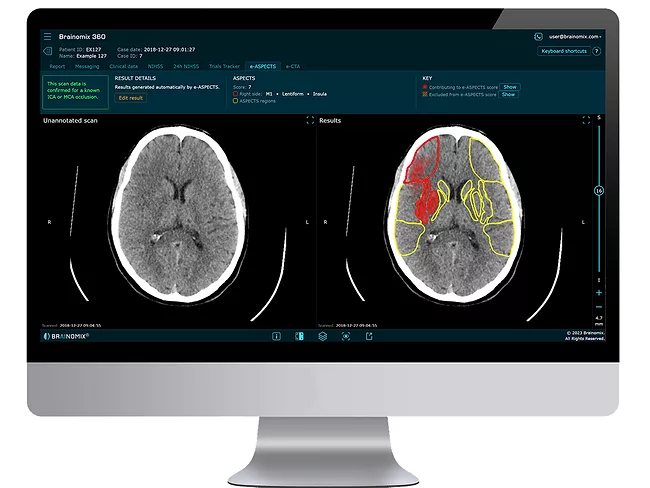
Brainomix Ltd. received U.S. FDA clearance for its Brainomix 360 E-aspects tool, a fully automated AI-imaging solution for stroke assessment. Powered by explainable AI, the Brainomix 360 E-aspects tool, which is already CE-marked, assesses non-contrast CT scans to automatically generate a score and measures the volume of ischemic signs. It also features an overlaid heatmap to visually assist clinicians when treating stroke patients.
While U.S. policymakers focus on drug prices, mandatory federal spending on Medicare and Medicaid for 2010 through 2020 was actually 9% lower than what the Congressional Budget Office (CBO) projected in 2010. One of the “significant sources” the CBO cited for its off-the-mark projection was less-than-anticipated spending for Medicare Part D prescription drugs due to new generic competition and fewer new brand drugs being launched. In light of reality, the CBO has lowered its long-term projection of health spending through 2033.
Spectrawave Inc. said U.S. FDA clearance of its flagship intravascular Hypervue imaging system will help physicians optimize coronary stenting in the cardiac catheterization lab.
Elekta AB received U.S. FDA clearance for what it called a “groundbreaking upgrade” of its MR-Linac platform which can continuously calculate the movement of a tumor anywhere in the body. The company said the Elekta Unity’s comprehensive motion management platform provides clinicians with enhanced, adaptive radiation therapy workflow to track moving organs such as the prostate, liver and pancreas.
March 17 brought neither good luck nor good news to Pear Therapeutics Inc. Just prior to the opening bell, the prescription digital therapeutics company reported that it had engaged MTSA Health Partners LP to explore strategic alternatives for the company. In addition, Pear filed an 8-K with the SEC withdrawing its revenue and operating guidance for fiscal 2022 and 2023 and indicating that it does not plan to hold a fourth quarter and full year 2022 earnings conference call and webcast.
Sarepta Therapeutics Inc. CEO Doug Ingram said the U.S. FDA has promised to schedule “expeditiously” an advisory committee meeting on the BLA related to SRP-9001 (delandistrogene moxeparvovec) for Duchenne muscular dystrophy (DMD).
Citing clinical trial data backed by real-world data, members of the U.S. FDA’s Antimicrobial Drugs Advisory Committee voted overwhelmingly, 16-1, March 16 that the overall benefit-risk assessment is favorable for the use of Pfizer Inc.’s Paxlovid to treat mild to moderate COVID-19 in adults who are at high risk for progression to severe COVID-19, including hospitalization or death.
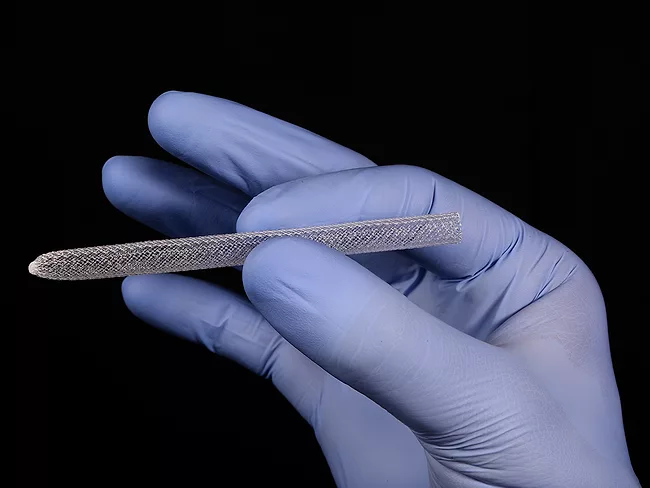
Woven Orthopedic Technologies LLC, received U.S. FDA 510(k) clearance for its Ogmend implant enhancement system for use in spine surgery. Ogmend is expected to give surgeons more confidence in using surgical screws when operating in compromised fixation scenarios.

 RSS
RSS