Epitomee Ltd. happily swallowed the news of U.S. FDA clearance for its capsule for weight management, an ingestible medical device for adults who are overweight or obese. Designed for use along with diet and exercise, the capsule expands in the stomach to create a feeling of fullness that lasts up to six hours.
The U.S. Department of Health and Human Services reported the winners of the Leading Edge Acceleration Projects in Health Information Technology program, with a couple of key areas of interest.
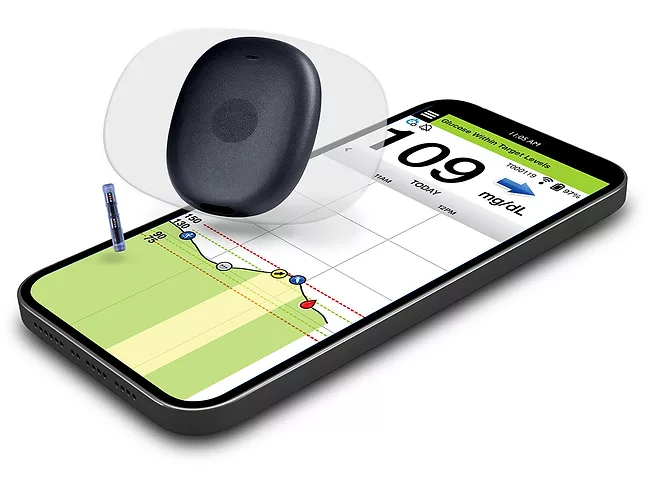
The U.S. FDA cleared Senseonic Holdings Inc.’s Eversense 365, the first continuous glucose monitor to last a full year with a single sensor rather than the 10 days to two weeks typical for wearable sensors such as those offered by Abbott Laboratories and Dexcom Inc.
With an eye on shutting down national security threats and securing American innovation, the U.S. House overwhelmingly passed the Biosecure Act Sept. 9 with a vote of 306-81. The next stop on the bill’s path to enactment is a Senate vote and, if it gets that, then on to the president’s desk.
This is a very exciting time for med-tech in Europe despite companies facing regulatory and funding challenges, Todd Brinton, corporate vice president, advanced technology, and chief scientific officer at Edwards Lifesciences Corp. told BioWorld.
The U.S. FDA cleared Senseonic Holdings Inc.’s Eversense 365, the first continuous glucose monitor to last a full year with a single sensor rather than the 10 days to two weeks typical for wearable sensors such as those offered by Abbott Laboratories and Dexcom Inc.
The U.S. FDA’s draft guidance for predetermined change control protocols (PCCPs) is out for comment, but a recent agency webinar highlighted some areas of ambiguity.
The U.S. FDA reported Sept. 17 that the Zimmer Biomet Holdings Inc. CPT hip system is associated with an increased risk of thighbone fracture, a problem Zimmer acknowledged with a July 2, 2024, class II recall.
The Nov. 20-21 meeting of the digital health advisory committee will discuss the use of generative artificial intelligence algorithms in medical devices with a focus on the total product life cycle – a theme that suggests a concern on the agency’s part regarding the reliability of these algorithms’ output.
Exact Sciences Corp. reported performance data for its blood-based colorectal cancer screening test that showed sensitivities of 88.3% for CRC and 31.2% for advanced precancerous lesions at specificity of 90.1% for negative samples confirmed by colonoscopy.
 RSS
RSS