The U.S. CMS said its Medicare administrative contractors withdrew a draft local coverage determination that would have restricted the use of surveillance testing for allograft rejection.
TGA opened a consultation for regulation of assistive technologies, a key element of which is to make determinations about the regulatory status of some of these products. While the agency makes clear that some items that are currently unregulated may soon be subject to regulation, one of the more innocuous-seeming articles that may fall under regulation is the common and seemingly innocuous wig.
The long struggle by Boston-based I2o Therapeutics Inc.’s business unit Intarcia Therapeutics to get long-lasting exenatide for diabetes onto the market ended with a final thumbs-down from the U.S. FDA because of safety concerns. At issue was ITCA-650, a twice-yearly implantable exenatide-device combo meant to improve glycemic control in adults with type 2 diabetes.
The U.S. Federal Trade Commission’s broad rule banning noncompete employment clauses was struck down by the U.S. District Court for the Northern District of Texas. In a final judgment from Judge Ada Brown, the court set aside the noncompete rule, saying it won’t be enforced or take effect as planned on Sept. 4.
The U.S. FDA recently granted Medtronic plc approval for its deep brain stimulation (DBS) system to be used to treat Parkinson’s disease or essential tremor while a patient is asleep, under general anesthesia. The approval gives patients another option for DBS therapy which can transform their quality of life, Amaza Reitmeier, vice president and general manager for Medtronic brain modulation, told BioWorld in an interview.
The U.S. FDA’s draft guidance for predetermined change control protocols for all device types fills in a gap left by previous draft guidance, but there is one potential stopping point for class III devices.
Drug and device sponsors conducting clinical trials in China to support U.S. FDA approval may want to reconsider their choice of trial sites, as trials conducted at hospitals and clinics affiliated with China’s military or in the Xinjiang Uyghur Autonomous Region could be in for increased scrutiny.
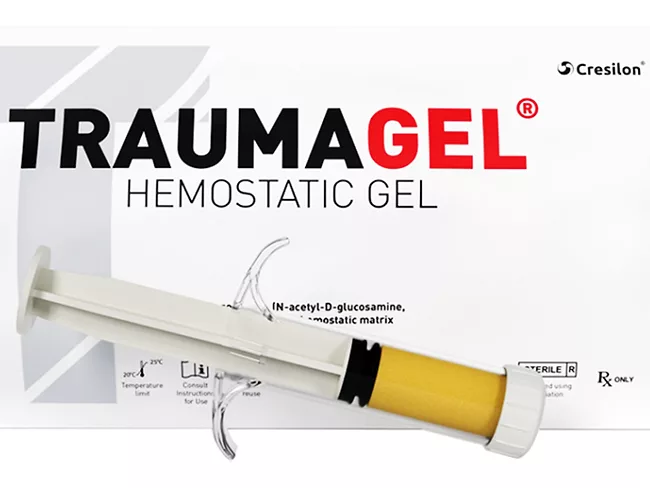
Cresilon Inc. secured U.S. FDA clearance for Traumagel, a hydrogel that stops potentially life-threatening bleeding in seconds. Cresilon designed the product for use by the U.S. military, first responders and medical professionals to swiftly and effectively stop bleeding from traumatic wounds
Algodx AB received U.S. FDA 510(k) clearance for its sepsis detection software Navoy CDS. The technology, which analyzes patient data, has the potential to improve patient outcomes as it enables clinicians to detect and treat sepsis earlier.
The U.K. Medicines and Health Care Products Regulatory Agency enacted its AI Airlock program for artificial intelligence – the agency’s branding for its regulatory sandbox for this type of medical software.
 RSS
RSS