The U.S. Department of Justice reported that THD America Inc., and its Italian corporate parent company agreed to pay $700,000 over inducing physicians to use incorrect payment codes in Medicare and Medicaid claims.
The U.S. FDA approved Apple Inc.’s Airpods Pro 2 as an over-the-counter assistive hearing device for adults with mild-to-moderate hearing loss, making the ubiquitous devices the first assistive hearing technology to receive this designation.
The U.S. FDA issued warning letters to a pair of non-clinical testing labs located in China for violations of good laboratory practices, but the fall-out may reach existing marketing authorizations.
The FDA’s Sept. 5, 2024, draft guidance for the use of patient preference information (PPI) over the total product life cycle represents a new set of requirements for device makers when obtaining such information. Going forward, device makers may be required to provide more detail about patient heterogeneity, including when the benefit-risk calculation varies by subpopulation.
The European Medicines Agency advised its member state regulatory partners to closely track how they use LLMs in making regulatory decisions – a clear signal that some regulatory decisions may be inappropriately torqued by their well-known shortcomings.
With an eye on shutting down national security threats and securing American innovation, the U.S. House overwhelmingly passed the Biosecure Act Sept. 9 with a vote of 306-81. The next stop on the bill’s path to enactment is a Senate vote and, if it gets that, then on to the president’s desk.
The U.S. FDA posted a series of de novo decisions Sept. 9, including a digital diagnostic for chronic kidney disease progression by Renalytix AI Inc., of New York, and a digital therapy device for management of fibromyalgia symptoms by Swing Therapeutics Inc., of San Francisco.
The U.S. FDA’s final guidance for device remanufacturing was the result of a nearly decade-long policy examination, and the agency’s Sept. 10 webinar highlighted a few key questions. The FDA’s Angela Krueger said the agency “always encourages transparency” on the part of manufacturers to ensure device safety and performance but said the FDA does not endorse disclosure of trade secrets in providing information on device servicing.
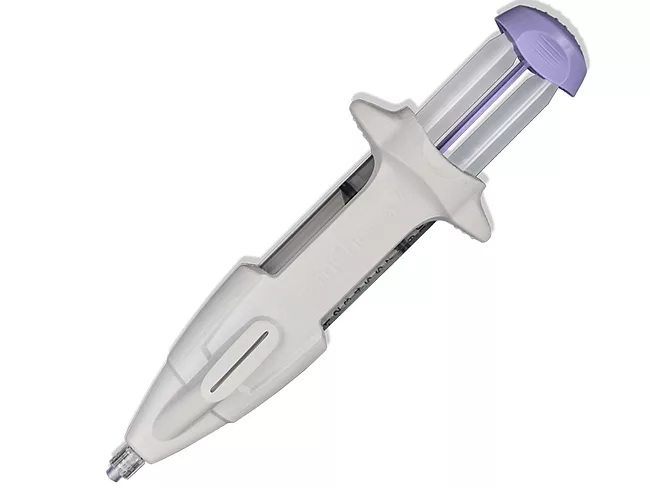
Femasys Inc. checked off a box on the way to launch of its Fembloc non-surgical birth control method with U.S. FDA clearance of Femchec. An enhanced version of the Femvue product used to diagnose fallopian tube abnormalities, Femchec enables confirmation of successful blockage of the fallopian tubes to prevent pregnancy without use of radiation.
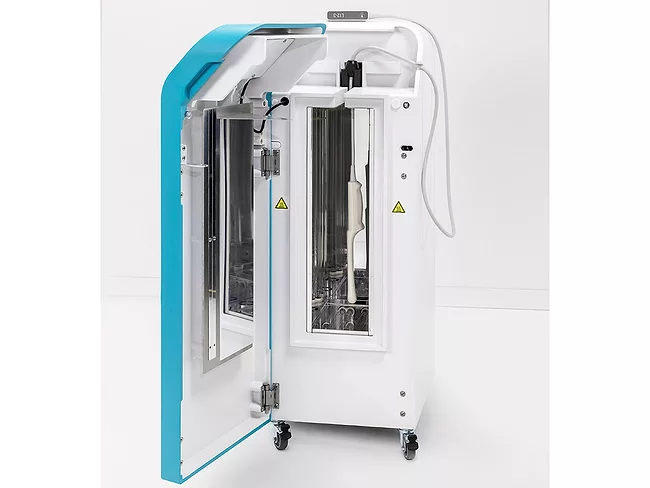
Germitec SA received U.S. FDA de novo clearance for Chronos, its chemical-free, ultraviolet-C-based disinfection device for endocavitary and external ultrasound probes. The technology will help to protect patients and aid health care professionals in tackling cross-contaminations in U.S. hospitals, Vincent Gardès, CEO of Germitec, told BioWorld.
 RSS
RSS