A committee of the U.S. House of Representatives wrapped up business in a late-running June 14 markup of spending bills that would give the U.S. FDA roughly $6.6 billion to work with in fiscal 2024. However, the final bill omits language in the manager’s mark that had called on the FDA to engage in rulemaking or guidance development for lab-developed tests, but the FDA made up for that by adding a proposal to engage in rulemaking for LDTs in its regulatory agenda.
The June 14 hearing of the House Appropriations Committee was focused largely on spending levels for the Department of Agriculture, but there was also some concern over the proposed spending levels for the FDA. One of the more conspicuous features of the legislative report is the recommendation that the FDA finalize guidance or rulemaking for risk-based regulation of lab-developed tests (LDTs), a clear departure from the stance taken by Congress for a number of years.
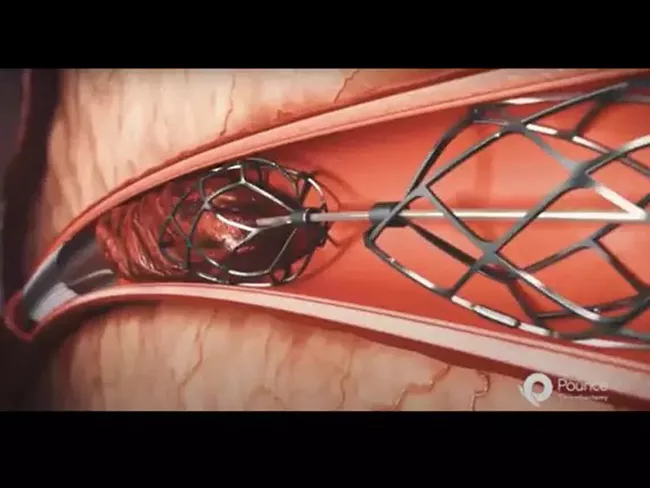
Surmodics Inc. is poised to jump on the market for below the knee thrombectomy now that its Pounce platform with a low-profile (LP) model has FDA 510(k) clearance. The system can now effectively clear organized clots from vessels as small as 2 mm in diameter. The Pounce LP expands the Eden Prairie, Minn.-based company’s “grab-go-flow” platform. In its first iteration, Pounce enabled removal of thrombi and emboli in peripheral arteries 3.5 mm to 6 mm in diameter.
The need to reauthorize the U.S. Pandemic and All-Hazards Preparedness Act (PAHPA) prompted a June 13 hearing in the House of Representatives, but a major fissure appeared between the Republican and Democratic Parties regarding FDA’s authorities for managing drug shortages.
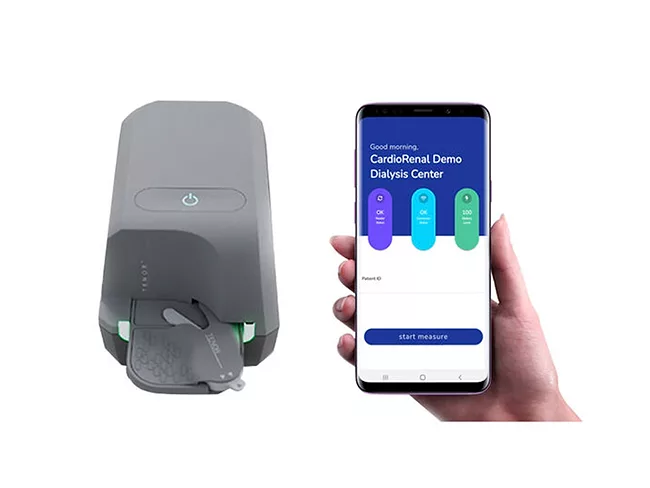
Cardiorenal SAS reported it has been granted a breakthrough device designation by the U.S. FDA for its Tenor at-home blood potassium measuring device. The Tenor smart device combines multiple technologies, app and cloud capabilities to assist patients with chronic kidney disease in measuring their blood potassium levels from home, obtaining results in under five minutes.
The U.S. FDA’s September 2022 guidance for clinical decision support (CDS) software was controversial the moment the agency posted the document, prompting the filing of a citizen’s petition five months later. The CDS Coalition has penned a June 8 letter to FDA commissioner Robert Califf in an effort to draw a reaction from the agency, but the letter was accompanied by a summary of an analysis of CDS software with a machine learning (ML) component that suggests that such products that are in development may have to be reconsidered.
Pulse Medical Technology Inc. obtained breakthrough device designation from the FDA for its fourth generation μFR system, which would accelerate the commercialization of the device. “The fourth generation μFR system is currently not available on the market, but Pulse Medical is preparing for the marketing approval of the product in the U.S.,” Jingfeng Han, director of science division at Pulse Medical, told BioWorld.
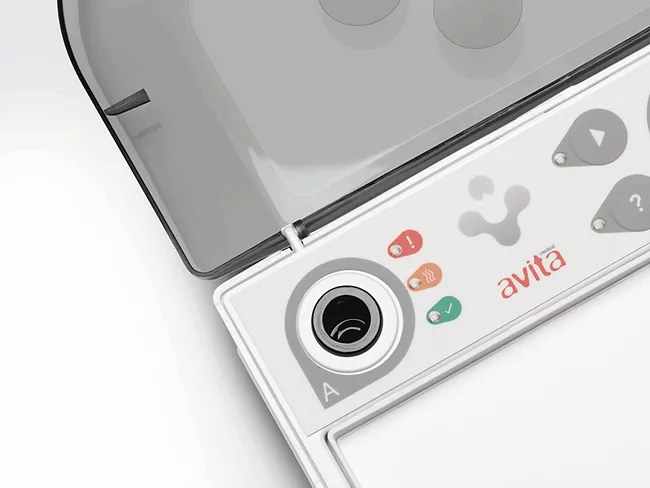
The U.S. FDA granted premarket approval to Avita Medical Inc.’s Recell system for a wide range of full-thickness skin defects, potentially quintupling the company’s market opportunity. Recell is a cell harvesting device that produces and delivers a regenerative cell suspension using a small sample of the patient’s own skin. The Spray-On Skin cells, previously approved for use in severe burns, stimulate healing and repigmentation. “This is a landmark approval representing an inflection point for Avita Medical,” said Avita CEO Jim Corbett. “The FDA approval now offers surgeons a best-in-class treatment option for a multitude of severe wounds within inpatient and outpatient settings.”
The U.S.FDA posted two warning letters to medical device manufacturers June 6, one each to Irhythm Technologies Inc., and Steiner Biotechnology LLC, and both warnings include citations for marketing for claims that are not in the FDA-reviewed product labels.
The U.S. FDA has given the greenlight to Sparrow Acoustics Inc. (dba Sparrow Bioacoustics) for its Stethophone, a software-based technology that allows doctors and nurses to check a patient’s heart and lung sounds using a smartphone. Providers simply hold the smartphone against the patient’s chest to listen for possible abnormalities.
 RSS
RSS