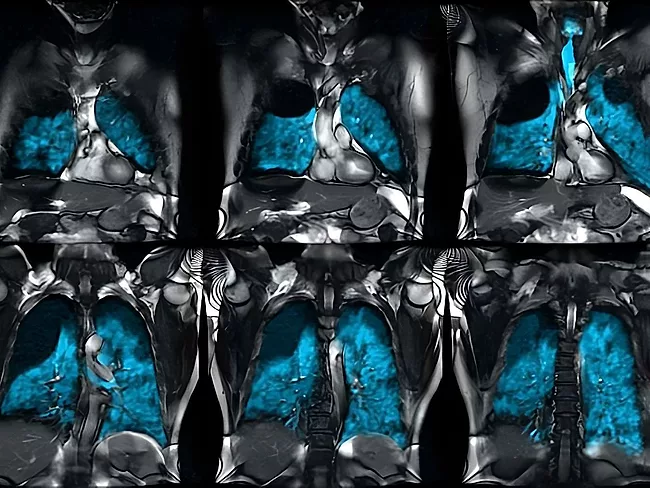
The U.S. FDA has approved Polarean Imaging plc’s drug-device combination product, Xenoview, for use with magnetic resonance imaging (MRI) in evaluating lung ventilation in adults and children aged 12 and older. The hyperpolarized contrast agent, which is prepared from the Xenon Xe 129 gas blend, is expected to be commercially available in the U.S. starting next month.
The U.S. FDA managed to wrap up a guidance for clinical decision support (CDS) products after several years, one of several projects the agency was liable for in the area of digital health. While a much-needed draft guidance for change control for artificial intelligence algorithms made the guidance agenda for the FDA’s new fiscal year, that draft is only a B draft guidance priority, suggesting that a final guidance might not emerge until calendar year 2024, possibly later.
Continuous positive airway pressure (CPAP) devices made by Philips Respironics Inc. are still presumed by the U.S. FDA and other regulators to present a health hazard to patients, but the company’s latest data seem to suggest otherwise. In a Dec. 21 statement, the Royal Philips subsidiary said that testing suggests no appreciable harm to health related to particulate matter emissions from the polyester-based polyurethane (PE-PUR) foam in these devices, and that there is no evidence of long-term harm associated with volatile organic compounds (VOCs), both of which are conclusions with which the FDA may not agree.
The FDA posted a recall announcement for two catheter kits made by Arrow International LLC, a subsidiary of Wayne, Pa.-based Teleflex Inc., due to problems with the connectors used in the kits. While no injuries or deaths have been reported, the problem could lead to embolism and/or delayed delivery of needed therapeutic fluids to patients, making this a class I recall due to the risk of injury and death.
The U.S. FDA has had a long-standing guidance dealing with drug manufacturing facilities that delay or deny FDA investigators’ attempts to inspect a manufacturing facility, but that policy was exclusive of device manufacturing facilities up until passage of the FDA Reauthorization Act (FDARA) of 2017. FDARA’s expansion of the policy to include device manufacturing facilities has prompted a rewrite of an existing 2014 guidance.
Even though Cytokinetics Inc. received applause for testing its heart failure drug, omecamtiv mecarbil, in the second largest global heart disease clinical trial ever, the drug didn’t get a standing ovation from the U.S. FDA’s Cardiovascular and Renal Drugs Advisory Committee (CRDAC) Dec. 13.
What could be Cytokinetics Inc.’s first approved drug will take center stage Dec. 13 at a meeting of the U.S. FDA’s Cardiovascular and Renal Drugs Advisory Committee. But judging from the FDA’s briefing document for the meeting, the spotlight on the heart failure drug, omecamtiv mecarbil, could be harsh.
The U.S. FDA posted an update to the ongoing recall of respirators and positive airway pressure devices by Philips Respironics Inc., a subsidiary of Amsterdam-based Royal Phillips NV, which are associated with more than 21,000 medical device reports (MDRs) between Aug. 1 and Oct. 31, 2022. However, these MDRs are also associated with 91 patient deaths, which while they cannot be attributed directly to these devices, are nonetheless a stain on the reputation of the company’s products going forward.
The companion diagnostic (CDx) has been a mainstay of oncology care for several years, but Richard Pazdur, director of the U.S. FDA’s Oncology Center of Excellence (OCE), said recently in a public forum recently that the notion of a single CDx for an investigational drug has not served patients well. Pazdur said OCE and the FDA’s Center for Devices and Radiological Health are working on a pilot program that would entail the publication of performance standards for the tests used in these trials, a development that would lead to more routine development of lab-developed tests (LDTs) for these studies and thus undercut any incentive to develop a patented in vitro diagnostic for that purpose.
The U.S. FDA announced that it has cleared a new set of tubes used in hemodialysis machines made by Fresenius Medical Care AG & Co., of Bad Homburg, Germany, that are expected to overcome concerns about the previous tubes’ release of potentially toxic biphenyls. The agency acknowledged that it has no reports of adverse events related to the use of these chemicals in the silicone used to manufacture the tubes, stating that its action on this issue is driven solely by animal studies in the medical literature, none of which were cited in the FDA’s Oct. 28 announcement.
 RSS
RSS