Medical device supply chain considerations became especially salient during the COVID-19 pandemic, but the U.S. FDA is interested in ensuring that supply chains do not hamper patient access going forward. However, Clayton Hall of the Medical Device Manufacturers Association (MDMA) said on a recent FDA webinar that device makers are sometimes at the mercy of their suppliers.
Just three months after raising $10 million from its IPO on the Paris Euronext Growth market, SMAIO SA (Software Machines and Adaptive Implants in Orthopedics) obtained U.S. FDA 510(k) clearance for its Balance Analyzer 3D surgery planning software and for its patient-specific union rods. This spinal realignment planning software uses medical imaging of the patient’s spine in an upright static position.
The U.S. FDA is among the regulators that are taking account of the views of patients in medical device development and regulation, but artificial intelligence (AI) and machine learning (ML) are terra incognita for many, if not most patients. Rebekah Angove, vice president for patient experience and program evaluation at the Patient Insight Institute, told BioWorld that while some patients clearly want to know more about AI and ML, it is also clear that more than a certain amount of detail is more of a distraction than a help for most patients.
What was billed as a U.S. Senate Health, Education, Labor and Pensions Committee hearing June 16 to get an update from top government health officials on the nation’s response to COVID-19 was, in reality, a concerted effort to get Republicans in the U.S. Senate to open the checkbook so the Biden administration could fill in the amount for more COVID-19 spending, Ranking Member Richard Burr (R-N.C.) charged as he concluded the hearing.
U.S. FDA Commissioner Robert Califf offered the keynote address at this year’s annual meeting of the Food and Drug Law Institute (FDLI), revisiting recent events that have roiled the agency’s staff and reputation. Califf made a point of emphasizing the need for new statutory authorities in connection with the supply chains for FDA-regulated products, and remarked that his return to the agency will not be a reversion to the norm in this context.
Ekso Bionics Holdings Inc. added a new indication for its robotic Eksonr exoskeleton with a U.S. FDA 510(k) clearance for use of the mobility device in patients with multiple sclerosis (MS). The green light for MS follows clearances for stroke and spinal cord rehabilitation in 2016 and acquired brain injury (ABI) in 2020.
The U.S. FDA has granted clearance for Earlitec Diagnostics Inc.’s Earlipoint evaluation tool for the diagnosis and assessment of autism spectrum disorder (ASD) in children aged 16-30 months. The eye-tracking technology utilizes Dynamic Quantification of Social-Visual Engagement (DQSVE), which captures a child’s moment-by-moment looking behavior. The clearance was based on positive results from two studies in which more than 500 children were enrolled.
The U.S. FDA’s device center continues to promote alternatives to ethylene oxide (EtO) as a medical device sterilant, with the latest development involving radiation as a sterilizing technology. The agency said it may open a new master file program for radiation that follows an existing program that is agnostic as to sterilization method, and which may speed the adoption of alternative sterilization methods in the years ahead. The FDA’s Center for Devices and Radiological Health recently announced a pilot program for alternatives to EtO sterilization that would eliminate a significant number of regulatory filings.
The FDA announced a class I recall of the Dragonfly Opstar imaging catheter by Abbott Vascular, of Santa Clara, Calif., due to the loosening of a band marker that may lead to separation from the catheter. The agency said two instances in which the marker has separated from the catheter have been reported, with another three incidents of loosening without separation.
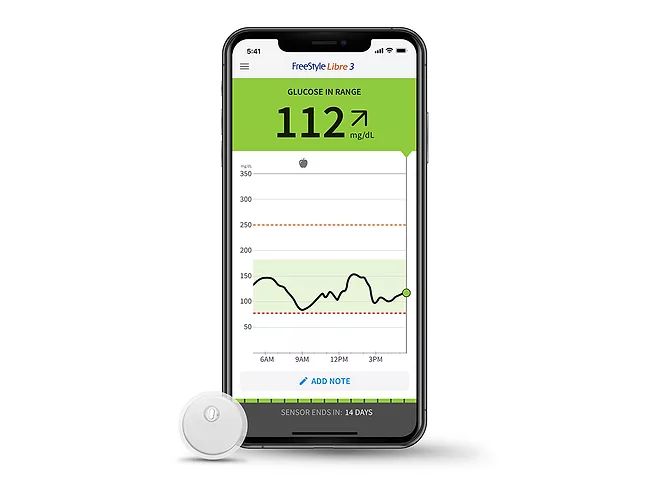
Abbott Laboratories Inc. announced U.S. FDA clearance for its next-generation Freestyle Libre 3 continuous glucose monitor (CGM) system for people aged 4 years and older with diabetes. Accuracy of the sensor was evaluated in a non-randomized, multicenter, single-arm study with 100 people on intensive insulin therapy (95, aged 6 years and older). Results from the pivotal trial were released May 31, showing it is the first CGM to demonstrate a mean absolute relative difference (MARD) below 8%, indicating it will be one of the most accurate sensors on the market.
 RSS
RSS