Clinicians are still at liberty to use medical products outside the labeled indication for use, but the U.S. FDA believes radiologists may be unaware of the limitations of radiological computer-aided triage and notification (CADt) software for intracranial large-vessel occlusion (LVOs). The agency advised clinicians that these programs are not intended for use as a substitute for radiologist review of images, but instead should be used only to flag suspect images as part of an effort to triage these patients.
As part of a series of guidances addressing clinical trial diversity, the U.S. FDA issued a draft guidance April 13 focused on improving enrollment of participants from underrepresented racial and ethnic populations.
Boston Scientific Corp.’s image-guided programming software, Vercise Neural Navigator with Stimview XT, got the green light from the FDA for use with the company’s deep brain stimulation (DBS) portfolio in patients with essential tremor or Parkinson’s disease. The software, developed in a collaboration with Brainlab AG, provides more sophisticated image-guided programming tools for personalization of the stimulation therapy, halving the time needed for adjustments and increasing precision.
Newstem Ltd. filed a presubmission to the U.S. FDA for a de novo request and an in vitro diagnostic device with the EMA for its Newstem software diagnostic device (NSDD). The bioinformatics-based platform is a personalized diagnostic to inform oncologists about the presence of mutations in tumors and predict a patients’ resistance to chemotherapy treatments. The technology utilizes specialized stem cells (haploid cells) that carry just one set of chromosomes.
The FDA program for third-party review of 510(k) applications was designed to take some of the load off the agency’s review staff and thus allow the agency to focus on more complex filings, but recent data suggest that the program has had only a modest effect on the FDA’s workload. The number of third-party reviews for the current and two previous fiscal years only modestly exceed the numbers from fiscal years 2018 and 2019, a conspicuous trend given the distractions at the FDA’s device arising from its work to manage the COVID-19 pandemic.
For the second time in four years, the FDA has issued a draft guidance for cybersecurity in premarket applications, just one of several actions undertaken recently by the U.S. federal government in connection with cybersecurity.
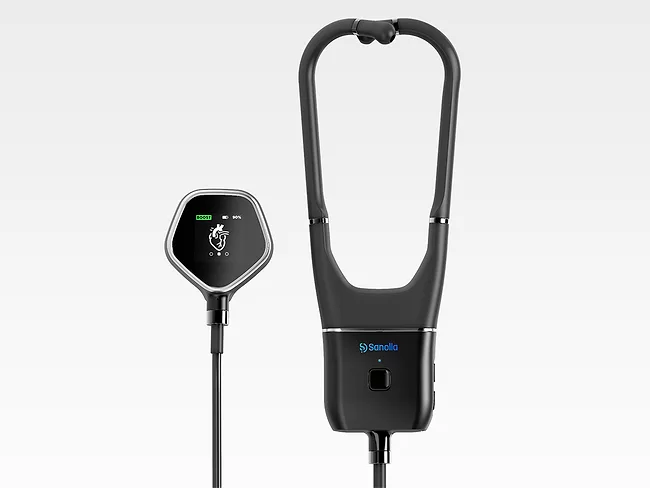
Israeli startup Sanolla Ltd. won U.S. FDA 510(k) clearance for its smart-infrasound stethoscope Voqx. The artificial intelligence (AI)-based device is the first stethoscope cleared by the U.S. FDA to detect infrasound and audible information to identify clinical conditions. The auscultation capabilities are designed to support early assessment of cardiopulmonary conditions.
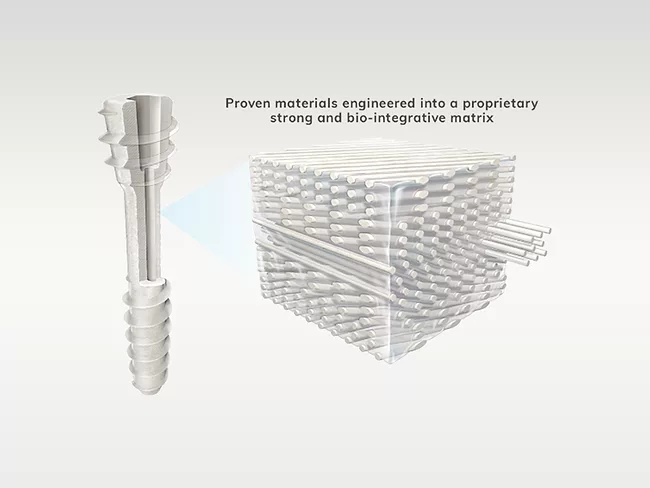
Ossio Inc. has received FDA clearance for Ossiofiber suture anchors used to fix soft tissue to bone in the shoulder, foot and ankle. This is the most recent of clearances for the company’s intelligent bone regeneration technology which began in 2019 as a possible alternative to permanent fixation implants for the foot and ankle alone.
Merit Medical Systems Inc. received FDA 510(k) clearance for the Scout Bx delivery system, which enables the placement during stereotactic and MRI-guided biopsy of a reflector to guide breast surgery. The delivery system works with the company’s Scout reflector, a wire-free radar localization device.
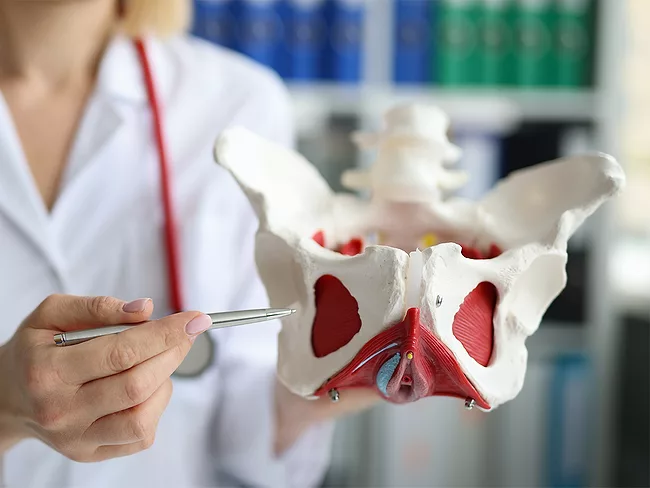
The U.S. FDA has given the green light to a pelvic organ prolapse (POP) repair device developed by Misgav, Israel-based Escala Medical Ltd. The mesh-free, non-surgical repair system is designed to anchor sutures to ligaments of the pelvic floor in an incision-free procedure. Escala, which is a portfolio company of Israeli government franchised incubator Trendlines Group Ltd., believes the device will help the 1 in 5 women in the U.S. affected by POP.

 RSS
RSS