The U.S. FDA has released a final guidance for the agency’s refuse-to-accept (RTA) policy for cybersecurity measures in medical devices, a policy document that was required by Congress via the Consolidated Appropriations Act for the 2023 federal fiscal budget.
U.S. FDA commissioner Robert Califf went to Capitol Hill ostensibly to answer questions about the agency’s budget request for fiscal 2024, but the conversation quickly focused on issues such as baby formula and food supply security.
The U.S. FDA granted Graymatters Health Ltd. 510(k) clearance to market Prism for PTSD, a non-invasive, self-neuromodulation adjunct digital therapy for post-traumatic stress disorder (PTSD).
The U.S. FDA gave Bot Image Inc. a coveted threefer with 510(k) clearance for its Prostatid artificial intelligence (AI) software for detection, diagnosis and monitoring of prostate cancer using both standard MRI and a non-invasive bi-parametric MRI, which does not require a contrast agent.
Elekta AB received U.S. FDA clearance for what it called a “groundbreaking upgrade” of its MR-Linac platform which can continuously calculate the movement of a tumor anywhere in the body. The company said the Elekta Unity’s comprehensive motion management platform provides clinicians with enhanced, adaptive radiation therapy workflow to track moving organs such as the prostate, liver and pancreas.
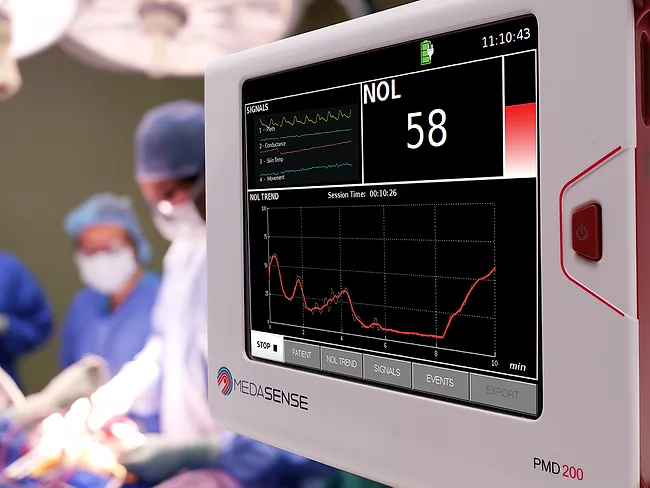
Medasense Biometrics Ltd. received U.S. FDA marketing authorization for its PMD-200 patient monitor with nociception level index (NOL) technology that monitors patients’ physiological response to pain during surgery. NOL uses a multi-parametric sensor platform combined with artificial intelligence (AI) algorithms to generate a ‘signature of pain’ for patients under anesthesia who are also receiving opioids and other analgesics.
To increase transparency at its advisory committee (adcom) meetings, the U.S. FDA is proposing asking guest speakers to voluntarily disclose their financial interests and professional relationships to determine their eligibility to give a presentation at an adcom meeting.
Playwright George Bernard Shaw is credited with coining the phrase, “better late than never,” a piece of advice the U.S. FDA seems to have taken to heart when it comes to posting the regulations for first-of-a-kind devices. The agency has posted eight regulations for de novo devices just between Jan. 4 and Jan. 5, 2023, five of those arriving on the latter of those two days in a post-holiday scramble to catch up.
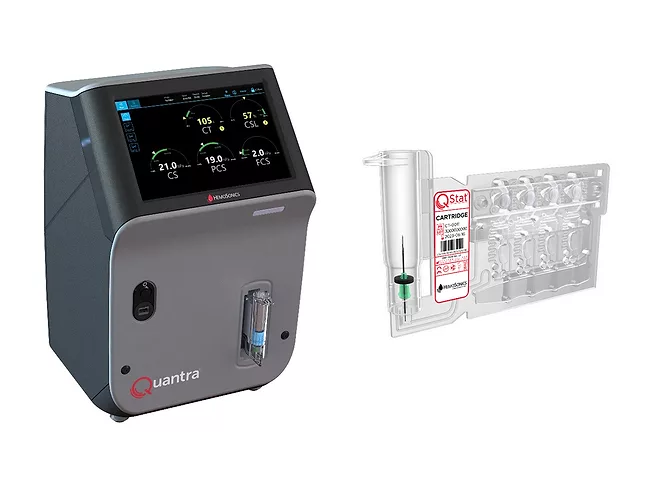
Hemosonics LLC said it was recently awarded U.S. FDA clearance for a new hemostasis test cartridge assay it said significantly expands the indications for clinical use of its existing Quantra system to now also include trauma and liver transplantation procedures. The expanded Quantra hemostasis system with its QStat cartridge will add to capabilities of the system’s QPlus cartridge assay already established in the point-of-care and lab-based, whole blood hemostasis testing market.
The CMS had floated a coverage concept for devices routed through the U.S. FDA breakthrough devices program shortly before the Biden administration took office, but the change in administration proved lethal to the program in terms of its initial contours. The latest development in this saga would have the program revert to an expanded use of the existing Medicare coverage with evidence development (CED) program, a far cry from the original concept of same-day coverage upon FDA approval or clearance of the device.
 RSS
RSS