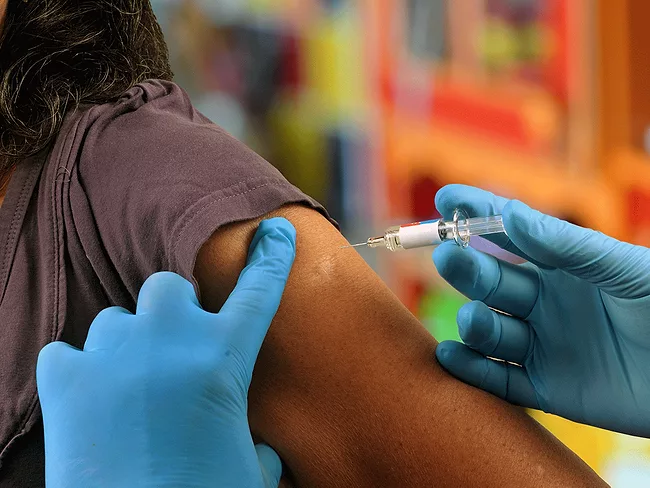
Pfizer Inc. said that, in children aged 5 through 11, the COVID-19 vaccine it co-developed with Biontech SE showed 90.7% efficacy against all variants of concern following two doses. The data were included in briefing documents filed ahead of a full discussion at the FDA’s Vaccines and Related Biological Products advisory committee meeting set for Oct. 26.
Shares of Ultimovacs ASA (OSE:ULTI) climbed 16.6% to NOK148.60 (US$17.82) on news the FDA will expedite an eventual review of its investigational cancer vaccine, UV-1, in combination with checkpoint inhibitors for the potential treatment of unresectable or metastatic melanoma.
Despite some concerns from a few members, the Advisory Committee on Immunization Practices unanimously approved recommendations to the CDC that boosters be made available to those wanting them. The advisory committee recommended that a single COVID-19 vaccine booster dose be given six months or more after completing an mRNA primary series in the same risk group for whom the CDC recommended a booster dose of Pfizer Inc-Biontech SA’s vaccine. The CDC presented data to the committee that the single mRNA COVID-19 vaccine dose be given to those age 65 and older, for those at least 18 years old and reside in long-term-care settings, and also for those ages 50 to 60 with certain underlying medical conditions.
The FDA issued an Oct. 18 reminder to the diagnostics industry that the agency still requires test developers to register with an institutional review board (IRB) for all studies of human subjects. This still pertains to studies that make use of leftover, de-identified specimens in FDA-regulated studies, an alert to industry which suggests that enforcement actions may be in the near offing.
As largely expected, the FDA on Oct. 20 authorized the use of booster doses for COVID-19 vaccines from Moderna Inc. and Johnson & Johnson, in line with last week’s Vaccines and Related Biological Products Advisory Committee (VRBPAC) meetings. It also cleared the way for “mix-and-match” boosters, allowing eligible people to receive boosters from any of the FDA-approved vaccines, regardless of which vaccine they received originally.
Stealth Biotherapeutics Corp.’s refusal to file (RTF) letter from the FDA regarding the NDA for elamipretide, a candidate that targets mitochondria in the treatment of Barth syndrome, hardly knocked the stock, as investors likely saw the bad news coming.
The FDA published a draft rule on Oct. 19 for over-the-counter hearing aids, four years after the Food and Drug Administration Reauthorization Act (FDARA) had directed the agency to do so by 2020. One of the potentially more problematic aspects of the draft is that the rule would be preemptive of state law on several points, including consumer protections, a consideration that could serve as a flashpoint in future litigation.
The U.S. Centers for Medicare & Medicaid Services’ (CMS) withdrawal of a proposal to provide automatic coverage of FDA-designated breakthrough devices has drawn criticism from device makers, but the industrial reaction runs the gamut.
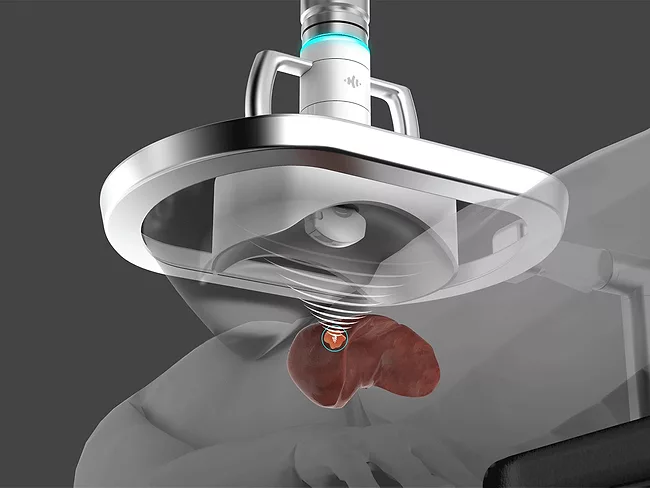
The FDA granted breakthrough device designation to Histosonics Inc. for the first system to harnesses microbubbles created by pulsed ultrasound waves to wreak very targeted cellular destruction, with real-time visualization and control. The therapy, called histotripsy, destroys tissue in the liver without heat, radiation or surgery. The technology was developed at the University of Michigan.
The question of bias in artificial intelligence (AI) algorithms is generally thought to be overcome by ensuring that the data set used to train the algorithm is representative of the population at large. However, Naomi Aaronson, executive director of clinical evaluation at the Blue Cross Blue Shield Association, said its not that simple because demographic data can combine in unpredictable ways and thus “the only real understanding of whether it works is in the clinical validation” of the algorithm in various settings.
 RSS
RSS