The U.S. Recover program, set up in July 2022 to identify the causes of long COVID, find biomarkers of disease and discover new therapeutic targets, is now preparing to move to its next phase and begin testing potential treatments in a multi-arm, randomized, placebo-controlled trial. But with 200 different symptoms, and limited understanding of relevant system-level pathological targets, there are significant hurdles to be overcome.
Massachusetts General Hospital and University of California Oakland have described 15-lipoxygenase (LOX) inhibitors reported to be useful for the treatment of stroke, among others.
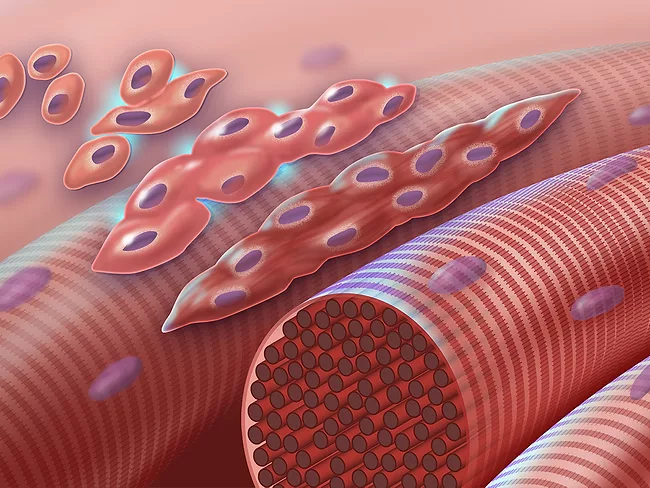
Researchers have linked Duchenne muscular dystrophy (DMD) to a loss of regenerative capacity of muscle stem cells. The findings, which were published in the March 1, 2023, issue of Science Translational Medicine, suggest that boosting the regenerative capacity of muscle stem cells could delay or perhaps even prevent the progression of DMD. DMD is “an early and horrible disease,” senior author Frederic Relaix, who is the director of a research team studying the biology of the neuromuscular system at the Mondor Institute for Biomedical Research told BioWorld.
Researchers from the University of British Columbia presented data from a study that aimed to define the role of nuclear receptor subfamily 1 group H member 3 (NR1H3) in the pathophysiological mechanisms that drive increased risk, severity and progression in multiple sclerosis (MS).
The rare, deadly neurological disease called hereditary sensory and autonomic neuropathy 9 (HSAN9) is caused by mutations in the gene that encodes tectonin β-propeller repeat-containing protein 2 (TECPR2).
Autifony Therapeutics Ltd. has described compounds acting as modulators of voltage-gated potassium channels from the Kv3 subfamily, such as Kv3.1, Kv3.2 and/or Kv3.3, reported to be useful for the treatment of myoclonic epilepsy, among others.
Bacteria inflaming the meninges have developed an immunosuppressive mechanism that contributes to their ability to attack the brain. Researchers found that, by activating pain receptors (nociceptors) to release chemical substances that block an immune cell receptor, Streptococcus pneumoniae and Streptococcus agalactiae deactivated the protective function of macrophages and weakened brain defenses. This, in turn, enabled them to invade the brain.
 RSS
RSS