Medicines for Malaria Venture (MMV) has launched a call for new chemical compounds to screen against malaria through its MMV open innovation (MMVoi) initiative. Submissions from both industry and academia allow for compounds that have already been synthesized but not yet tested against malaria to be identified.
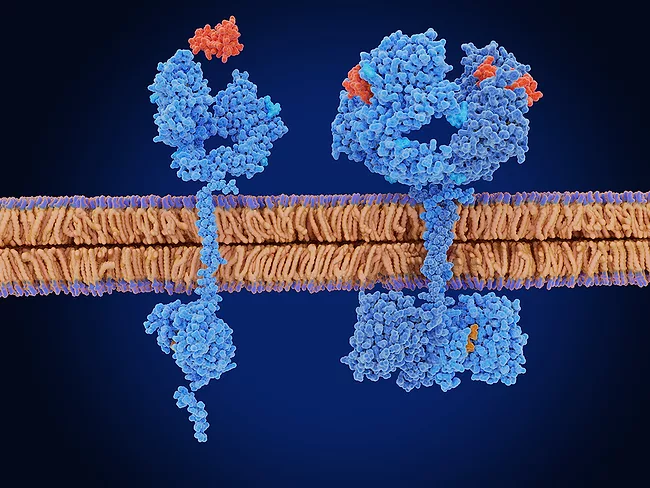
Epidermal growth factor receptor (EGFR) is involved in cell proliferation leading to malignant transformation, and for that it is considered a therapeutic target for treatment and prevention in lung and other cancers.
Throughout the body, the vasculature and the nervous system are fellow travelers. Renaissance physician and anatomist Andreas Vesalius described their proximity on the macroanatomical level in the 16th century, and modern microscopic techniques have shown that it extends into the micrometer range – where there is a blood vessel, there is often a nerve nearby, and vice versa.
Blood cancer drug venetoclax could potentially be used to deplete HIV latently infected cells and delay viral rebound, leading to a potential cure for HIV, according to a study from researchers in Australia who tested the drug in humanized mice models.
Medimmune Ltd. has prepared and tested lipidated peptide analogues with improved stability acting as dual agonists of glucagon receptor (GCGR) and glucagon-like peptide 1 receptor (GLP-1R). They are reported to be useful for the treatment of obesity, nonalcoholic steatohepatitis (NASH) and type 2 diabetes.
Katholieke Universiteit Leuven and Springworks Therapeutics Inc. have jointly identified tetrahydropyridopyrimidines acting as transcriptional coactivator YAP1/transcriptional enhancer factor (TEAD) or WW domain-containing transcription regulator protein 1 (WWTR1; TAZ)/TEAD interaction inhibitors.
A Retune Pharma Inc. patent describes new insulin-like growth factor 1 receptor (IGF-1R; CD221) inhibitors reported to be useful for the treatment of cancer, thyroid-associated ophthalmopathy (Graves ophthalmopathy) and autoimmune disease.
Serengen GmbH and Deargen Inc. have established a collaboration to accelerate the drug discovery process by bringing together Serengen’s novel DNA encoded library (DEL) technology with Deargen’s artificial intelligence (AI)-driven drug discovery platform, Deardti.
 RSS
RSS