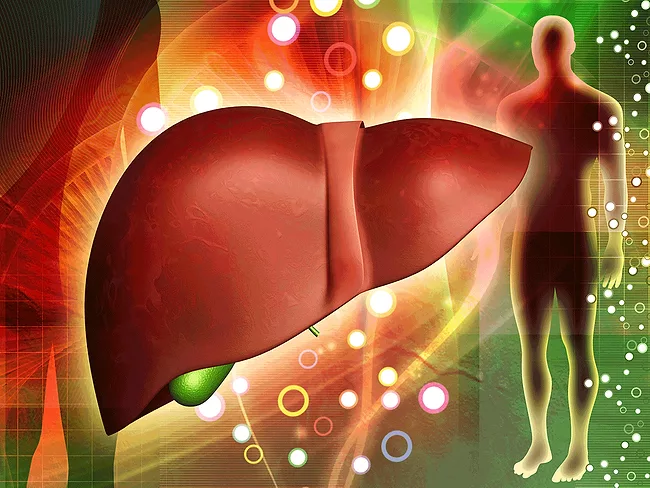
While the liver is mostly known as the core of metabolism, contributing to the storage of nutrients and excretion of toxic substances, there is an increasing interest in how it interacts with the central nervous system through the liver-brain axis. At the 2023 European Association for the Study of the Liver (EASL) meeting in Vienna, Austria, group leader Kristina Schoonjans and her colleague Hadrien Demagny from the Laboratory of Metabolic Signaling at École Polytechnique Fédérale de Lausanne, Switzerland, gave talks setting out the context of inter-organ communication in liver disease, adding new findings from their research in the liver-brain axis.
Jiangsu Simcere Pharmaceutical R&D Co. Ltd. has described proteolysis targeting chimera (PROTAC) compounds comprising an E3 ubiquitin ligase binding moiety covalently linked to a probable global transcription activator SNF2L2 (SMARCA2; BAF190B; SNF2-α) targeting moiety reported to be useful for the treatment of cancer.
St. Jude Children’s Research Hospital has divulged molecular glue degraders comprising cereblon (CRBN) binding agents covalently bound to a eukaryotic peptide chain release factor GTP-binding subunit ERF3A (GSPT1) and/or DNA-binding protein ikaros (IKZF1) targeting moiety acting as GSPT1 and/or IKZF1 degradation and GSPT1 and/or IKZF1/CRBN interaction inducers reported to be useful for the treatment of cancer.
Novartis AG has synthesized naphthyridinone derivatives acting as K(ir) 3.1/3.4 (GIRK1/4; KCNJ3/5) IKACh channel blockers reported to be useful for the treatment of bradyrhythmic arrhythmia, bradycardia, atrial fibrillation, heart block, hypotension, primary aldosteronism, sick sinus syndrome and vasovagal syncope, among others.
Remix Therapeutics has disclosed compounds acting as RNA splicing modulators reported to be useful for the treatment of cancer and Huntington’s disease.
Having demonstrated in previous work that drug-Fc conjugates (DFCs) are a promising treatment alternative for multidrug-resistant (MDR) gram-negative bacteria, researchers from the Center for Discovery and Innovation and Cidara Therapeutics Inc. presented results from the identification of CTC-177, a novel DFC, as a potential immunoprophylactic agent against MDR gram-negative bacterial infections.
Researchers from Murdoch Children’s Research Institute presented data from a study that linked recessive variants in the SART3 gene with a novel neurodevelopmental syndrome.
A cluster of deaths in 1993 in the southwestern U.S. that were characterized by an acute respiratory failure and shock were determined to be due to hantaviruses, which are RNA zoonotic viruses typically transmitted by a rodent vector. Given a fatality rate ranging from 15% to 40% and capacity to potentially spread through human-to-human contact, it is possible that the public health risks posed by these agents have been underestimated.
 RSS
RSS