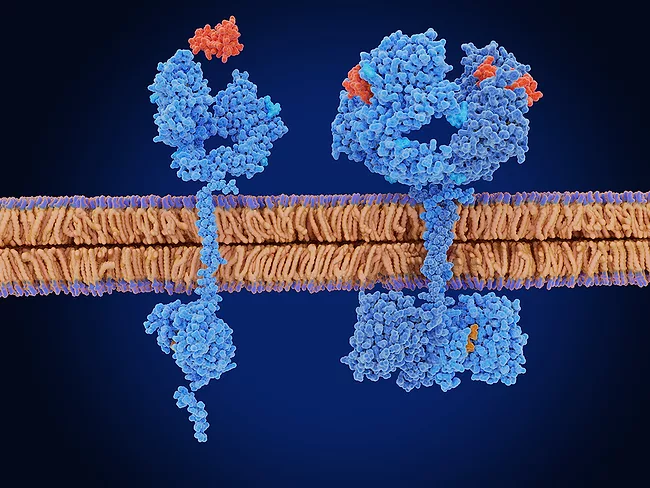
Iktos SA and Curreio Inc. have established a collaboration agreement using artificial intelligence (AI) for new drug design. Under this collaboration, Iktos will leverage its de novo generative design technology in combination with Curreio’s cryo-electron microscopy (EM) platform to facilitate the rapid design of novel preclinical drug candidates for an undisclosed target.
Researchers from Universität zu Köln have published data from a study that investigated the pathophysiology of disabling pansclerotic morphea (DPM), and as such, gain better understanding of the much larger range of disorders characterized by poor wound healing and severe, unchecked fibrosis.
At the recent ASCO meeting, researchers from the University of Rochester reported preclinical data for on a new small-molecule inhibitor of WAP four-disulfide core domain protein 2 (HE4) – UR-238 – that is being investigated for the treatment of cancer.
Emris Pharma, a recent spin-off of Hadasit Medical Research Services and Development Ltd. and Yissum Research Development Co., has started development of a new topical drug to treat skin toxicities caused by epidermal growth factor receptor (EGFR) inhibitors used to treat cancer.
Autotaxin (ATX) is an enzyme responsible for the production of lysophosphatidic acid (LPA), which plays a role in the pathogenesis of systemic sclerosis (SSc). Researchers from Mitsubishi Tanabe Pharma Corp. and colleagues have reported on the preclinical evaluation of MT-5562, a novel oral ATX inhibitor, as a therapeutic option for SSc.
Enochian Biosciences Inc. is on track to file an IND application for its innovative cancer platform around the early part or middle of next year. If successful, that would allow clinical trials to begin in the first half of next year.
At the recent American Transplant Congress, researchers from McGill University presented the discovery and preclinical evaluation of a novel retinoic acid receptor-related orphan receptor γt (RORγt) inhibitor, TF-S14, being developed as a potential therapy to delay skin allograft rejection.
Research led by Duke University and the German Center for Diabetes Research shows the glucose-dependent insulinotropic polypeptide (GIP) receptor plays an essential role in the action of the type 2 diabetes drug Mounjaro (tirzepatide; Eli Lilly and Co.) in human pancreatic islets.
A nutritional supplement to reduce the effects of aging might not be a pill of eternal youth, but it could reduce many of the problems of getting old while maintaining good health. The first step to achieve this is included in a study led by scientists from Columbia University. They have set their sights on the amino acid taurine.
Additional early-stage research and drug discovery news in brief, from: Karolinska Development, Tonix Pharmaceuticals, Transcode Therapeutics, Umecrine Cognition, Vycellix.

 RSS
RSS