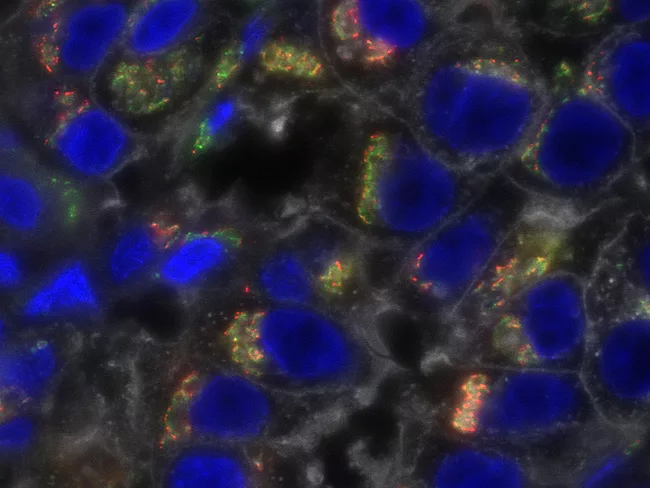
With age, senescent cells become detrimental to tissues. Mayo Clinic scientists have observed this phenomenon in the lung alveoli, where senescent macrophages accumulated in aging tissue and in early stages of non-small-cell lung cancer (NSCLC) driven by the Kras oncogene. “We found that the macrophages were present in the earliest stages of the disease. Strategies targeting these cells for elimination or preventing their accumulation would be worthwhile to test in other conditions (assuming we find they occur),” Darren Baker, a Mayo Clinic senescent cell biologist and senior author of the study, told BioWorld.
A study of more than a thousand tumor samples, led by the Weizmann Institute of Science in Israel, gives valuable insight into the different gene expression patterns seen in different cancers. The new findings could help address challenges associated with targeting many types of tumors, which are hard to treat in large part due to the variable nature of their cells and gene expression patterns, by helping to create better targeted therapeutics.
Aria Pharmaceuticals Inc. has described C-C chemokine receptor type 2 (CCR2; MCP-1-R) modulators reported to be useful for the treatment of systemic lupus erythematosus (SLE) and lupus nephritis.
Ranok Therapeutics (Hangzhou) Co. Ltd. has divulged proteolysis targeting chimeras (PROTACs) comprising an E3 ubiquitin ligase binding moiety covalently coupled to a GTPase KRAS (G12D mutant) targeting moiety through a linker reported to be useful for the treatment of cancer.
Researchers at Jiangsu Chia Tai Tianqing Pharmaceutical Group Co. Ltd. and Medshine Discovery Inc. have identified azobenzene compounds acting as endothelin-1 receptor (EDNRA; ETA) antagonists reported to be useful for the treatment of IgA nephropathy.
Insilico Medicine IP Ltd. has synthesized 3C-like proteinase (3CLpro; Mpro; nsp5) (SARS-CoV-2; COVID-19 virus) inhibitors reported to be useful for the treatment of SARS-CoV-2 infection (COVID-19).
With the rise of antibiotic resistance, treatment options against Yersinia pestis bacteria that cause pneumonic plague could also become limited. Antibody treatment has been effective in animal models of plague, but no approved human vaccine exists against this fatal disease.

 RSS
RSS