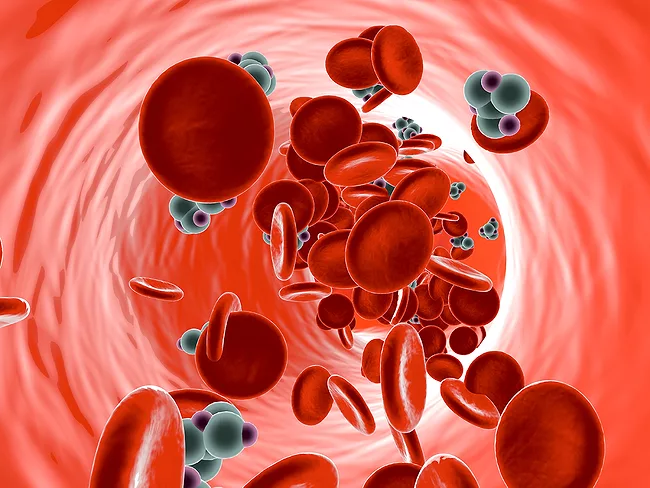
The alpha chain of the IL-3 receptor, CD123, is frequently overexpressed in acute myeloid leukemia (AML) and is considered an attractive target in the treatment of this disease. However, cytotoxic antibodies or T-cell engagers targeting CD123 have shown insufficient clinical efficacy or safety, confirming the need for alternative targeted approaches.
Three Aurora kinases (AURKA, AURKB and AURKC) are required for cell division and their activities/expression is increased in many human cancers. Accordingly, AURK inhibitors have entered early clinical trials, but their approval has been delayed due to off-target dose-limiting toxicity. Inhibition of AURKB catalytic activity is distinguished in that does not depend on disruption of spindle microtubules, but targeting catalytic activity disables both mitotic and nondividing cells.
Researchers from Shanghai Institute of Materia Medica presented the discovery of novel furan-2-carboxylic acid derivatives as potential candidates for the treatment of type 2 diabetes mellitus (T2DM). Synthesis and optimization of SL-010110, a previously identified molecule with the ability to inhibit gluconeogenesis via a unique mechanism, resulted in the discovery of a novel series of derivatives.
The FDA has awarded rare pediatric disease designation to Orphagen Pharmaceuticals Inc.'s OR-449 for the treatment of pediatric adrenocortical carcinoma (ACC). OR-449 is a selective, first-in-class, potent and orally bioavailable small-molecule antagonist to steroidogenic factor-1 (SF-1; NR5A1), an orphan nuclear receptor and transcription factor that is essential for the growth and development of the adrenal gland.
Researchers from University Medical Center Utrecht and Yale University School of Medicine have recently described two novel, strictly anaerobic Allobaculum strains, 128T and 539T, isolated from the feces of humans with inflammatory bowel disease (IBD).
Maia Biotechnology Inc. has advanced its telomere-targeting molecule program (Project T3) with the nomination of a lead new molecular entity candidate (MAIA-2021-20) and a back-up new molecular entity candidate (MAIA-2022-12) for progression into preclinical GLP-toxicity and other studies. One of these candidates may then be advanced into clinical trials upon completion of the preclinical evaluations.
Being able to detect cancers early can substantially improve survival, but most early detection tests for cancer rely on expensive and sophisticated molecular techniques that might be difficult to implement in resource strapped environments. Two new studies published last week attempt to overcome this problem.
Debiopharm International SA has identified enoyl-(acyl-carrier protein) reductase FabI (Acinetobacter baumannii) inhibitors reported to be useful for the treatment of bacterial infections and hospital-acquired pneumonia.
Shanghai Qilu Pharmaceutical Research and Development Centre Ltd. has presented HBeAg (hepatitis B virus; HBV) and/or HBsAg (HBV) secretion inhibitors reported to be useful for the treatment of HBV infections.
 RSS
RSS
.webp?height=488&t=1670008838&width=650 "Acute myeloid leukemia")