Researchers from Meiji Seika Pharma Co. Ltd. and affiliated organizations reported the discovery and preclinical evaluation of a novel PD-1 agonist antibody, HM-266, being developed for the treatment of various inflammatory disorders, including autoimmune diseases.
The FDA has cleared Tango Therapeutics Inc.'s IND application for TNG-462, a next-generation methylthioadenosine-cooperative (MTA) inhibitor of protein arginine methyl transferase 5 (PRMT5) for the treatment of cancers with methylthioadenosine phosphorylase (MTAP) deletion.
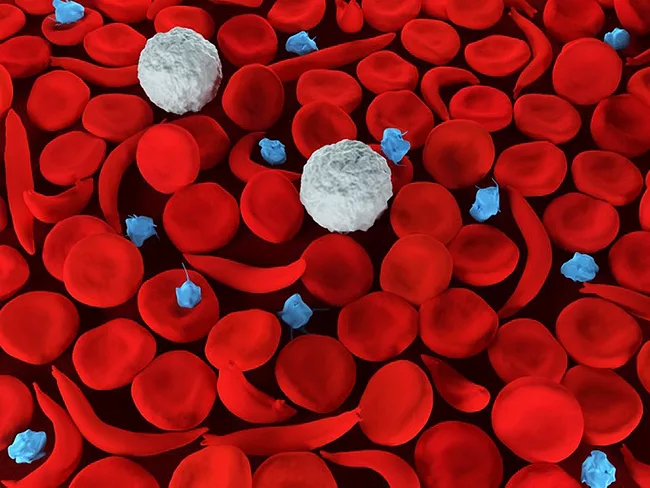
Sickle cell disease (SCD) is autosomal recessive disorder caused by mutations in the β-globin gene, and induction of fetal γ-globin is considered an established therapeutic strategy for the treatment of this disease. A research team led by scientists at Kyorin Pharmaceutical Co. Ltd. has discovered RK-701, a small-molecule inhibitor of G9a and G9a-like protein (GLP) as a potential therapeutic agent for SCD.
In a study published in the online edition of Proceedings of the National Academy of Sciences on Jan. 23, 2023, a team of scientists from Frederick National Laboratory for Cancer Research and the University of California, San Francisco (UCSF) described how neurofibromin 1 (NF1) missense mutations act in a dominant negative manner through dimerization with wild-type neurofibromin.
Research shows that individuals with schizophrenia have abnormal gene expression patterns in their brains compared with people without the condition. In a study published in PLOS Biology on Jan. 24, 2023, the authors reported that many genes in brain tissue from the dorsolateral prefrontal cortex, a region involved in cognition, have expression patterns that follow a 12-hour cycle. The investigators found that these patterns were largely lost in people with schizophrenia.
A genome-wide association study (GWAS) from The University of Queensland has linked blood cell traits (BCTs) and neurological and psychiatric disorders (NPDs), providing a tool to improve patient treatments or repurposing different drugs. The researchers also found a cause-effect relationship between Parkinson's and platelet distribution width. In their study, published Jan. 25, 2023, in Cell Genomics, the scientists observed the genetic overlap between common NPDs and 29 BCTs, including functional genes, regulatory elements and new genetic correlations linked to hematological data and for these diseases.
Decibel Therapeutics Inc. has received clearance of its clinical trial application (CTA) by the U.K.'s Medicines and Healthcare products Regulatory Agency (MHRA) to initiate a phase I/II trial of gene therapy DB-OTO in pediatric patients with congenital hearing loss due to an otoferlin deficiency.
West China Hospital, Sichuan University has described heteroatom-substituted aromatic compounds reported to be useful for the treatment of pain and as general anesthetics.

 RSS
RSS