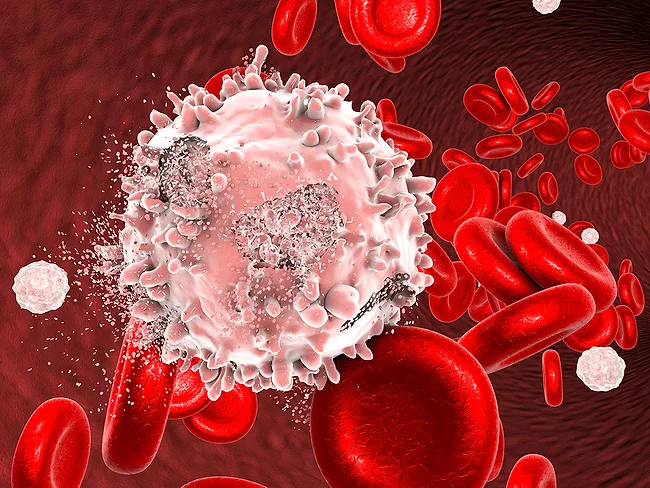
Immunotherapy, a treatment that increases the survival of cancer patients to the point of remission of the disease, can also have the opposite effect. In some patients, immune checkpoint blockade accelerates cancer. Now, researchers at the University of Michigan Medical School have discovered that the answer to this hyperprogressive disease (HPD) lies in the interconnection of the molecular pathways of interferon signaling (IFNγ), fibroblast growth factor 2 (FGF2) and the β-catenin protein.
By combining drug sensitivity with genomic profiling of tumor cells, a study from St. Jude Children's Research Hospital with more than 800 patients has shown a wide diversity in drug sensitivity for pediatric acute lymphoblastic leukemia (ALL) and defined six patterns of response to treatment. “This work provides a framework for ‘functional precision medicine’,” corresponding author Jun Yang, vice chair of the Department of Pharmacy and Pharmaceutical Sciences at St. Jude Children's Research Hospital, told BioWorld.
Sitryx Therapeutics Ltd. has identified nuclear factor erythroid 2-related factor 2 (NFE2-related factor 2; NFE2L2; NRF2) activators reported to be useful for the treatment of inflammatory disorders.
Abbvie Inc. has described new proteolysis targeting chimera (PROTA) compounds comprising an E3 ubiquitin ligase-binding moiety covalently linked to tyrosine protein phosphatase nonreceptor type 2 (PTPN2)-targeting moiety reported to be useful for the treatment of cancer, diabetes type 2 and nonalcoholic steatohepatitis.
Reservoir Neuroscience Inc. has disclosed prostaglandin E2 receptor EP2 subtype (PTGER2; EP2) antagonists reported to be useful for the treatment of inflammation.
C4x Discovery Holdings plc has advanced its MALT-1 inhibitor program into the preclinical candidate selection phase. Inhibition of MALT-1 has potential therapeutic applicability as a monotherapy for MALT-1-driven cancers and in combination with BTK inhibitors across multiple hematological indications, as well as broader potential in solid tumors and inflammation.
Harbour Biomed Ltd. has received FDA clearance of its IND application to initiate clinical trials in the U.S. with HBM-1007, a fully human monoclonal antibody targeting CD73.
 RSS
RSS