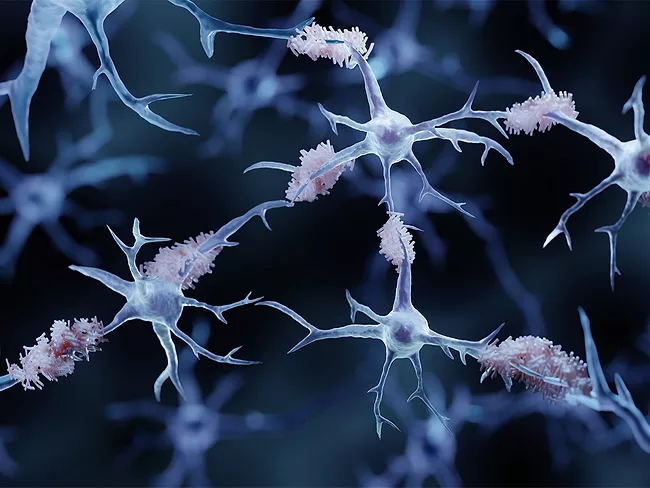
At the ongoing meeting of the American Chemical Society in Denver, F. Hoffmann-La Roche Ltd. has reported the discovery of an orally available and brain-penetrant irreversible asparagine-specific endopeptidase (AEP) inhibitor, RO-7542742, for the potential treatment of neurodegenerative diseases.
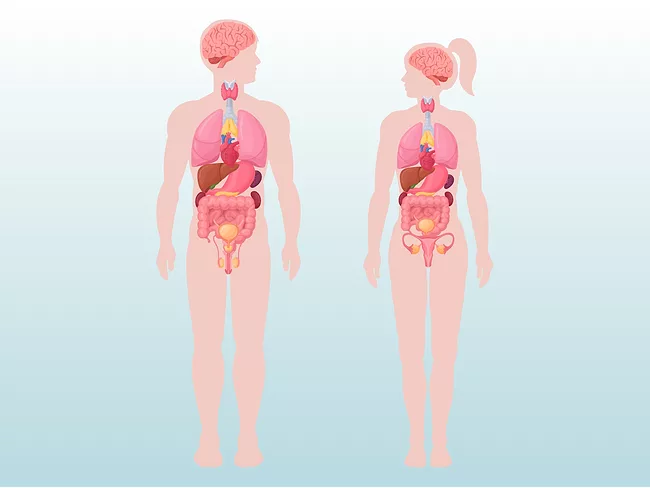
The risk of developing multiple sclerosis (MS) is nearly four times as high for women as it is for men. And that relative risk has increased sharply over time. In 1955, women were only slightly more likely than men to develop MS. A research team at the University of Toronto and the Oklahoma Medical Research Foundation (OMRF) has gained new insights into possible causes for this increasing disparity.
Chengdu Duote Antibody Pharmaceutical Co. Ltd. has described antibody-drug conjugates comprising antibody or antigen-binding fragments covalently linked to eribulin derivatives through a linker reported to be useful for the treatment of cancer.
Nanjing Mingde New Drug Research Co. Ltd. has divulged proteolysis targeting chimeras (PROTACs) comprising an E3 ubiquitin ligase-binding agent coupled to an estrogen receptor α (ER-α; ESR1)-targeting moiety via linker. They are reported to be useful for the treatment of breast cancer.
Shenzhen Zhongge Biotechnology Co. Ltd. has identified interleukin-1 receptor-associated kinase 4 (IRAK-4) inhibitors and derived PROTAC compounds reported to be useful for the treatment of autoimmune disorders, inflammatory disorders, cancer, transplant rejection and more.
Beijing Zheyuan Technology Co. Ltd. has synthesized serine/threonine-protein kinase PLK1 (STPK13) inhibitors reported to be useful for the treatment of cancer and sepsis.
Alzheimer’s disease (AD) is characterized by synaptic damage, neuronal loss and cognitive decline caused by the neurotoxic effects of amyloid-β. It is the third most significant challenge to global health nowadays and currently available drugs have limited efficacy.
Adcendo ApS and Multitude Therapeutics Inc. have signed a licensing agreement for the development of a highly differentiated antibody-drug conjugate (ADC) targeting tissue factor, designated ADCE-T02.

 RSS
RSS