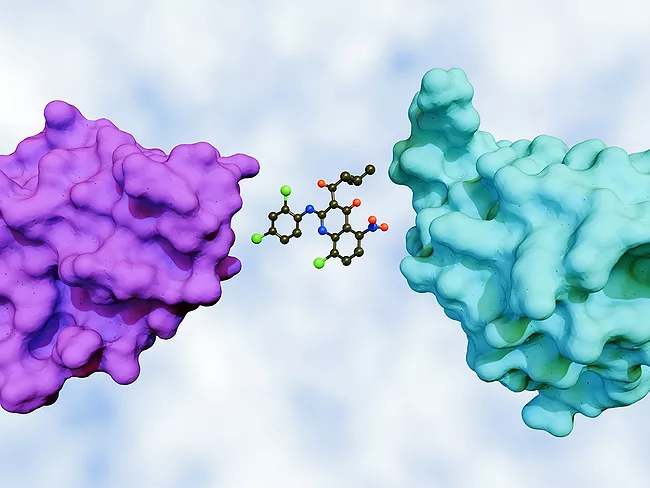
DNA polymerase θ (POLθ) is a specialized, error-prone DNA polymerase that promotes the repair of DNA double-strand breaks through theta-mediated end joining (TMEJ), an alternative pathway that operates independently of homologous recombination.
Third Arc Bio Inc. has closed a $52 million series A extension to advance its pipeline of multifunctional antibodies for a range of oncology and immunology & inflammation (I&I) indications.
Biodexa Pharmaceuticals plc has closed an exclusive license agreement with Otsuka Pharmaceutical Co. Ltd. for OPB-171775 (now MTX-240), a phase I-ready molecular glue intended to be developed for the treatment of gastrointestinal stromal tumors (GIST) and potentially additional indications.
Looking to fill a treatment gap, the U.S. Biomedical Advanced Research and Development Authority (BARDA) is launching the first stage of a $100 million prize competition to support development of broad-spectrum, small-molecule antiviral therapies targeting viruses in the Togaviridae and Flaviviridae families.
The U.K.’s main research funding agency is looking to put more public money into proof of concept and pre-seed funding of putative university spinouts, to make them more investible and improve relations between academics and investors. The move by UK Research and Innovation, which in 2026 will allocate £9.22 billion (US$12.58 billion) of taxpayer money across all fields of research, is in response to a government edict that the agency prioritizes outputs over inputs.
Kinoteck Therapeutics Co. Ltd. has discovered nitrogen-containing heterocyclic derivatives acting as Werner syndrome ATP-dependent helicase (WRN; RECQ3; RECQL2) inhibitors potentially useful for the treatment of cancer.
Anew Therapeutics Pte Ltd. has synthesized heterocyclic compounds acting as interleukin-17A (IL-17A)/interleukin-17 receptor A (IL-17RA) interaction inhibitors. As such, they are reported to be useful for the treatment of Crohn’s disease, type 1 diabetes, dry eye, multiple sclerosis, myositis, psoriasis, rheumatoid arthritis and vitiligo, among others.
Haisco Pharmaceutical Group Co. Ltd. has disclosed new muscarinic M4 receptor agonists described as potentially useful for the treatment of substance abuse and dependence, Alzheimer’s disease, pain, schizophrenia and sleep disorders.
A patent from Hansoh Bio LLC, Jiangsu Hansoh Pharmaceutical Group Co. Ltd. and Shanghai Hansoh Biomedical Co. Ltd. describes new multi-membered macrocyclic compounds acting as GTPase KRAS G12C, G12V and/or G13D mutant inhibitors.
Alterity Therapeutics Ltd. has divulged salts of ATH-434, the company's oral agent designed to inhibit the aggregation of pathological proteins implicated in neurodegeneration.

 RSS
RSS