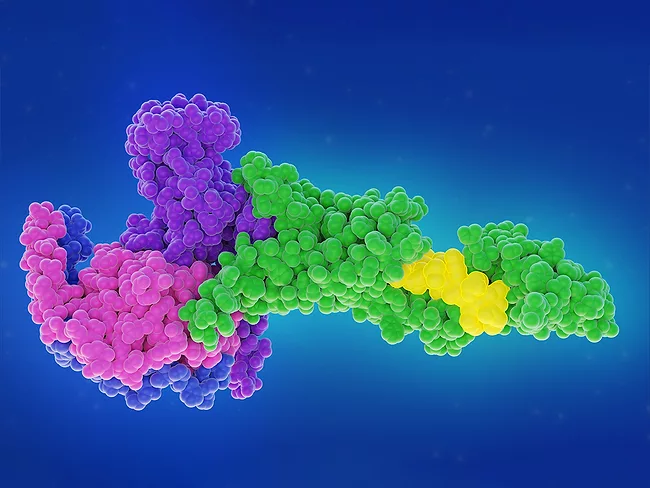
A new molecule combines the action of two incretins, GLP-1 and GIP, hormones that regulate glucose and appetite, with lanifibranor, a triple agonist of peroxisome proliferator activated receptors (PPAR α/γ/δ). GLP-1-GIP-Lani enables targeted delivery of the PPAR agonist to cells that express incretin receptors, enhancing weight loss, improving glucose control and reducing inflammation in obese mice. In these models, it surpassed the effects of GLP-1 receptor agonists such as semaglutide and GLP-1-GIP co-agonists such as tirzepatide in reducing body weight, improving glycemic control and enhancing metabolic outcomes during active treatment.
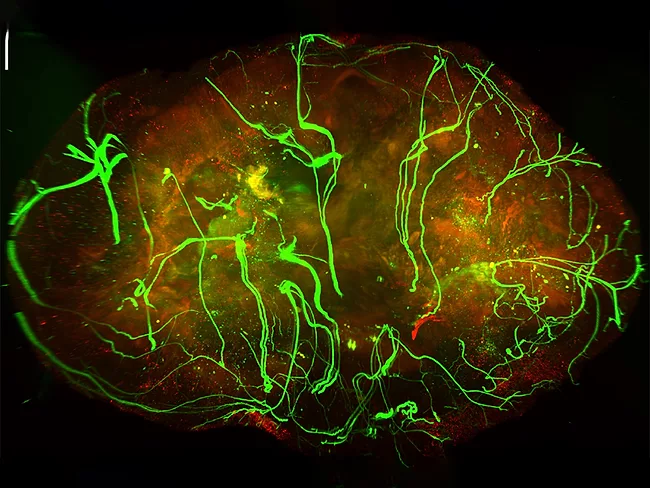
Innervation by the sympathetic nervous system is typically a boon to tumors. But researchers from Weill Cornell Medicine and colleagues have shown that in some cases, the relationship between tumors and the nervous system is more complex. Depending on context, innervation can either assist or obstruct tumor growth. “The nervous system typically has been considered as a driver of cancer growth, but here we’ve found that it can be a brake on cancer growth in some contexts,” said David Simon, an assistant professor of biochemistry and biophysics at Weill Cornell Medicine.
Shanghai Yingli Pharmaceutical Co. Ltd. has divulged new nitrogen-containing heterocyclic compounds acting as N-glycosylase/DNA lyase (OGG1) inhibitors potentially useful for the treatment of cancer, autoimmune disease and inflammatory disorders.
Foshan Ionova Biotherapeutics Co. Ltd. has discovered new interleukin-17A (IL-17A) inhibitors potentially useful for the treatment of inflammatory disorders.
Riltide Medicines Co. Ltd. has identified new cyclic GMP-AMP synthase (MB21D1; cGAS) inhibitors potentially useful for the treatment of autoimmune disease, rheumatic disease, cardiovascular, dermatological, renal, respiratory, neurological and inflammatory disorders, among others.
Astrazeneca AB has reported new antibody-drug conjugates (ADCs) comprising an antibody or antigen-binding fragment covalently linked to cytotoxic drug potentially useful for the treatment of cancer.
The combination of impaired epithelial barrier function, mucosal inflammation and elevated oxidative stress is determinant for the pathogenesis of ulcerative colitis (UC). NF-E2-related factor 2 (NRF2) is an important transcription factor for modulating antioxidant defenses, inhibiting inflammatory pathways and regenerating the epithelial barrier. Montai Therapeutics Inc. has developed a potent and selective NRF2 agonist compound, MTAI-1025, for the management of UC using its proprietary CONECTA platform.
Addex Therapeutics Ltd. has released preclinical data demonstrating antitussive activity of its γ-aminobutyric acid subtype B receptor (GABA-B) positive allosteric modulator (PAM) candidate in a bleomycin-induced idiopathic pulmonary fibrosis (IPF)-exacerbated chronic cough model.
Rett syndrome (RTT) is a rare neurodevelopmental condition affecting multiple organ systems and is most often driven by mutations in the X-linked MECP2 gene. Researchers at Shanghai Duomirui Biological Technology Co. Ltd. have developed a new class of trofinetide prodrugs aimed at addressing limitations related to drug administration and pharmacokinetic properties.
 RSS
RSS