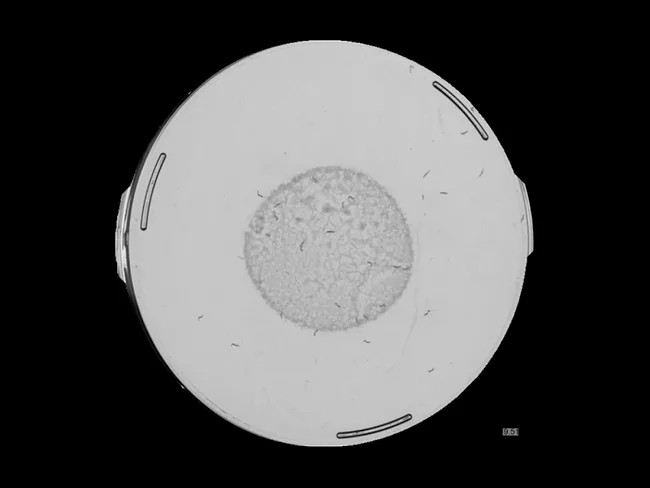
By independently manipulating the lifespan of worms and one of its purported biomarkers, namely, the cessation of vigorous movement (CVM), investigators at the Center for Genomic Regulation (CRG) in Barcelona have demonstrated that the two are driven by partly independent processes.
Two new studies now have uncovered fungal DNA in tumors throughout the body and endeavor to characterize the cancer mycobiome. Both studies were published in the Sept. 29, 2022, online issue of Cell. Although the association between cancer and individual microbes has long been explored, recent attention has focused on the whole human microbiome.
Tumor mutational burden (TMB), a biomarker used to assess whether a patient will respond to immunotherapy, needs to be recalculated in order to be useful for patients of Asian or African descent. Scientists at the Dana-Farber Cancer Institute found a significant bias in the estimated TMB values affecting these populations and adjusted them for those patients.
Cell cycle-associated protein 1 (CAPRIN1) is an ubiquitously expressed protein, the levels of which are usually high in tissues with an elevated cell turnover; it is also abundant in the brain, where it regulates the transport and translation of synaptic protein mRNA.
A Mayo Clinic study demonstrated how the deficiency of the enzyme CDK12 or its regulation by cyclin K causes the expression of mutations related to resistance to endocrine therapy in prostate cancer. Prostate tumors with CDK12 deficiency are more aggressive, recurrent, produce metastases and are associated with castration-resistant prostate cancer (CRPC). CDK12 deficiency impairs DNA repair and increases genomic instability, causing an effect known as homologous recombination deficiency or BRCAness.
Impairment in the functionality of the adipose tissue is crucial for obesity-related metabolic comorbidities and may trigger the onset of type 2 diabetes. The adipose tissue has been proposed as a main contributor of circulating miRNAs (miRNAs), but has not yet been characterized for these markers.
Understanding how alternative splicing is regulated and how it contributes to disease pathogenesis might open new therapeutic options for the treatment of diabetic nephropathy (DN). Bcl-2-like protein 1 (BCL2L1), also known as BCLX, for which two alternative splicing forms (Bcl-xL and Bcl-xS) have been seen to have antagonistic effects.
Researchers from the U.K. have investigated the specificity and sensitivity of clonidine growth hormone (GH) as a biomarker for the differential diagnosis of multiple system atrophy (MSA) from pure autonomic failure (PAF), Parkinson’s disease (PD) and progressive supranuclear palsy (PSP).
Vasoactive intestinal polypeptide receptor 1 (VIPR1) has been shown to have contradicting effects in different cancers. Researchers have investigated the association of VIPR1 with immune inhibitory components to understand its immune landscape.
As patients with Pompe disease age, they develop neurocognitive issues and impairment in their cerebral white matter, as shown in MRI scanning. To date, there are no biomarkers that reflect this disease progression in the brain. The usefulness of neurofilament light chain (NfL) was investigated for this purpose.
 RSS
RSS