Ice, juice, the exact measure of liquor, a few drops of Angostura... What goes into a good New Year’s Eve cocktail? According to researchers working on vaccines for the most elusive viruses, it will be time soon to toast next-generation vaccines. If 2020 was the year of the COVID-19 pandemic, and in 2021 the year of mRNA vaccinations, 2022 brought polyvalent designs of antigens, evaluated highly neutralizing antibodies, and fine-tuned mRNA technology against SARS-CoV-2, HIV and the flu.
Peptidream Inc. announced a new multi-target collaboration and license agreement with Merck & Co. Inc., known as MSD outside the U.S. and Canada, as well as research collaboration and license agreement with Eli Lilly & Co (Lilly). Both agreements are focused on the discovery and development of novel peptide drug conjugates (PDCs). Under the agreement with MSD, Peptidream will provide peptide candidates identified from its proprietary Peptide Discovery Platform System (PDPS) technology for use as PDCs against targets of interest to MSD.
Insitu Biologics Inc. has entered into an agreement with the Mayo Foundation for Medical Education and Research to further develop its prolonged-release drug delivery technology for cancer therapeutics.
Orgenesis Inc. and Kurve Therapeutics Inc. have announced promising preclinical study results for intranasal administration of a cell-based oncolytic virus-bearing product.
The hexanucleotide repeat expansion (HRE) GGGGCC in the noncoding region of the chromosome 9 open reading frame 72 (C9ORF72) gene is the most common cause of hereditary (40%) and apparently sporadic (5%-6%) amyotrophic lateral sclerosis (ALS).
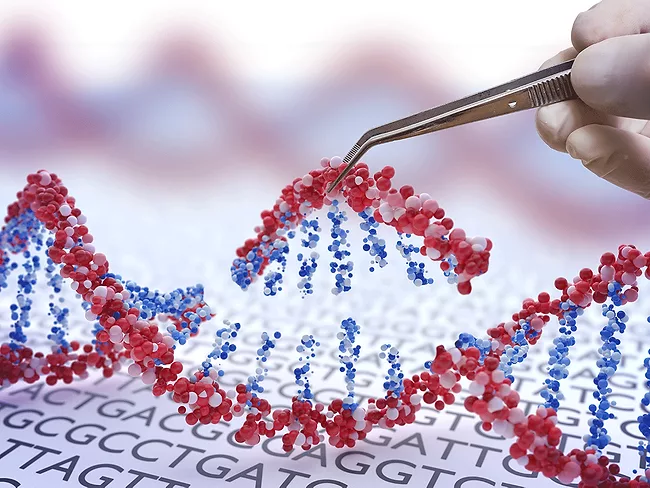
Programmable genome insertion of long DNA sequences, useful for both gene therapy and basic research, commonly relies on cellular responses to double-strand breaks (DSBs) using programmable nucleases, such as CRISPR-Cas9, for induction of repair pathways such as non-homologous end joining (NHEJ). To overcome the current limitations of gene integration approaches, scientists from the Massachusetts Institute of Technology and colleagues developed a new strategy based on advances in programmable CRISPR-based gene editing, such as prime editing, together with the application of precise site-specific integrases.
A combination of bioengineering techniques on normal cell binding proteins could be the method of the future for selective cell binding. Scientists at the University of California, San Francisco (UCSF) have created a synthetic glue based on the expression of membrane receptors to establish the desired connection between cells. The results may be applied in different fields of cell biology or biomedicine, such as regeneration and wound repair, including the nervous system, or cancer.
The positively charged nanoparticle polyamidoamine generation 3 (P-G3) can be specifically targeted to either visceral or subcutaneous fat, and affects both types of fat in different ways, researchers from Columbia University reported in two papers recently published. The studies, published online in Nature Nanotechnology on Dec. 1, 2022, and in Biomaterials on Nov. 28, 2022, are both “a conceptual advance” and “quite amenable to translation,” co-corresponding author Kam Leong told BioWorld.
Previous research has shown that cytotoxic lymphocytes rely on gasdermin-mediated pyroptosis to kill tumor cells. Pyroptosis appears to be closely involved in anticancer immune response and has therefore emerged as a promising strategy for cancer treatment. In a recently published study, scientists at the University of Wisconsin-Madison aimed to leverage gasdermin-triggered pyroptosis for antitumor immunotherapy.
Steric hindrance and electrostatic interactions often prevent the subsequent development of clinically relevant nanoparticles to the in vivo stage. Researchers at the Shanghai Institute of Materia Medica, Chinese Academy of Sciences, have now demonstrated the development of nanoparticles exhibiting pH-sensitive properties triggering the stretching of peptides to reveal accessible liver-targeted ligands that can deliver biologically active peptides in vivo.
 RSS
RSS