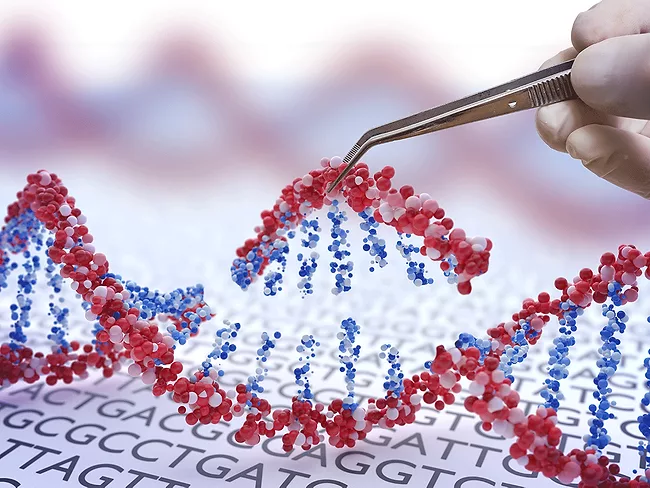
CRISPR, or clustered regularly interspaced palindromic repeats, is transforming biomedical research, and making rapid inroads into the clinic, with its ability to easily target specific DNA and RNA sequences. CRISPR itself is made of RNA. It recognizes target sequences and delivers CRISPR-associated (Cas) proteins, nucleases that cut the target sequence. In two papers published online in Nature on Jan. 4, 2023, researchers have demonstrated that a recently discovered type of Cas protein, Cas12a2, can degrade double-stranded DNA when its associated CRISPR guide RNA recognizes its target sequence.
Biocytogen Pharmaceuticals (Beijing) Co. Ltd. and Hansoh Pharmaceutical Group Company Ltd. have established an antibody collaboration, assignment and exclusive license agreement. Biocytogen will provide a license to Hansoh Pharma for its selected fully human antibody molecules against a designated target for development, manufacturing and commercialization globally.
Tucked into the 4,155-page, $1.7 trillion spending bill for fiscal 2023 that U.S. President Joe Biden signed into law Dec. 23 is a small provision that may have outsized impact on future biosimilar and other drug development. Championed by lawmakers on both sides of the political spectrum, the provision modernizes the data that can be used to support drug development, including alternatives to animal studies.
Ice, juice, the exact measure of liquor, a few drops of Angostura... What goes into a good New Year’s Eve cocktail? According to researchers working on vaccines for the most elusive viruses, it will be time soon to toast next-generation vaccines. If 2020 was the year of the COVID-19 pandemic, and in 2021 the year of mRNA vaccinations, 2022 brought polyvalent designs of antigens, evaluated highly neutralizing antibodies, and fine-tuned mRNA technology against SARS-CoV-2, HIV and the flu.
Peptidream Inc. announced a new multi-target collaboration and license agreement with Merck & Co. Inc., known as MSD outside the U.S. and Canada, as well as research collaboration and license agreement with Eli Lilly & Co (Lilly). Both agreements are focused on the discovery and development of novel peptide drug conjugates (PDCs). Under the agreement with MSD, Peptidream will provide peptide candidates identified from its proprietary Peptide Discovery Platform System (PDPS) technology for use as PDCs against targets of interest to MSD.
Insitu Biologics Inc. has entered into an agreement with the Mayo Foundation for Medical Education and Research to further develop its prolonged-release drug delivery technology for cancer therapeutics.
Orgenesis Inc. and Kurve Therapeutics Inc. have announced promising preclinical study results for intranasal administration of a cell-based oncolytic virus-bearing product.
The hexanucleotide repeat expansion (HRE) GGGGCC in the noncoding region of the chromosome 9 open reading frame 72 (C9ORF72) gene is the most common cause of hereditary (40%) and apparently sporadic (5%-6%) amyotrophic lateral sclerosis (ALS).
Programmable genome insertion of long DNA sequences, useful for both gene therapy and basic research, commonly relies on cellular responses to double-strand breaks (DSBs) using programmable nucleases, such as CRISPR-Cas9, for induction of repair pathways such as non-homologous end joining (NHEJ). To overcome the current limitations of gene integration approaches, scientists from the Massachusetts Institute of Technology and colleagues developed a new strategy based on advances in programmable CRISPR-based gene editing, such as prime editing, together with the application of precise site-specific integrases.
 RSS
RSS