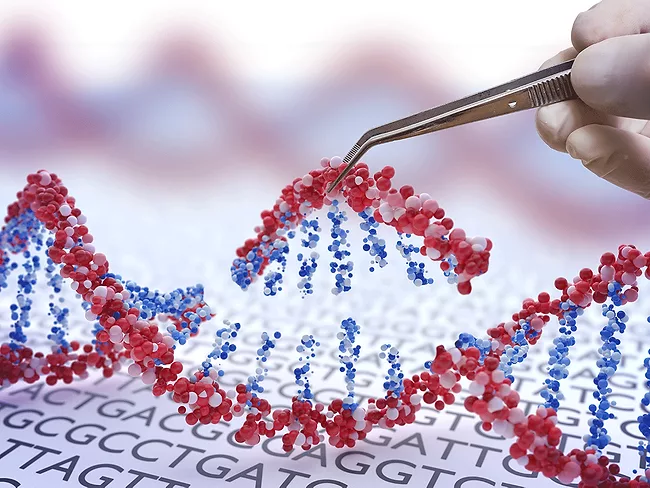
Programmable genome insertion of long DNA sequences, useful for both gene therapy and basic research, commonly relies on cellular responses to double-strand breaks (DSBs) using programmable nucleases, such as CRISPR-Cas9, for induction of repair pathways such as non-homologous end joining (NHEJ). To overcome the current limitations of gene integration approaches, scientists from the Massachusetts Institute of Technology and colleagues developed a new strategy based on advances in programmable CRISPR-based gene editing, such as prime editing, together with the application of precise site-specific integrases.
A combination of bioengineering techniques on normal cell binding proteins could be the method of the future for selective cell binding. Scientists at the University of California, San Francisco (UCSF) have created a synthetic glue based on the expression of membrane receptors to establish the desired connection between cells. The results may be applied in different fields of cell biology or biomedicine, such as regeneration and wound repair, including the nervous system, or cancer.
The positively charged nanoparticle polyamidoamine generation 3 (P-G3) can be specifically targeted to either visceral or subcutaneous fat, and affects both types of fat in different ways, researchers from Columbia University reported in two papers recently published. The studies, published online in Nature Nanotechnology on Dec. 1, 2022, and in Biomaterials on Nov. 28, 2022, are both “a conceptual advance” and “quite amenable to translation,” co-corresponding author Kam Leong told BioWorld.
Previous research has shown that cytotoxic lymphocytes rely on gasdermin-mediated pyroptosis to kill tumor cells. Pyroptosis appears to be closely involved in anticancer immune response and has therefore emerged as a promising strategy for cancer treatment. In a recently published study, scientists at the University of Wisconsin-Madison aimed to leverage gasdermin-triggered pyroptosis for antitumor immunotherapy.
Steric hindrance and electrostatic interactions often prevent the subsequent development of clinically relevant nanoparticles to the in vivo stage. Researchers at the Shanghai Institute of Materia Medica, Chinese Academy of Sciences, have now demonstrated the development of nanoparticles exhibiting pH-sensitive properties triggering the stretching of peptides to reveal accessible liver-targeted ligands that can deliver biologically active peptides in vivo.
A computational platform that used single-cell RNA sequencing (scRNA-seq) data could quickly predict the best chemical compounds to use to convert cells from one type into another for use in research or cell therapies. The work, published in the Nov. 17, 2022, issue of Stem Cell Reports, was a collaboration between the lab of Hongkui Deng, a professor and director of the Key Laboratory of Cell Proliferation and Differentiation at Peking University in Beijing, and the lab of Antonio del Sol, a professor at the Luxembourg Centre for Systems Biomedicine at the University of Luxembourg.
Bit Bio Ltd. has announced the addition to its portfolio of ioGlutamatergic Neurons MAPT N279K and ioGlutamatergic Neurons MAPT P301S disease models for frontotemporal dementia (FTD), and early access to its ioGABAergic Neurons for neurological diseases, including epilepsy, schizophrenia, autism and Alzheimer's disease.
Nona Biosciences, a wholly owned subsidiary of HBM Holdings Ltd., has entered into a collaboration agreement with Dragonfly Therapeutics Inc. based on Nona's proprietary fully human heavy chain only antibody (HCAb) transgenic mice platform to discover and develop fully human heavy chain only antibodies for bispecific/multi-specific therapeutic antibody generation.
Sunshine Biopharma Inc. has entered into a collaboration agreement with a leading lipid nanoparticle (LNP) formulation company to advance the development of Sunshine's mRNA-based anticancer macromolecule, K1.1.

 RSS
RSS