On the last day of this year’s Molecular Targets meeting, an annual joint conference of the American Association for Cancer Research, the National Cancer Institute and the European Organization for the Research and Treatment of Cancer, the final plenary went from molecular to macro in a lively discussion of the biggest roadblock in cancer drug development, and what can be done to improve it.
"My fondest hope is that maybe depression and other mental health disorders may be diagnosed by underlying cause, rather than categorized dualistically," Edward Bullmore, director of the Wolfson Brain Imaging Centre, and head of the Department of Psychiatry at the University of Cambridge, told his audience at the European Congress of Neuropsychopharmacology (ECNP). "I think it's much more aligned with the way that the rest of medicine has been working for some time."
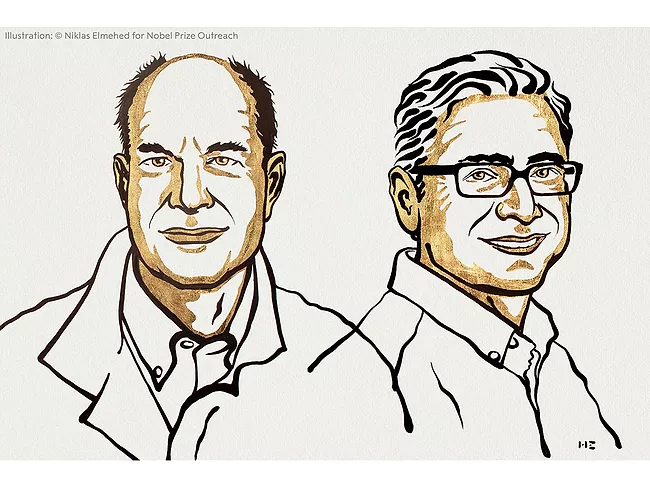
The 2021 Nobel Prize in Physiology or Medicine was awarded Oct. 4 to David Julius and Ardem Patapoutian “for their discoveries of receptors for temperature and touch.”
Low-grade gliomas with mutated isocitrate dehydrogenase-1 (IDH1) produced and secreted higher levels of the cytokine granulocyte colony-stimulating factor (G-CSF) than other glioma types, which improved their antitumor immune response in animal models.
Horseshoe or Rhinopolus bats in Laos carry coronavirus species with a near-identical receptor binding domain to SARS-CoV-2, according to a paper posted on the preprint server Research Square by investigators from the Pasteur Institutes of Paris and Laos.
Trimers of nanobodies, a simpler form of antibody made by some animal species, were effective at preventing and treating COVID-19 in preclinical studies, researchers reported in the Sept. 22, 2021, issue of Nature Communications.
Researchers have retrospectively divided more than 16,000 non-small-cell lung cancer (NSCLC) patients with EGFR mutations into four structure-based subgroups, and looked at how the members of each subgroup fared depending on which EGFR inhibitor they were given.
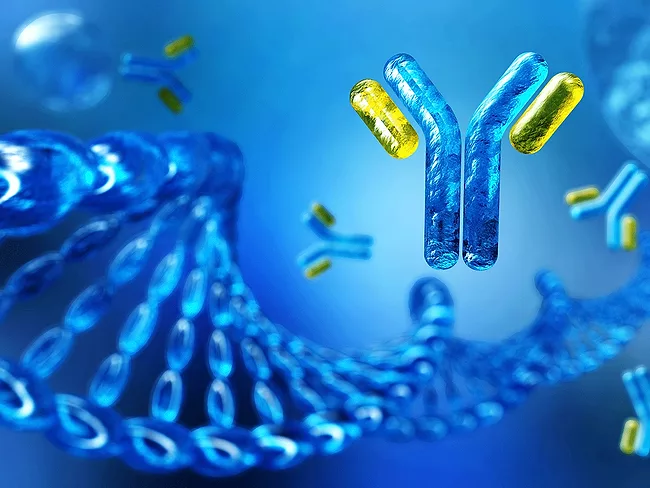
Delivering antibodies in the form of their DNA could enable their therapeutic use under several circumstances where traditional antibodies fall short. One of those is resource-poor settings where the current cost of antibodies makes them a nonstarter. Perhaps the largest opportunity to expand antibody use in such settings is for HIV, where broadly neutralizing antibodies have the potential to be the next best thing to a vaccine or a cure – if they can be made to last, for cheap.
Monoclonal antibodies are a triumph of modern medicine. They are also too expensive to be a standard therapy in all but the wealthiest countries. “Having 10% or 15% of your population on antibodies is not sustainable even in wealthy countries,” Rachel Liberatore told BioWorld. Liberatore is director of research and development at Renbio Inc., which is testing the intramuscular delivery of antibody-encoding DNA to prevent and treat infections, including SARS-CoV-2 and HIV.
In studies that give new insights into both developmental biology and the origins of melanoma, investigators at Memorial Sloan-Kettering Cancer Center and Weill Cornell Medical College have identified the activity of chromatin remodeling protein ATAD2 as necessary for cells with the oncogenic mutation V600E to give rise to melanomas.
 RSS
RSS