Researchers at the University of Virginia have used a retrospective database analysis to show that the use of nucleoside reverse transcriptase inhibitors for the treatment of HIV or hepatitis B reduced the risk of developing type 2 diabetes by 33%.
Keeping you up to date on recent developments in diagnostics, including: Distinguishing metastatic SLNs in breast cancer; MRS method reveals insights into Alzheimer’s disease; SARS-CoV-2 multiplex assay allows 3x as many patients per run.
Keeping you up to date on recent developments in orthopedics, including: Technology for printing customized neuroprostheses on a 3D bioprinter; AI could expand healing with bioscaffolds; AI detects osteoarthritis years before it develops; 'Bandage' developed to rebuild broken bone.
Keeping you up to date on recent developments in oncology, including: Single-cell RNA sequencing may clarify response to chemotherapy; Epigenetic resistance to PARP inhibitors; Researchers eye organ-on-a-chip drug screening model.
Keeping you up to date on recent developments in cardiology, including: Generating 3D heart organoids; Hostility and heart attacks; Virtual screening tool aims to simplify diagnosing pulmonary hypertension.
Keeping you up to date on recent developments in neurology, including: New smart drug delivery system may help treatment for neurological disorders; Imaging probe developed for Alzheimer's disease; Potential target identified for migraine therapy.
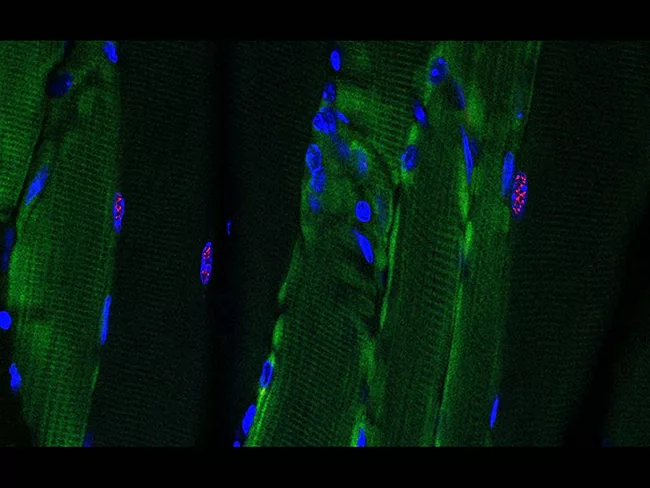
Researchers at the University of California at San Diego have used RNA-targeted CRISPR to reverse symptoms in an animal model of myotonic dystrophy type 1 (DM1). They reported their findings in the Sept. 14, 2020, issue of Nature Biomedical Engineering.
Keeping you up to date on recent developments in diagnostics, including: Intensive care scoring systems outperform miRNA in sepsis diagnosis; Report: AI falls short of potential in health care; Angiopoietin trouble can lead to lymphedema.
Keeping you up to date on recent developments in orthopedics, including: Restless nature of human spinal cord revealed by noninvasive functional imaging; Stronger bones thanks to heat and microbiota; Researchers use soy to improve bone cancer treatment.
Keeping you up to date on recent developments in oncology, including: New algorithm prioritizes breast cancer patients for surgery, chemotherapy; Oxygen grows tumors but shrinks metastasis chances; ‘Fight or flight’ nervous system helps fight tumors, too; Proton beam therapy available in South Florida.
 RSS
RSS