Keeping you up to date on recent developments in oncology, including: Single-cell RNA sequencing may clarify response to chemotherapy; Epigenetic resistance to PARP inhibitors; Researchers eye organ-on-a-chip drug screening model.
While the ultimate goal is increased diversity in clinical trials so as to improve health equity, a great start is making diversity a priority and a part of the research plan, Luther Clark, deputy chief patient officer at Merck & Co. Inc., said during an FDA Office of Minority Health and Health Equity webinar Sept. 22.
TORONTO – Ka Imaging Inc. has received U.S. FDA 510(k) clearance for a portable, dual-energy X-ray detector that distinguishes itself from others in this class by delivering regular digital radiography, bone and tissue images in a single X-ray exposure. Designed for early detection of pneumonia, including COVID-19, the Reveal detection system also differentiates bone and soft-tissue.
The field of artificial intelligence (AI) is stretching the boundaries of conventional med-tech regulation, and several regulatory agencies are working to cut that Gordian knot. Marc Lamoureaux, director of digital health at Health Canada’s (HC) medical device directorate, said on a Sept. 21 webinar that legislation passed in 2019 gives the agency a “regulatory sandbox” in which to experiment with AI regulation, a mechanism he said may bring these algorithms to market much more rapidly than would otherwise be the case.
Visby Medical Inc. emerged from stealth mode to secure emergency use authorization (EUA) from the U.S. FDA for its Personal PCR device for detection of COVID-19 infections. It is the first FDA-authorized portable device to use the polymerase chain reaction technology for COVID-19 testing. The San Jose, Calif.-based company was known as Click Diagnostics Inc. until March 2020.
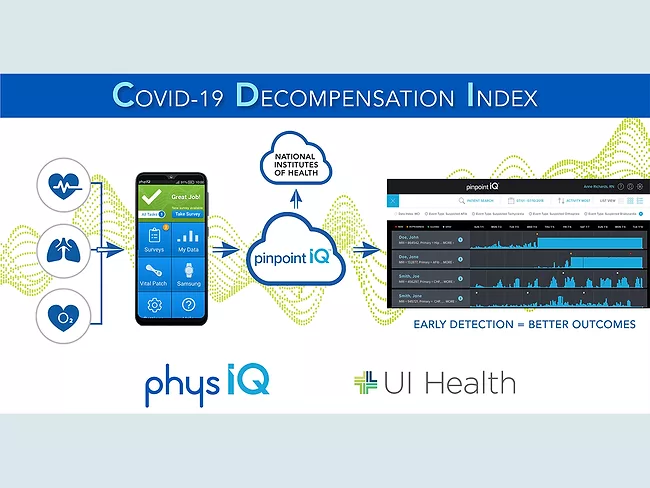
The digital medicine company Physiq Inc. has received a contract from the NIH to develop an artificial intelligence (AI)-based index that can provide an early warning that a patient with COVID-19 is in decline and needs medical treatment. The index, called the COVID-19 Decompensation Index (CDI) Digital Biomarker, will run on Physiq’s existing Accelerateiq computing platform, analyzing physiological data from FDA-cleared wearable devices to create a personalized baseline for patients who have tested positive for COVID-19.
Following days of speculation, Illumina Inc. said today it will acquire liquid biopsy startup Grail Inc. for $8 billion in cash and stock, bringing back into the fold a company it spun out in 2016. The deal gives Illumina a major stake in the race the race to develop a less-invasive way to diagnose cancer. Since spinning out, Grail has raised nearly $2 billion from big-name investors with promises of a blood test for early cancer detection and is hoping to introduce its liquid biopsy as a laboratory-developed test (LTD) as early as next year.
Regulatory snapshots, including global submissions and approvals, clinical trial approvals and other regulatory decisions and designations: Abbott, Axonics, Simplify Medical, Visby Medical.

 RSS
RSS