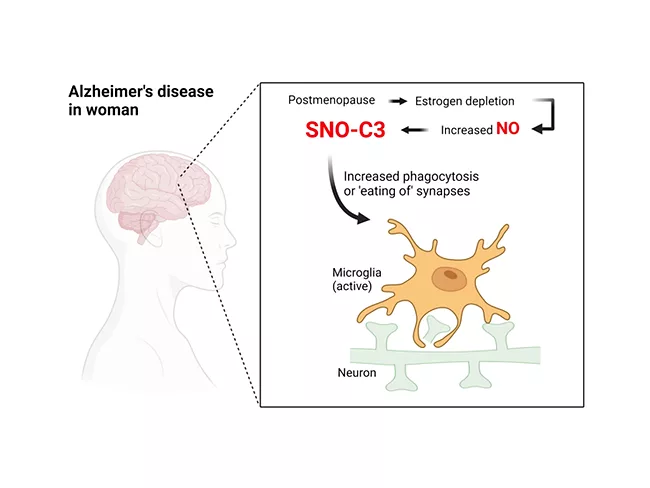
Alzheimer’s disease has a higher incidence in women. This sex difference was associated with a modification of certain proteins of the immune system. According to a recent study, the drop in estrogen with menopause increased the expression in the brain of a neurotransmitter, nitric oxide (NO), generating the S-nitrosylation of complement factor C3 (abbreviated SNO-C3), which activated the microglia.
Bryostatin-1 has failed another Alzheimer’s disease (AD) study. Synaptogenix Inc. released top-line data showing the protein kinase C activator missed the primary endpoint in the company’s phase II study in treating advanced AD.
Investigators from Cerevance Inc. have reported the discovery and preclinical characterization of a novel tandem pore domain halothane-inhibited K+ channel 1 (THIK-1) inhibitor, C-101248, being developed for the treatment of neuroinflammation in Alzheimer’s disease (AD). NETSseq and histological analysis revealed that THIK-1 expression was up-regulated in microglia from different cortical regions of AD donors compared with aged matched nondemented control brains.
Researchers have identified a link between amyloid plaques and dysfunctional neuronal conduction in animal models of Alzheimer’s disease (AD). Their study, which was published in the Dec. 1, 2022, issue of Nature, suggests new ways to think about AD, as well as badly needed potential alternatives to plaque removal to fight the disease.
Eisai Co. Ltd. and Biogen Inc. presented the full data set for the Clarity Alzheimer’s disease trial of lecanemab at the 2022 Clinical Trials on Alzheimer’s Disease, which was simultaneously published in the New England Journal of Medicine. The data supported the top-line results released in September 2022.
At the recent Clinic Trials on Alzheimer’s Disease (CTAD) conference in San Francisco, Regenlife SAS presented the design for its Light4life study examining the therapeutic efficacy of the RGn600 device. This trial on more than 100 subjects will evaluate the cognitive impacts of new photobiomodulation technology.
The age-old separation of dentistry from medicine is deeply embedded in education and professional practice. Given the great advances in both disciplines in recent decades, there is a reasonable argument to be made for maintaining the divide.
Anavex Life Sciences Corp. posted positive top-line data from its phase IIb/III study of ANAVEX 2-73-AD-004 (blarcamesine) in treating mild cognitive impairment due to Alzheimer’s disease (AD) and mild AD. The oral small-molecule activator of the sigma-1 receptor (SIGMAR1) met the study’s primary endpoints and key secondary endpoint with statistically significant results.
Researchers have identified a link between amyloid plaques and dysfunctional neuronal conduction in animal models of Alzheimer’s disease (AD). Their study, which was published in the Dec. 1, 2022, issue of Nature, suggests new ways to think about AD, as well as badly needed potential alternatives to plaque removal to fight the disease.
Vigil Neuroscience Inc. has synthesized triggering receptor expressed on myeloid cells 2 (TREM2) agonists reported to be useful for the treatment of frontotemporal dementia, multiple sclerosis, rheumatoid arthritis, stroke, prion infections, Parkinson's, Alzheimer's and Nasu-Hakola diseases.