There are 40 years of history behind the development of phosphoinositide 3-kinase (PI3K) inhibitors, Rebecca Dent told her audience at ESMO Breast Cancer 2022. And there have been success stories. There are five FDA-approved PI3K inhibitors in several cancer types, and in April, the FDA approved Vijoice (alpelisib; Novartis AG) for PIK3CA-related overgrowth spectrum, a rare disorder resulting from germline mutations of PIK3CA.
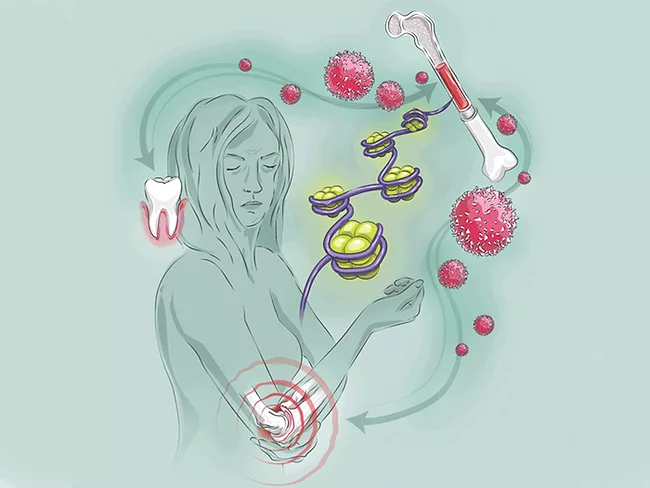
Researchers at the University of Pennsylvania have gained new insight into how different inflammatory conditions reinforce each other via trained innate immunity.
Antibiotics drugs discovery, Ursula Theuretzbacher told the audience at the 2022 European Congress of Clinical Microbiology & Infectious Diseases (ECCMID), has more than one challenge to overcome.
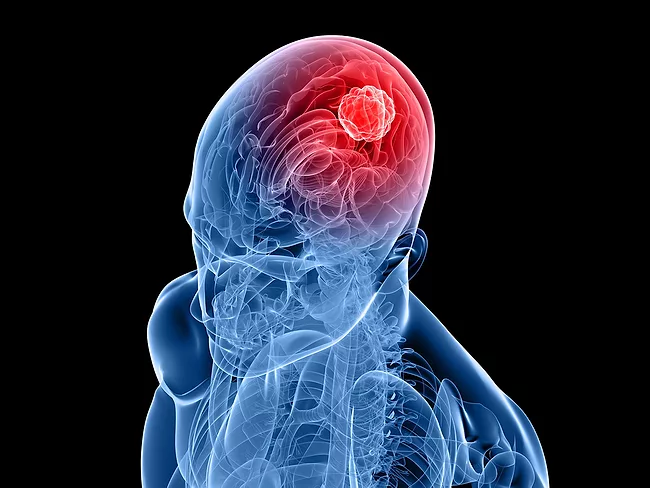
The tumor microenvironment is critical for the ability of cancers to survive and grow, and some aspects of the microenvironment are studied, and targeted, accordingly. Tumor immunology is one of the most active areas of cancer research and has become a pillar of treatment. Others, not so much. “The nervous system is the last component of the microenvironment that people have left completely unrecognized,” Humsa Venkatesh told BioWorld. Even in brain tumors and metastases, where the presence of neurons is glaringly obvious, there has been little attention to how the two interact until recently.
“We’re still a far cry from reproducible, durable benefits” with CAR T cells targeting solid tumors, Crystal Mackall told the audience at the 2022 annual meeting of the American Association for Cancer Research (AACR). But “we’re beginning to see some signals.” Mackall is the founding director of the Stanford Center for Cancer Cell Therapy.
Investigators at Boston Children's Hospital have demonstrated that SARS-CoV-2 infection of blood monocytes and lung macrophages in the lung could kill the cells via pyroptosis, increasing inflammation and leading to severe COVID-19.
There is a project management joke that the first 90% of a project takes 90% of the time, whereas the last 10% of the project takes the other 90% of the time.
Researchers at the University of Minnesota have identified a nonhormonal form of contraception for males, which left male mice temporarily sterile after a few weeks of administration.
Researchers at the Albert Einstein College of Medicine have turned pancreatic cancer’s immunosuppressive properties, and mechanisms, against itself. The team have used the bacterium Listeria monocytogenes as a delivery vehicle for tetanus toxoid protein, a highly immunogenic antigen that is used in childhood tetanus vaccinations. In mouse models of pancreatic cancer, treatment reduced both primary tumors and metastases, and extended survival.
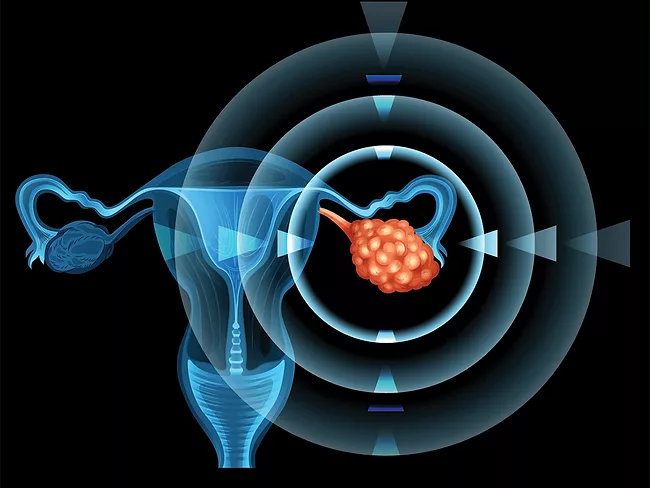
Researchers at the University of Queensland have found a genetic link between endometriosis and ovarian cancer subtypes, enabling them to identify potential drug targets for therapy and increasing the understanding of both diseases.
 RSS
RSS