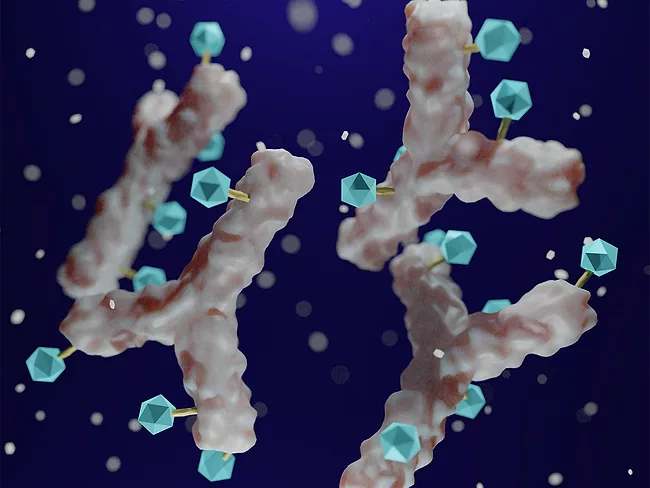
The sea anemone Stichodactyla helianthus, which carpets the Caribbean seafloor, may hold the key to eliminating the senescent cells that survive cancer therapy. A collaboration led by Spanish scientists across several international research centers has discovered a new type of toxin that selectively eliminates senescent cancer cells.
Depending on who you ask, AI will take over the world and save it; or ruin it. Certainly, it is changing it. Science magazine dedicated its first editorial of 2026 to AI. Despite its title – “Resisting AI slop“ – editor-in-chief Holden Thorp gave the sort of nuanced review that is typical of him. “Like many tools, AI will allow the scientific community to do more if it picks the right ways to use it,” he wrote. “The community needs to be careful and not be swept up by the hype surrounding every AI product.”
The concept of the 3 Rs – reducing, refining and replacing animal research – has been championed since the 1950s, when William Russel and Rex Burch argued in their book “The Principles of Humane Experimental Technique” that the 3 Rs could simultaneously improve the treatment of research animals and advance the quality of scientific and medical research and testing. Current standard practices of animal research undeniably cause animal suffering at the same time that they have prioritized replicability over translatability.
Over the course of the year, and continuing into the latest scientific meetings, an extraordinary breadth of new antibody-drug conjugate (ADC) designs was reported, with innovations spanning targets, linkers, payloads, conjugation chemistries and overall architectures. Once defined by a simple “one target, one payload” model, the field is lately expanding into a more versatile and diverse therapeutic space.
It’s been a year of two halves in Europe, with early optimism that the biotech sector had recovered from the post-pandemic funding drought being crushed by an investment slowdown from June onward.
In October, the Nobel Committee awarded the 2025 Nobel Prize in Physiology or Medicine to Shimon Sakaguchi, Mary Brunkow and Fred Ramsdell for their discoveries in the field of autoimmunity.
Gene editing technologies are moving forward in preclinical development with innovative strategies designed to treat diseases at their root and even reverse them. However, many approaches still struggle to reach target cells or tissues – either they fail to arrive, or their efficacy is low. In vivo therapies face numerous challenges, but despite these hurdles, 2025 has marked a year of remarkable progress.
In October, the Nobel Committee awarded the 2025 Nobel Prize in Physiology or Medicine to Shimon Sakaguchi, Mary Brunkow and Fred Ramsdell for their discoveries in the field of autoimmunity. As has become typical for the scientific Nobel Prizes, the award-winning research is by now several decades old. But the discoveries were the basis for ongoing research into how to prevent autoimmunity that notched significant wins in 2025, in both basic research and in the clinic.
In 2025, science saw its breakthroughs, which BioWorld will be covering as part of our end-of-the-year wrap-up. But the biggest science story of 2025 is not about any scientific advance. It is the politicized destruction of U.S. science, and the dismantling of a scientific ecosystem that has been the envy of the world since it emerged after Germany destroyed its own pre-eminence in the 1930s.
Advances in antiretroviral therapy (ART) now allow people living with HIV to lead normal lives with undetectable and nontransmissible levels of the virus in their blood. Yet that reality is limited to those with access to treatment. More than 40 million people worldwide live with HIV, with over a million new infections and hundreds of thousands of deaths each year, underscoring that major challenges remain.
 RSS
RSS