BioWorld. Link to homepage.

Clarivate
  • BioWorld
  • BioWorld Science
  • BioWorld Asia
  • Data Snapshots
    • Biopharma
    • Medical technology
    • Infographics: Dynamic digital data analysis
    • Index insights
    • NME Digest
  • Special reports
    • Infographics: Dynamic digital data analysis
    • Trump administration impacts
    • Under threat: mRNA vaccine research
    • BioWorld at 35
    • Biopharma M&A scorecard
    • Bioworld 2025 review
    • BioWorld MedTech 2025 review
    • BioWorld Science 2025 review
    • Women's health
    • China's GLP-1 landscape
    • PFA re-energizes afib market
    • China CAR T
    • Alzheimer's disease
    • Coronavirus
    • More reports can be found here

BioWorld. Link to homepage.

  • Sign In
  • Sign Out
  • My Account
Subscribe
BioWorld - Tuesday, February 17, 2026
Home » Topics » Science » Omics

Omics
Omics RSS Feed RSS

3D Rendering of tumor microenvironment
Drug design, drug delivery & technologies

AI-based spatial omics unveils molecular talks in tumors

March 25, 2025
By Mar de Miguel
The three-dimensional analysis of cell types and their locations by spatial transcriptomics provides key information of their interactions within tissues or organs. Based on this technology, scientists at the Wellcome Sanger Institute have developed an AI tool called Nichecompass, which shows a comprehensive view of the cancer microenvironments, the different cells, their locations, and how they communicate with each other through different molecules inside the tumor. This AI could process data in an hour and compare samples before and after a treatment.
Read More
Digital cancer cells illustration
Drug design, drug delivery & technologies

AI reads cancer cells’ 3D shape to predict their drug response

March 24, 2025
By Mar de Miguel
Scientists at the Institute of Cancer Research (ICR) in the U.K. are developing a technology that analyzes, in vitro, how the 3D morphology of cancer cells changes when exposed to a compound, using AI to predict their response to new treatments. The researchers estimate that their methodology could accelerate drug development by 6 years, by ruling out unsuccessful drugs and thus reducing the number of preclinical trials.
Read More
Illustration of magnifying glass inspecting brain
HIV/AIDS

In HIV, draining the reservoir means understanding the brain

March 14, 2025
By Anette Breindl
The availability of effective antiretroviral therapy has lowered the risk, and the severity, of neural sequelae of HIV infection. “Early in the HIV pandemic, approximately 15% of people with HIV had dementia and or encephalitis,” Howard Fox told his audience. “Fortunately, with treatment, the prevalence of these severe disorders has been greatly lowered. But there is persistence of what are called more minor disorders – which are not minor if you have them.”
Read More
Genome concept art.
Infection

Study looks to noncoding gene variants for new drug targets

March 12, 2025
By Nuala Moran
A new multi-omics approach to unpicking how noncoding gene variants influence the development of common chronic diseases has identified tens of thousands of instances where variants have an impact on gene expression levels and gene splicing, the post-transcriptional modification that allows one gene to code for multiple proteins.
Read More
Justin Rubio working in the lab
Inflammatory

Inflammation appears to cause mutations linked to MS progression

March 11, 2025
By Tamra Sami
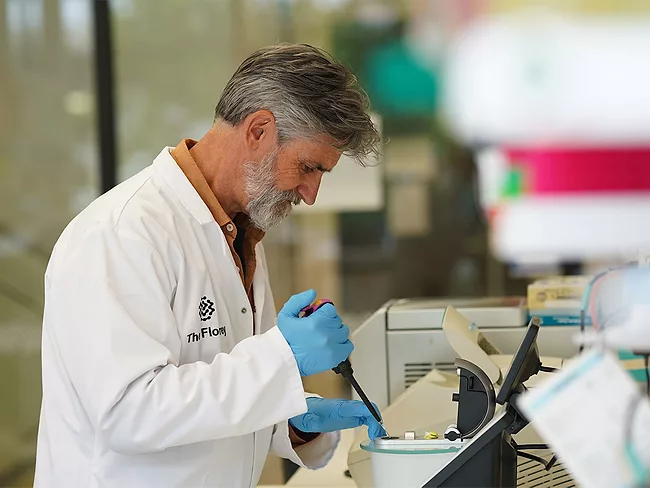
For the first time, researchers have identified that inflammation – long associated with multiple sclerosis (MS) – appears to cause increased mutations that damage neurons linked to MS progression. Researchers at the Florey Institute and the University of Melbourne studied MS brain lesions, which are areas of past or ongoing brain inflammation that are visible as spots on MRI scans.
Read More
Justin Rubio working in the lab
Inflammatory

Inflammation appears to cause mutations linked to MS progression

March 10, 2025
By Tamra Sami
For the first time, researchers have identified that inflammation – long associated with multiple sclerosis (MS) – appears to cause increased mutations that damage neurons linked to MS progression. Researchers at the Florey Institute and the University of Melbourne studied MS brain lesions, which are areas of past or ongoing brain inflammation that are visible as spots on MRI scans.
Read More
D-rendered image showing atlas of human embryonic skeletal development
Drug design, drug delivery & technologies

More than 100M cells included in the human cell atlas

Nov. 26, 2024
By Mar de Miguel
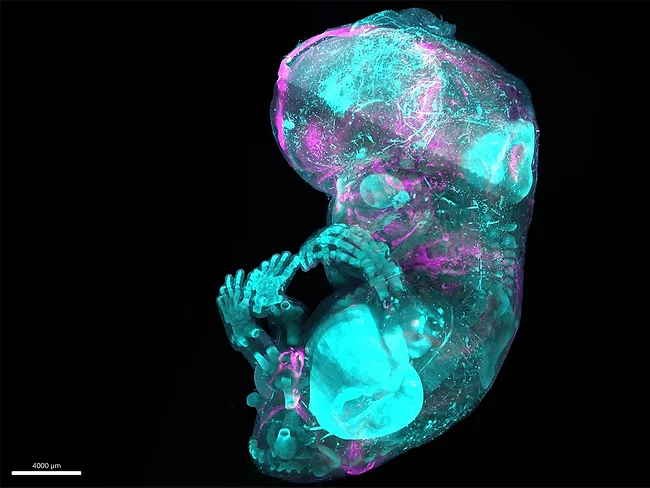
An international consortium of thousands of scientists is creating the Human Cell Atlas, a three-dimensional map of all the cells in the body. The goal is to understand all the cells that make up human tissues, organs and systems, which will enable multiple medical applications. This collection of cell maps is openly available for navigation at single-cell resolution, identified through omics analyses that reveal the tridimensional distribution of each cell.
Read More
D-rendered image showing atlas of human embryonic skeletal development
Drug design, drug delivery & technologies

More than 100M cells included in the human cell atlas

Nov. 21, 2024
By Mar de Miguel
An international consortium of thousands of scientists is creating the Human Cell Atlas, a three-dimensional map of all the cells in the body. The goal is to understand all the cells that make up human tissues, organs and systems, which will enable multiple medical applications. This collection of cell maps is openly available for navigation at single-cell resolution, identified through omics analyses that reveal the tridimensional distribution of each cell.
Read More
Illustrated map of Indonesia showing connected dots
Genetic/congenital

Alternative splicing study reveals genetic variants across Indonesian archipelago

Oct. 22, 2024
By Tamra Sami
A new study helps explain the role of genetic variation in shaping gene regulation in the Indonesian archipelago, one of the most diverse regions in the world. “This study is the only study of splicing from Southeast Asian populations. There is basically no data from this part of the world,” study author Irene Gallego Romero told BioWorld. For drug discovery, most of the people that have historically participated in clinical trials are of European ancestry, and scientists are just beginning to study African populations to better understand genetic differences in these populations, said Romero, a population geneticist and biological anthropologist at the University of Melbourne.
Read More
Illustrated map of Indonesia showing connected dots
Genetic/congenital

Alternative splicing study reveals genetic variants across Indonesian archipelago

Oct. 16, 2024
By Tamra Sami
A new study helps explain the role of genetic variation in shaping gene regulation in the Indonesian archipelago, one of the most diverse regions in the world. “This study is the only study of splicing from Southeast Asian populations. There is basically no data from this part of the world,” study author Irene Gallego Romero told BioWorld. For drug discovery, most of the people that have historically participated in clinical trials are of European ancestry, and scientists are just beginning to study African populations to better understand genetic differences in these populations, said Romero, a population geneticist and biological anthropologist at the University of Melbourne.
Read More
Previous 1 2 3 4 5 Next

Popular Stories

  • Today's news in brief

    BioWorld
  • Illustration of SCAN in Parkinson’s vs healthy subcortex

    SCAN is core circuit affected in Parkinson’s disease

    BioWorld Science
    Parkinson’s disease (PD) is a neurodegenerative disorder that affects movement, and tremor is one of its signatures. But it is a much more wide-ranging disorder,...
  • 3D illustration of skin layers

    TL1A is overexpressed in hidradenitis suppurativa

    BioWorld Science
    Despite the availability of advanced therapeutic options, about 40%-50% of patients with hidradenitis suppurativa do not achieve significant improvement in...
  • IL-22 and TL1A, a robust couple for diagnosing hidradenitis suppurativa

    BioWorld Science
    Hidradenitis suppurativa (HS) is a chronic inflammatory skin disease with strong association with psoriasis and inflammatory bowel disease (IBD). While some...
  • Woman and 3D brain

    Astellas’ ASP-2246 shows promise in stroke management

    BioWorld Science
    Astellas Pharma Inc. recently presented data regarding ASP-2246, a drug candidate comprised of an mRNA encoding the transcription factor NeuroD1 encapsulated in...
  • BioWorld
    • Today's news
    • Analysis and data insight
    • Clinical
    • Data Snapshots
    • Deals and M&A
    • Financings
    • Medical technology
    • Newco news
    • Opinion
    • Regulatory
  • BioWorld Science
    • Today's news
    • Biomarkers
    • Cancer
    • Conferences
    • Endocrine/metabolic
    • Immune
    • Infection
    • Neurology/psychiatric
    • NME Digest
    • Patents
  • BioWorld Asia
    • Today's news
    • Analysis and data insight
    • Australia
    • China
    • Clinical
    • Deals and M&A
    • Financings
    • Newco news
    • Regulatory
    • Science
  • More
    • About
    • Advertise with BioWorld
    • Archives
    • Article reprints and permissions
    • Contact us
    • Cookie policy
    • Copyright notice
    • Data methodology
    • Infographics: Dynamic digital data analysis
    • Index insights
    • Podcasts
    • Privacy policy
    • Share your news with BioWorld
    • Staff
    • Terms of use
    • Topic alerts
Follow Us

Copyright ©2026. All Rights Reserved. Design, CMS, Hosting & Web Development :: ePublishing