With readouts from three clinical studies of its lead oncolytic virus Tilt-123 due later this year, Tilt Biotherapeutics Ltd. secured €12 million (US$12.9 million) in new funding, to add to the €10 million it raised last June. That will enable the company to complete the ongoing studies, to prepare for a phase II in ovarian cancer, its lead indication, and to take forward several preclinical programs that are nearing the clinic.
Nodus Oncology Ltd. closed on the first £2.4 million (US$2.9 million) of £12 million it expects to raise in a number of tranches over the next 12 months, to source and take forward third-generation DNA damage response (DDR) programs.
Turbine Ltd. began the new year with a partnership with Cancer Research Horizons, the innovation arm of Cancer Research UK, which will put its Simulatedcell computational biology platform to work on the vexed question of how best to position CDC7 inhibitors in cancer.
Sirnaomics Ltd. is gearing up to start either an expanded phase IIb or a phase III clinical trial for its lead siRNA candidate, STP-705, for the treatment of two non-melanoma skin cancers: squamous cell carcinoma in situ and basal cell carcinoma. STP-705 comprises two siRNA oligonucleotides that inhibit transforming growth factor beta 1 and cyclooxygenase-2 gene expressions and is delivered via injection using what the company describes as a polypeptide nanoparticle-enhanced delivery mechanism.
Alpha Biopharma Ltd. submitted an NDA in China for zorifertinib, a next-generation EGFR tyrosine kinase inhibitor (EGFR-TKI) to treat advanced EGFR-mutated non-small-cell lung cancer with central nervous system metastases. Zorifertinib is the first EGFR-TKI to be tested in a clinical study for this patient population, according to the company.
The U.S. FDA granted breakthrough therapy designation to Abbisko Therapeutics Co. Ltd.’s colony-stimulating factor 1 receptor (CSF-1R) inhibitor, pimicotinib, for patients with tenosynovial giant cell tumors who are not able to have surgery.
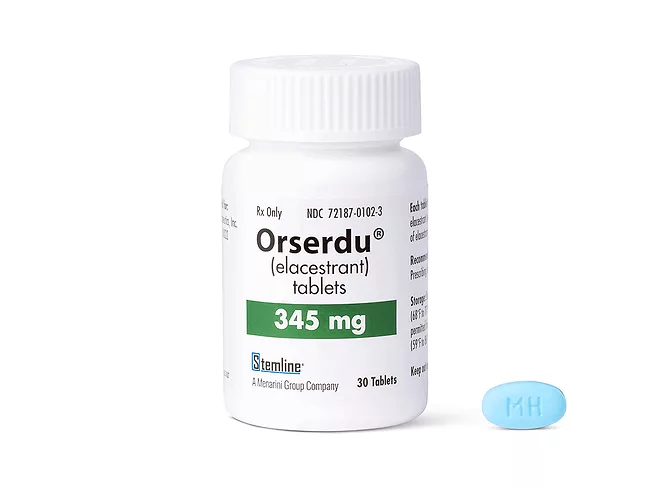
Winning the race to market with the first oral selective estrogen receptor degrader (SERD) for breast cancer is Menarini Group’s elacestrant, which gained U.S. FDA approval for use as second- and third-line therapy in patients with ER-positive/HER2-negative advanced or metastatic disease with the ESR1 mutation. It marks the first therapy approved specifically targeting ESR1, found in up to 40% of patients with ER-positive/HER2-negative disease.
Mantle cell lymphoma (MCL) patients developing resistance to existing BTK inhibitors now have a new treatment option, with the U.S. FDA’s accelerated approval of Jaypirca (pirtobrutinib) from Eli Lilly and Co.’s oncology unit, Loxo@Lilly. It is indicated for use in adults with relapsed or refractory disease who have received at least two lines of systemic therapy, including a BTK inhibitor.
Caribou Biosciences Inc.’s disclosure last December that it has chosen the target for CB-020, an induced pluripotent stem cell-derived allogeneic CAR-NK cell therapy for solid tumors, added impetus to the growing interest in receptor tyrosine kinase-like orphan receptor 1 (ROR1), where a number of parties are advancing programs.
An anticancer approach that leads to improved tumor visibility edged closer to the clinic after Grey Wolf Therapeutics Ltd. scooped $49 million in a series B round. The Oxford, U.K.-based immuno-oncology company plans to use the proceeds to move its lead candidate, GRWD-5769, into a phase I/II trial.

 RSS
RSS