Homerun success of Novo Nordisk A/S’ semaglutide, which recently became the U.S.’s biggest blockbuster drug, is serving as an “inflection point” for obesity therapeutics and fueling the drive for new and improved therapies, speakers said at Bio Korea 2024 on May 8.
Prologue Medicines Inc. has launched to develop therapeutics created from the viral proteome, which are proteins produced across all viruses. It’s a newer twist on harnessing the power of the proteins that regulate biology.
In the wake of Novo Nordisk’s semaglutide nabbing the title of the U.S.’s biggest blockbuster drug, it’s little surprise that Amgen Inc.’s obesity candidate, Maritide (maridebart cafraglutide), hogged the stage during the firm’s first-quarter earnings call after market close May 2, with company executives touting promising phase II data and a differentiated profile, sending shares of Thousand Oaks, Calif.-based Amgen (NASDAQ:AMGN) up nearly 12% to close May 3 at $311.29.
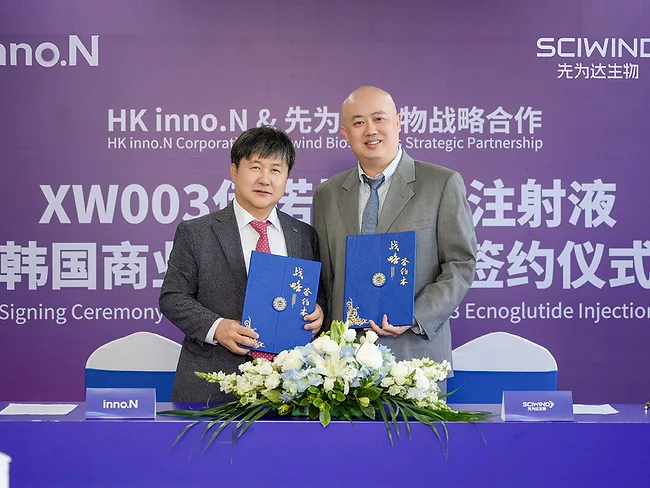
South Korea’s HK Inno.N Corp. said on May 2 that it gained exclusive development and commercial rights to Hangzhou, China-based Sciwind Biosciences Co. Ltd.’s once-weekly, injectable glucagon-like peptide-1 (GLP-1) agonist, XW-003 (ecnoglutide), in South Korea to treat type 2 diabetes and obesity.
Just a few days after the U.S. Congressional Research Service issued a report suggesting ways Congress could resolve the unanswered questions about patent listings in the FDA’s Orange Book, the FTC sent a second round of warning letters to eight biopharma companies and their subsidiaries, citing the listing of device patents for combination products.
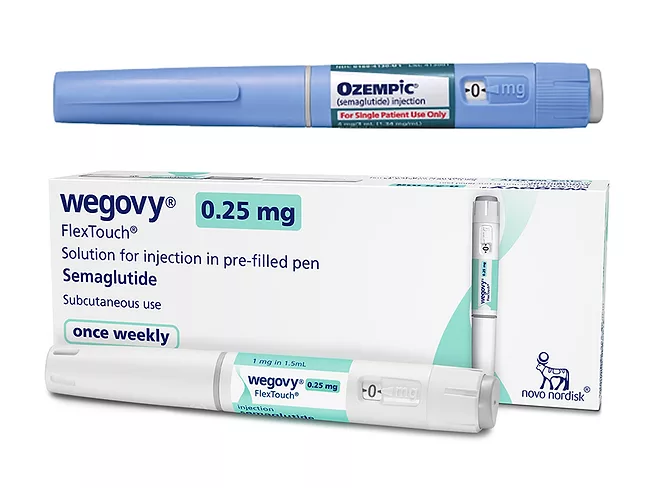
There was a time not that long ago when Merck & Co. Inc.’s Keytruda (pembrolizumab), with its multiple cancer indications, was seen as the heir apparent to Humira’s title of the biggest blockbuster drug. Not anymore. That title now belongs to Novo Nordisk A/S’ semaglutide, approved as Ozempic in 2017 to treat diabetes and as Wegovy in 2021 to help with weight loss.
Vertex Pharmaceuticals Inc. has tapped into Treefrog Therapeutics SA’s high-throughput stem cell manufacturing technology in a deal worth potentially up to $780 million to help it advance its type 1 diabetes programs, including phase I/II asset VX-880.
Led by executives who helmed The Medicines Co., Metsera Inc. has launched with $290 million in financing to develop drugs for treating weight loss, obesity-related conditions and metabolic diseases. The company is stepping into high profile and lucrative glucagon-like peptide-1 territory forged by Eli Lilly and Co.’s Zepbound (tirzepatide) for chronic weight management and Novo Nordisk A/S’s Wegovy (semaglutide), also approved for long-term weight management.
BNC Korea Inc. is picking up exclusive commercial rights to Kariya Pharmaceuticals ApS’ dual GLP-1/GIP agonists for Parkinson’s and Alzheimer’s disease in five countries – a move that comes shortly after BNC Korea dropped $1.5 million into the Danish pharma for a 4.5% stake.
Vertex Pharmaceuticals Inc. is acquiring Alpine Immune Sciences Inc. for $4.9 billion in cash to gain Alpine’s lead product, phase III-ready povetacicept, which demonstrates best-in-class potential in patients with immunoglobulin A nephropathy (IgAN). Povetacicept (ALPN-303), or “pove,” holds potential “as a pipeline in a product in a number of other serious renal diseases and cytopenias,” Vertex CEO Reshma Kewalramani said during an April 10 conference call, noting that the deal was “just the right fit with just the right assets at just the right phase of development where Vertex can add value.”
 RSS
RSS