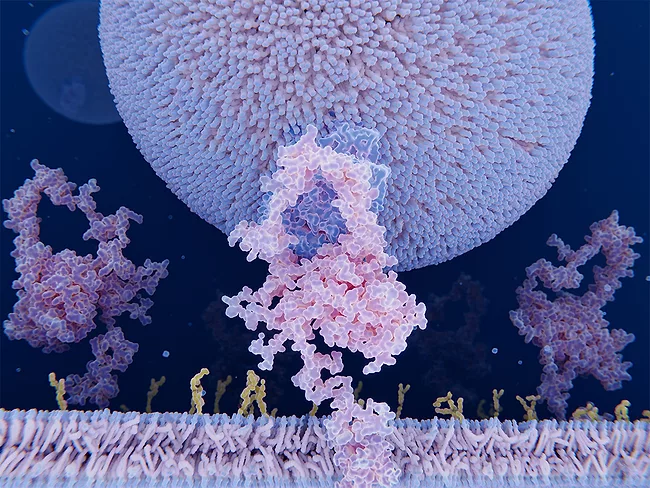
Hypoparathyroidism is a rare disorder characterized by low levels of parathyroid hormone (PTH) that lead to low blood calcium levels and hyperphosphatemia. Septerna Inc. is developing a small-molecule PTH1 receptor (PTH1R) agonist, SEP-479, designed to replace PTH and normalize serum calcium.
Mwyngil Therapeutics Inc. has released promising in vivo proof-of-concept results from its GPR75 inverse agonist program, supporting the potential of GPR75 modulation as a differentiated therapeutic approach for obesity and cardiometabolic disease.
Cholesterol is essential for cell function, but its balance hinges on hepatic LDL receptor (LDLR) abundance, which dictates how efficiently the liver clears circulating lipoproteins. Researchers at the University of California, San Diego (UCSD) identified a Ral-dependent pathway by which elevated cholesterol intake reduces hepatic LDLR availability, pointing to a potential target for lipid-lowering therapies.
Ascletis Pharma Inc. has received IND clearance from the FDA for ASC-35, a once-monthly subcutaneously administered GLP-1 receptor (GLP-1R)/GIP receptor (GIPR) dual peptide agonist, for the treatment of obesity.
Eli Lilly and Co. posted $19.8 billion in first-quarter 2026 revenue, driven by tirzepatide, marketed as Mounjaro for type 2 diabetes and Zepbound for obesity. The Indianapolis-based drugmaker is channeling cash flow from these blockbuster GLP-1 drugs into an aggressive dealmaking campaign — about $25.1 billion across 10 announced acquisitions so far this year and more than $26 billion in other closed deals.
Corxel Pharmaceuticals Ltd.’s oral small-molecule GLP-1 receptor agonist, CX-11, met the primary endpoints in a phase II trial evaluating the candidate in obese and overweight patients in the U.S., according to top-line results.
Chinese peptide therapeutics developer Shaanxi Micot Pharmaceutical Technology Co. Ltd. is seeking up to HK$1.22 billion (US$155 million) in a Hong Kong IPO to advance its lead phase III chronic kidney disease candidate, MT-1013, and next-generation obesity therapies.
The industry is stepping up its campaign to persuade European governments to increase their drugs budgets, in what is described as a landmark report making the case that spending on patented drugs is not a cost to be contained, but an investment in health and the economy.
Zydus Lifesciences Ltd. has synthesized co-crystals of saroglitazar and chitosan acting as triglyceride-lowering agents found to be potentially useful for the treatment of dyslipidemia and hyperglycemia.
Lu-AG-22515, also known as velaprumig, is a recombinant fusion protein that targets CD40 ligand (CD40L) and human serum albumin (HSA), thereby blocking the binding between CD40 and CD40L, a known signaling pathway involved in several autoimmune diseases. Researchers at H. Lundbeck A/S evaluated the pharmacokinetic (PK) and pharmacodynamic (PD) profile of Lu-AG-22515 in cynomolgus monkeys, as well as the impact of its inhibitory effect in the preclinical setting of thyroid eye disease (TED).
 RSS
RSS