Fulcrum Therapeutics Inc. has entered into a worldwide, exclusive license agreement with Camp4 Therapeutics Corp. to advance the discovery, development and commercialization of new therapeutic agents against an undisclosed target for the potential treatment of Diamond-Blackfan anemia (DBA).
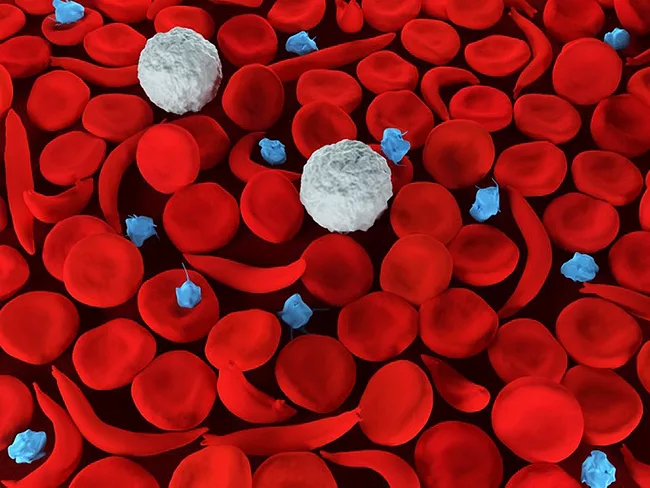
Research led by St. Jude Children’s Research Hospital and Harvard University shows base-editing approaches could be more effective than CRISPR-Cas9 gene-editing approaches for treating conditions such as sickle cell disease and β-thalassemia. Writing in the July 3, 2023, issue of Nature Genetics, the researchers compared three base-editing approaches with two CRISPR-Cas9 approaches to increasing levels of fetal hemoglobin in CD34+ hematopoietic stem and progenitor cells, and found one of the base-editing approaches was the most potent.
Janssen Pharmaceutica NV has identified bicyclic pyridin-2-one and pyrimidin-4-one derivatives acting as coagulation factor XIa inhibitors and thus reported to be useful for the treatment of thromboembolism, diabetes, diabetic retinopathy, septic shock, hereditary angioedema, arthritis, nephropathy and inflammatory disorders, among others.
Becoming the first gene therapy approved for hemophilia A, Roctavian (valoctocogene roxaparvovec) finally received the U.S. FDA’s blessing on June 29, after developer Biomarin Pharmaceutical Inc. spent nearly three years working to address issues raised in a 2020 complete response letter. The approval came a day prior to the June 30 PDUFA date.
A single low-dose injection with anti-DLL4 in a nonhuman primate model of acute graft-vs.-host disease (aGVHD) dramatically improved post-transplant survival, providing durable protection from otherwise lethal gastrointestinal GVHD, researchers reported in the June 28, 2023, issue of Science Translational Medicine. Blocking DLL4 specifically increased the migration of beneficial regulatory T cells into the intestines, with concomitant reduction in effector T cells, which are the main culprits in aGVHD. Ultimately, these activities effectively provided protection against T-cell-mediated damage in a nonhuman macaque primate model.
Identification of the mechanisms of innate immune sensors is fundamental to the understanding of health and disease. The pattern recognition receptor (PRR) subfamily of nucleotide-binding oligomerization domain (NOD)-like receptors (NLRs) work by recognizing either pathogen-associated molecular patterns (PAMPs), endogenous damage-associated molecular patterns (DAMPs) or associated molecular...
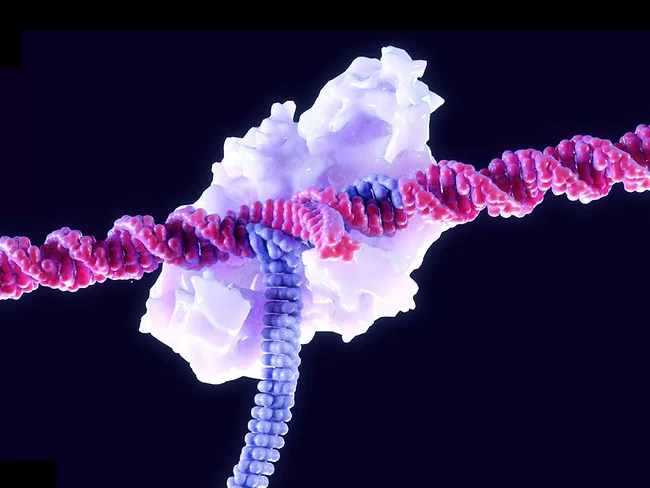
With CRISPR-Cas9 technology making its way toward clinical practice, laboratories are studying different gene-editing techniques, from base editors to prime editors, to correct mutations associated with various pathologies. Researchers at Tessera Therapeutics Inc. have been inspired by retrotransposons to develop a tool for editing DNA using RNA and reverse diseases such as phenylketonuria (PKU) or sickle cell disease (SCD).
Iaso Biotechnology Co. Ltd. has received FDA approval of the company’s IND application for IASO-782 injection for use in U.S. clinical trials for autoimmune hematological disorders, including primary immune thrombocytopenia (ITP) and warm autoimmune hemolytic anemia (AIHA).
New and updated preclinical and clinical data presented by biopharma firms at the European Hematology Association Congress, including: Actinium, Aptose, Cellectis, Disc, Geron, Gracell, Humanigen, Innate, Innovent, Kura, Modus, Nkarta, Salarius, Sumitomo.
Part of the reason for CAR T cells’ astonishing success in B-cell cancers is that B cells are astonishingly easy to replace. CAR T cells are specific, yes. But they are not specific to tumor cells. They are specific to their target antigens. In the case of Yescarta (axicabtagene ciloleucel, Gilead Sciences Inc.) and Kymriah (tisagenlecleucel, Novartis AG), the first two clinically approved T cells, that target is CD19, which is expressed on B-cell precursors. And when it is successful, the treatment leaves patients without any B cells at all.
 RSS
RSS