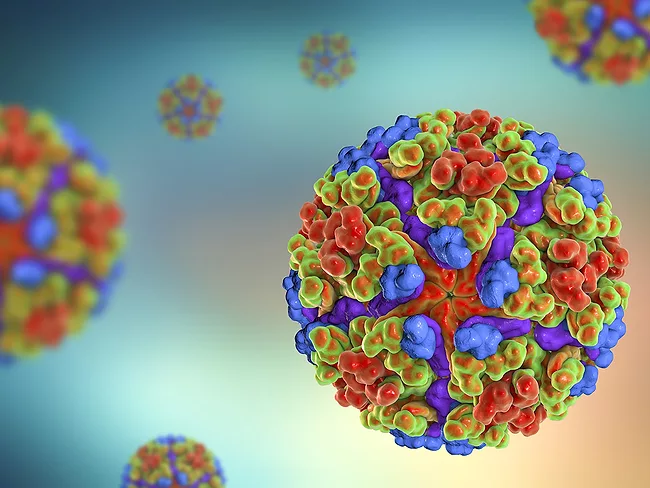
Antiretroviral therapies against HIV have been in use for more than 30 years and have enabled people living with HIV to maintain undetectable viral levels. Many of them are aging in good health. However, others present symptoms of cognitive decline. HIV can reach the brain and establish a reservoir there. Yet, it is still unknown what this reservoir is like, which cells are affected, and which comorbidities are typical of aging or are associated with the virus.
Centauri Therapeutics Ltd. has extended its series A financing round to £30 million (US$40.5 million) with the addition of a new £6 million (US$8 million) investment. Centauri initially closed its £24 million (US$32 million) series A round in 2022.
Amid an ongoing court challenge to the current composition of the CDC’s Advisory Committee on Immunization Practices (ACIP), the committee’s Feb. 25-27 meeting has been removed from its calendar.
Researchers from the University of Sassari (Italy) and their collaborators have recently published findings from their research focused on the impact of one allelic variant in the CCND3 gene, encoding cyclin D3, on blood cell traits and resistance to malaria.
Antibiotics specialist Bioversys AG has reported the first clinical proof-of-concept data for alpibectir (BVL-GSK098) in combination with ethionamide in pulmonary tuberculosis, with phase IIa early bactericidal activity data published in the New England Journal of Medicine.
Infectious disease-focused biopharma companies continued their rebound into year-end, with the BioWorld Infectious Disease Index finishing 2025 up 68.55% after standing at a collective 28.98% at the end of October. The rally underscores a sharp reversal from earlier in the year, when the index had declined 17.83% by the end of April before recovering to a 4.34% gain by July.
Stoked Bio Inc. has secured an exclusive global license from McMaster University for the patents covering enterololin, a promising narrow-spectrum antibiotic.
A week after catching Moderna Inc. and its investors off guard with a refuse-to-file letter, the U.S. FDA has reversed course on the company’s BLA submission seeking approval of seasonal influenza vaccine mRNA-1010, now agreeing to review the application and setting an assigned PDUFA date of Aug. 5, 2026.
Antimicrobial resistance (AMR) is increasingly compromising the effectiveness of essential antibiotics, resulting in higher global mortality and morbidity rates. Despite this urgent need, few new antibiotics, particularly against gram-negative bacteria, are in development.
Chikungunya virus is a positive-sense single-stranded RNA virus for which no antiviral therapy has been approved. Nucleotide analogues are among the most promising broad-spectrum antivirals, as they inhibit viral RNA-dependent RNA polymerase, an essential enzyme for RNA virus replication.
 RSS
RSS